Horses might need forage substitutes if their normal hay isn’t available or if they require a different type of forage for a physical reason.
Vanessa Allen is our guest on this podcast. She has been a nutrition advisor for Mars Horsecare in the UK since 2013. Prior to joining Mars, Allen was a research assistant at the University of Cambridge for nine years. She also has experience in the horse racing industry and a background and in top-level eventing.
(Editor’s note: The content of this podcast is the expert’s approach to the topic. Please consult with your practitioner if you have questions.)
Can’t Get Normal Forage
Allen reminded our listeners that forage is the foundation of every equine nutrition program. “The horse has a very complicated and quite sensitive digestive system,” noted Allen.
She said owners need to plan ahead to keep from running out of the forage the horses are used to eating. “We want to have a little bit of time before running out of one forage and having to start on a whole new batch,” she advised.
Allen reminded us that with some horses, forage is almost all of their diets. “So, it’s really important that we prep how much are we going to need, whether that’s month to month or seasonally. We often can nip to the feed shop for feed, but actually forage you need to plan that little bit further ahead.”
No matter where you live, weather can affect hay harvests and the amount produced year to year. “If we’ve had poor weather, then you know it’s something to get in [to the feed shop] quicker. Speak to your local supplier. Make sure they’re going to get have enough for you to last you through the winter or the months when you need to feed.”
Weather Differences
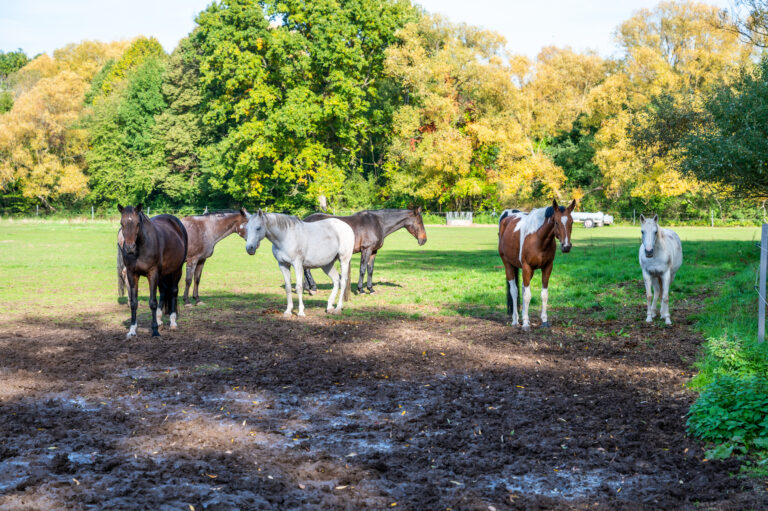
There are some situations where horses can graze grass all winter long. In other places, having horses out on wet pastures will ruin them for future use. Then there are the locations that have no grass available in winter or have snow that prevents grazing.
“So, it’s making sure that we prepare ahead and we keep that [forage] supply,” reminded Allen.
She said a rapid change of diet causes a real disturbance to the digestive system. “And with older horses, it’s even more of a strain on them when you know they may not have a digestive system that’s as fully functional [as that of a young horse],” she said.
Emergency Hay Options
In an emergency situation, Allen said in the UK “you can nip to the store and you can often buy ready-to-go, wrapped small bales of haylage. That might see you through a few days. That’s sort of a last minute, ‘I’m desperate’ sort of option.”
She said there are a few other options that can be used in ’emergency’ times. “We have short fibres and complete and partial hay replacers,” Allen said.
Allen reminded that while those are not a first choice for healthy horses, they might be necessary for specific animals that have issues.
Colic Forage Choice
Colic is a good example of a need for a different forage, noted Allen. “We have a few other options that we can use in those emergency times,” she said. “We have short short fibres and complete and partial hay replacer mashes.” Those mashes are made up of soaked short fiber pellets.
Allen emphasized that you must talk to your veterinarian to understand the feeding protocol based on the type of colic or colic surgery the horse has undergone.
Dental Issues and Forage Choice
Allen discussed in the podcast about how many owners can use mashes of feedstuffs for senior horses that have poor dentition. Sometimes, Allen said, you don’t want to feed the short-chopped fibers because they can get caught between the horse’s teeth.
“Other horses seem to manage fine with the very soft short chopped fibres, but simply can’t manage the long stem fibres anymore,” she said. “So again, really consult with the dental expert.”
Introduce Hay Replacer Slowly
It’s important with any changes in feedstuff to introduce the product slowly, emphasized Allen. “There might be some that are lower calorie, and they are perfect for the horses that are still senior good doers,” she explained. “Some are higher calorie, which are better suited to those [horses] who are poorer doers or through the winter months need extra calories if they’re in a more cold climate or working harder.”
Other Alternatives
Some forage mashes are produced by feed manufacturers. Many of these mashes—but not all—are produced to be low in sugar and starch. This is useful for some senior horses that have some more complex nutritional requirements, said Allen
“You also have some straight feeds that are used as more tend to be as partial home replacers,” she said.
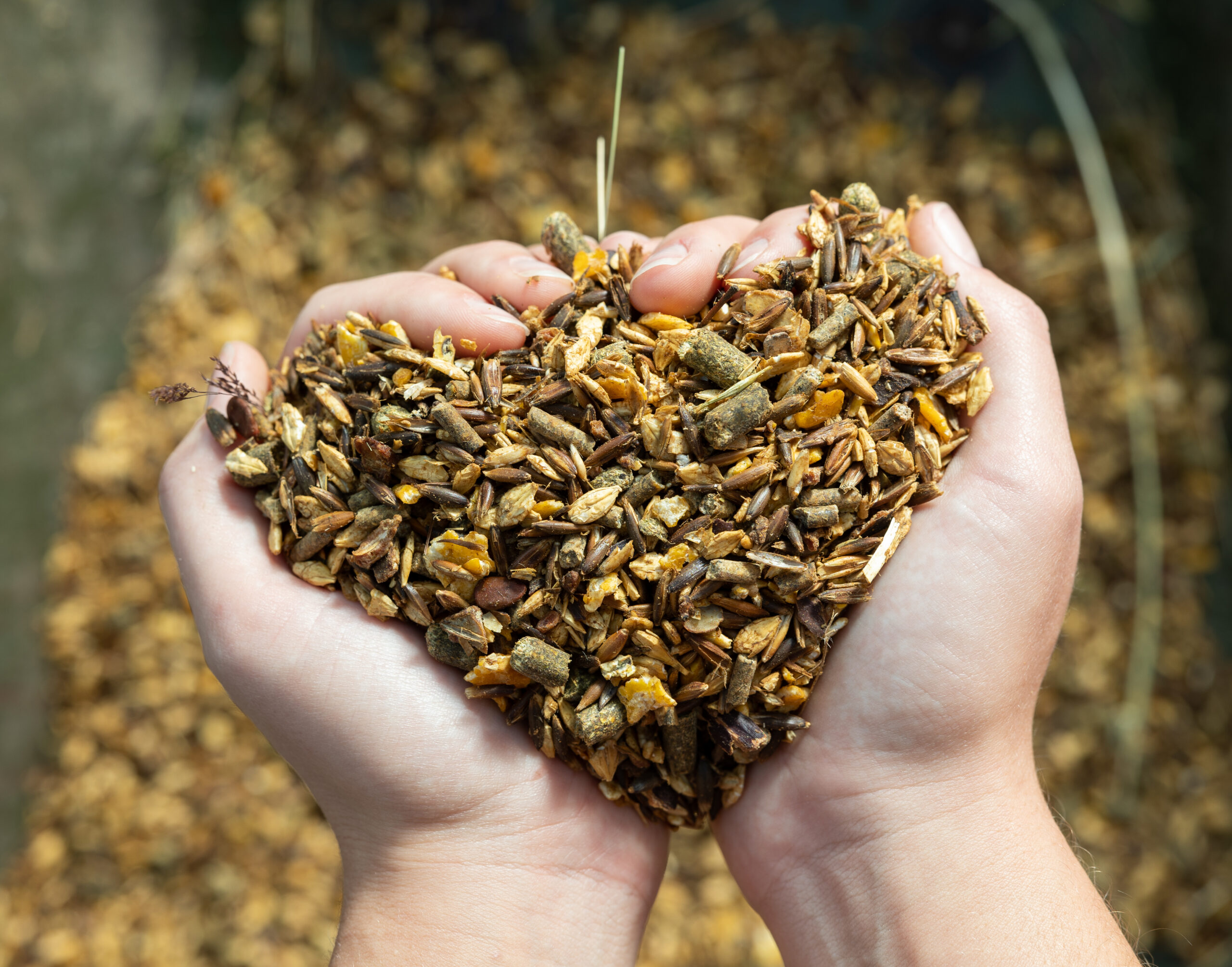
She said grass cubes, pellets, and nuts are available. “Again, these will usually be soaked to make sure that they’re safe for the horse to eat and also easier on those struggling with dental issues,” said Allen. “You may be able to get some that are produced with lower sugar levels. Be very careful with with grass cubes. Some can be very high in sugars depending on when that grass was harvested. So, they may not be suitable depending on clinical issues. There also are alfalfa nuts and alfalfa pellets. They’re probably more popular in in the U.S.”
She said some people might give their senior horses a variety of forages. Allen said owners might use grass cubes, sugar beet, and manufactured mashes.
“And don’t forget straw as a partial replacer for good doers struggling with their weight,” noted Allen. “It’s obviously lower in protein and lower in calories, so actually is quite useful with donkeys.”
Allen stressed to make sure you are feeding the correct amount if you have to change forage sources. This might require a discussion with an equine nutritionist.
Forage and Welfare
She reminded listeners that forage access can be a welfare issue due to boredom and clinical issues. Allen said that some horses might need smaller portions fed more often.
“But you have to consider your management,” she admitted. “Is it practical to feed horses on different schedules? Is it a herd feeding or is it individual feeding? Is it eating slower and getting pushed off of feed sources so it is not getting enough feed?”
Final Words
Allen reiterated a few tips from the podcast:
- Observe your senior horse’s behaviors.
- Are they chewing differently or eating more slowly?
- Are there any arthritic changes in the horse’s neck, jaw, limbs, anywhere that would change their eating habits?
- How are you feeding hay? Off the floor? A hay net? A manger?
- Feed the horse as an individual.
Further Content
- Tips on Feeding Older Horses With Dental Issues. Patricia A. Harris, MA, PhD, VetMB, DipECVCN, MRCVS. MySeniorHorse.com
- Equine Appetite Loss. MySeniorHorse.comFeeding Horses and Ponies Prone to Laminitis, Part 1. Sarah Nelson. MySeniorHorse.com
- Feeding Horses and Ponies Prone to Laminitis, Part 2. Sarah Nelson. MySeniorHorse.com
- My Senior Horse Video: Overweight Horse Management. Bryan Cassill. MySeniorHorse.com
- A Guide to Equine Body Condition Scoring. Sarah Nelson. MySeniorHorse.com
- How to Feed Your Overweight Horse Video. Bryan Cassill. MySeniorHorse.com
- The Horse Trust ‘Weight to Win’.
- Help! My Senior Horse is Losing Weight! Dr. Nettie Liburt. MySeniorHorse.com
Sign up for My Senior Horse’s FREE newsletter to get the latest information about equids 15 years and older delivered straight to your inbox!