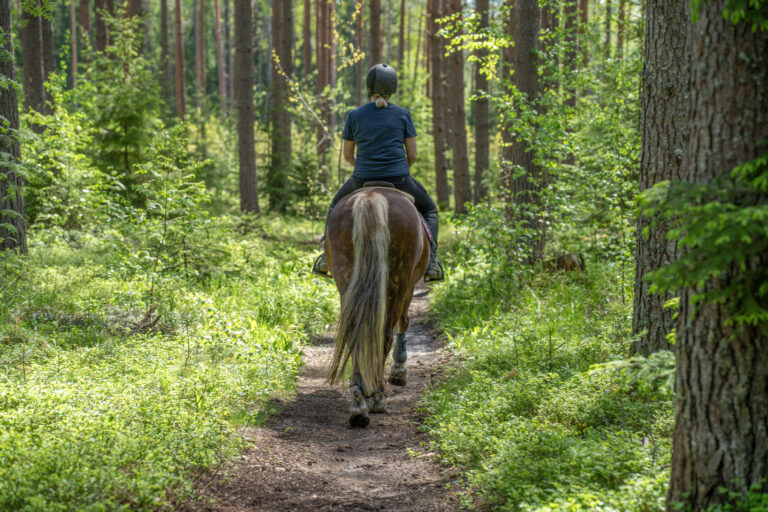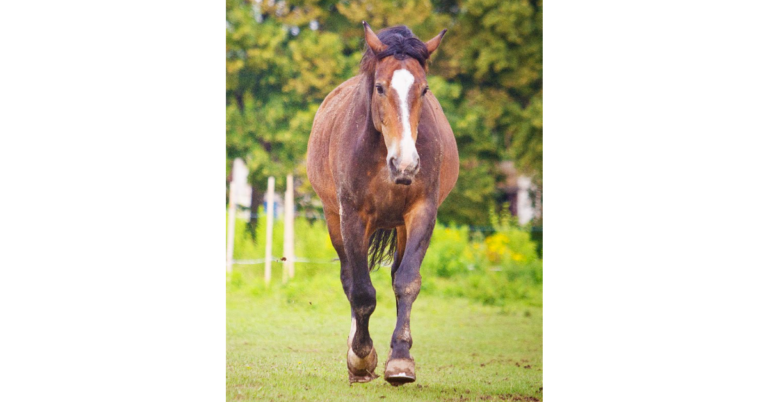

Pasture turnout is good for your horse’s body and mind. Some horses have large pastures to wander through. Others have small drylots or grassy paddocks.
No matter the size of the pasture, safety is paramount. Horses have a way of finding trouble even in the most idyllic setting.Fences are magnetic attractions that horses want to sidle up to just to see if the grass is really greener on the other side.
Read on for tips on selecting fencing and ensuring your turnout areas are safe for your horses.
Safe Equine Fencing Features
Fence height should be at least 4.5 to 5 feet. Consider using 6-foot fencing for stallions (and jumpers) to discourage the horse from trying to jump over it. Confining a stallion might necessitate incorporating a double fence perimeter. Using a mesh wire fence on the outermost perimeter can be useful to discourage human or dog contact with the horses. Double fencing also helps keep horses safe if there is an outer fence failure next to a busy roadway.
Fence posts should be anchored securely in the ground—at least 3 feet deep—with depths of 4 feet for gateposts. Round posts are generally stronger than square posts. Pressure-treated wood posts delay rot. A preservative can extend post longevity to 10-25 years. Larger diameter posts last longer.
Fence visibility is crucial, especially when horses are startled and running without full awareness of their surroundings, or for senior horses losing their vision. It might be necessary to place white strips (sheet or ribbon material) along a wire fence to help horses see it. Unfortunately, horses running in panic (or play) might not see any type of fence, especially if it is less-visible wire fencing.
Avoid any configuration that might trap a foot or leg. Keep in mind that foals can roll under a fence or become entangled. If mesh fencing is your choice, select material with openings less than 3 square inches. It is recommended to avoid using anything larger than a 2-inch-by-4-inch square opening.
An 8-inch clearance at the fence bottom tends to prevent foot or leg traps and isn’t quite large enough for a horse to get its head under when trying to reach grass.
High-tensile wire fencing should be pulled tight with no laxity. Configure diagonal cross-bracing incorporated in the corners to avoid leg or foot entrapment.
When using wooden boards or mesh wire, position them on the inside of the posts so a leaning horse can’t weaken the fasteners and push off the rails or wire. Separate rail spaces by distances less than 12 inches. Check the wire mesh to make sure there are no sharp points where the knots are tied in the wire. Put that side of the mesh away from the horse side of the fence.
If using wire fencing, it helps to place electric tape or wire on the inside of the top rail of the fence to keep horses from directly contacting the fence.
If using electric fencing, the distance between the wires or tapes can be as wide as 18 inches. Weeds and tall plants need to be trimmed and removed so as not to ground out an electric fence.
Cover the tops of metal T-posts with T-post safety caps to prevent impalement from an overactive horse or lacerations from a horse scratching his head or neck.
Avoid building sharp corners, triangular areas, or dead ends in fence lines that could enable dominant horses to trap another herd member with no means of escape. Round corners work best. When introducing your horse to a new pasture, be sure to walk him around the perimeter in both directions so he sees everything with both eyes. You should turn the horse out for the first time during full daylight.
Safe Gates for Horse Pastures
Horses like to congregate around gates when they are at pasture. So, consider drainage that keeps the gate area dry with stable footing for easy in-and-out access.
Gates are safest when their edges are rounded with smooth corners.
Gates and fences should be similar heights to discourage escape or reaching over to get grass. It might be advantageous to have gates that swing both ways as long as the posts and gate hardware are strong enough to accommodate leaning horses.
Gates provide access to and from the barn, paddocks, arenas, and trails. They are best installed in the most accessible locations to move horses around easily and to facilitate barn chores.
Don’t forget to install gates that are wide enough to allow the entry of tractors, mowers, manure spreaders, horse trailers, or your veterinarian’s truck. This means at least a 12-foot gate opening.
Secure gate latches are essential to prevent inquisitive horses from opening the gate and letting themselves out. It helps to use latches that you can open with one hand, but make sure horses can’t open them with their muzzles.
Don’t have a gap between the support post and gate that could entrap a horse’s head or neck.
Cut away any bolts and sharp objects that stick out from fasteners or edges, as these notoriously cause injury if a horse decides to rub or tries to shortcut a corner while moving around the pasture.
Halters, when used, should be the break-away kind in the event a horse snags it on a protrusion, post, or gate.
Consider creating areas of the pasture separated by temporary or permanent fencing and gates. That allows you to separate horses or use rotational grazing to preserve pasture grass.
Obstacles and Equipment
It’s easy to assume that the tractor parked in the pasture poses no hazard, but this is far from the truth. Any kind of equipment has the potential to cause serious harm to curious horses who hang out around that area.
The safest bet is to fence out any such equipment—tractors, harrows, rakes, cars, and horse trailers, for example.
Other pasture obstacles include water ditches and ditch crossings. If a crossing is composed of a metal culvert, it is necessary to cover the sharp metal ends or fence them off from horse contact. Options for non-contact also might include culvert edge guards, cement, or even using old tires as a barrier.
To prevent your horse from inadvertently falling into a ditch hidden by deep grass, walk him around the pasture when he first arrives so he can see and smell the presence of ground irregularities. This doesn’t guarantee that he won’t run through it, but it can help.
Some trees—red maple, yew, oleander, black walnut, chokecherry, buckeye, black locust, and oaks, as a few examples—are poisonous to horses. These need to be removed or fenced at a sufficient distance so that falling leaves, seeds, or fruit are inaccessible to horses.
Keep in mind that horses like to strip bark from trees. This can be from boredom or a desire for nutrients/roughage. So, even if the plant is not a hazard to the horses, horses might be a hazard to accessible trees! Fencing off the trees also will keep horses from congregating under them. Horse hooves compact the ground and reduce the amount of water available to the roots around the tree.
Dead branches also have the potential to impale a horse or cause an eye injury. Check with your veterinarian or county extension agent about which trees you’ll need to fence out. They also can help you check for the presence of toxic plants in your pasture.
Water Sources
Access to water is critical for horses no matter how they are stabled or pastured. You should plan to fence natural water sources away from horses to prevent the animals from causing issues such as erosion and contamination.
Another reason to fence off natural water sources is that some ponds or streams have surrounding ground that can become swampy. That can cause issues from lost shoes to animals becoming totally stuck in the mud and requiring rescue.
Natural water sources are also prone to erosion, leading to risks posed by holes, slopes, and boggy areas. Slow-moving or stagnant water also has the potential to grow blue-green algae during hot weather conditions. Cyanotoxins from the algae are potentially lethal to horses and dogs. The safest strategy is to fence horses away from stagnant natural water sources.
Watering troughs or automatic watering systems are more reliable water sources. These need to be cleaned regularly to eliminate buildup of debris, sand, dead insects, and algae. Goldfish in the tank can help keep algae to a minimum and also can reduce mosquito larvae in the tank.
In winter, a stock tank heater keeps water ice-free. The safest type of heater is one that immerses to the bottom of the tank rather than floats on top.
Cover all electric cords with plastic pipe and periodically check that the heater is not shorting out and preventing horses from drinking.
In some cases, it is simply easier and less labor intensive to install heated automatic watering systems that provide water on demand. Be sure there is a sufficient number of water sources to accommodate the size of the herd in the pasture. If water is a scarce resource, dominant horses might prevent more submissive individuals from accessing water.
Place a water source in an expansive area rather than in corners of the field or by a gate. This makes it more difficult for one horse to guard it and keep others away.
Shelters in Horse Pastures
In many situations, horses don’t necessarily need a shelter. However, a run-in shed offers daily shelter from sun, wind, rain, or snow. If multiple horses share the pasture, then the shed must be large enough to allow all to enter without being trapped. The other option is to build more than one shed to provide shelter for all herd members.
Some three-sided sheds offer an extended wind wall on one side that horses can stand behind to get out of blowing weather.
Place the shed on high ground to facilitate drainage. Building the shed into the fence line eliminates the presence of an area between shed and fence that could entrap a horse.
Final Words
Good planning in advance of building a perimeter around your pasture can save you from a lot of extra work and keep your horses as safe as possible. You’ll want to consider the safest fencing and exclude hazards when designing your horse’s confinement area.
Factor in the needed size of pasture based on forage availability, plant growth, and stability to prevent overgrazing.
Parasite and weed control are also important features for maintaining a healthy pasture, as are good drainage and safe water sources.
Do your research and consult with agricultural experts and your veterinarian to determine the best way to configure safe pastures on your property. Then you’ll have peace of mind while you enjoy watching your horses frolic in their pasture freedom.
Further Reading
- Are Warm Season Grasses Suitable for Senior Horses? Dr. Nerida McGilchrist. MySeniorHorse.com
- Nutritional and Non-nutritional Aspects of Forage. Nerida Richards, Brian D. Nielsen, Carrie J. Finno. Vet Clin North Am Equine Pract.2021 Apr; 37(1):43-61.
- Equine Nutrition Basics: Protein, Vitamins, and Minerals. Dr. Nettie Liburt. MySenior Horse.com
- Choosing Hays for Overweight Horses Video. Bryan Cassill. MySeniorHorse.com
- 10 Tips for Feeding Forages for Horses. Dr. Pat Harris. MySeniorHorse.com
- Nutritional and Non-Nutritional Aspects of Forage. Nerida Richards, Brian D. Nielsen, and Carrie J. Finno. Vet Clinics of North America—Equine Practice
- Horse Feed Ingredients—Quality Not Just Quantity. Amber Krotky. MySeniorHorse.com
Sign up for My Senior Horse’s FREE newsletter to get the latest information about equids 15 years and older delivered straight to your inbox!
-
View all posts
Nancy S. Loving, DVM, was a performance horse veterinarian based in Colorado for most of her career. She has a special interest in helping horse owners understand technical veterinary topics and research.