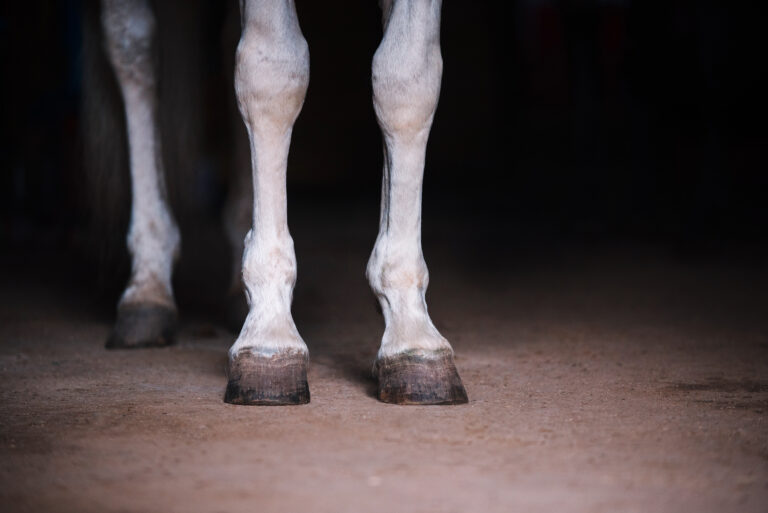
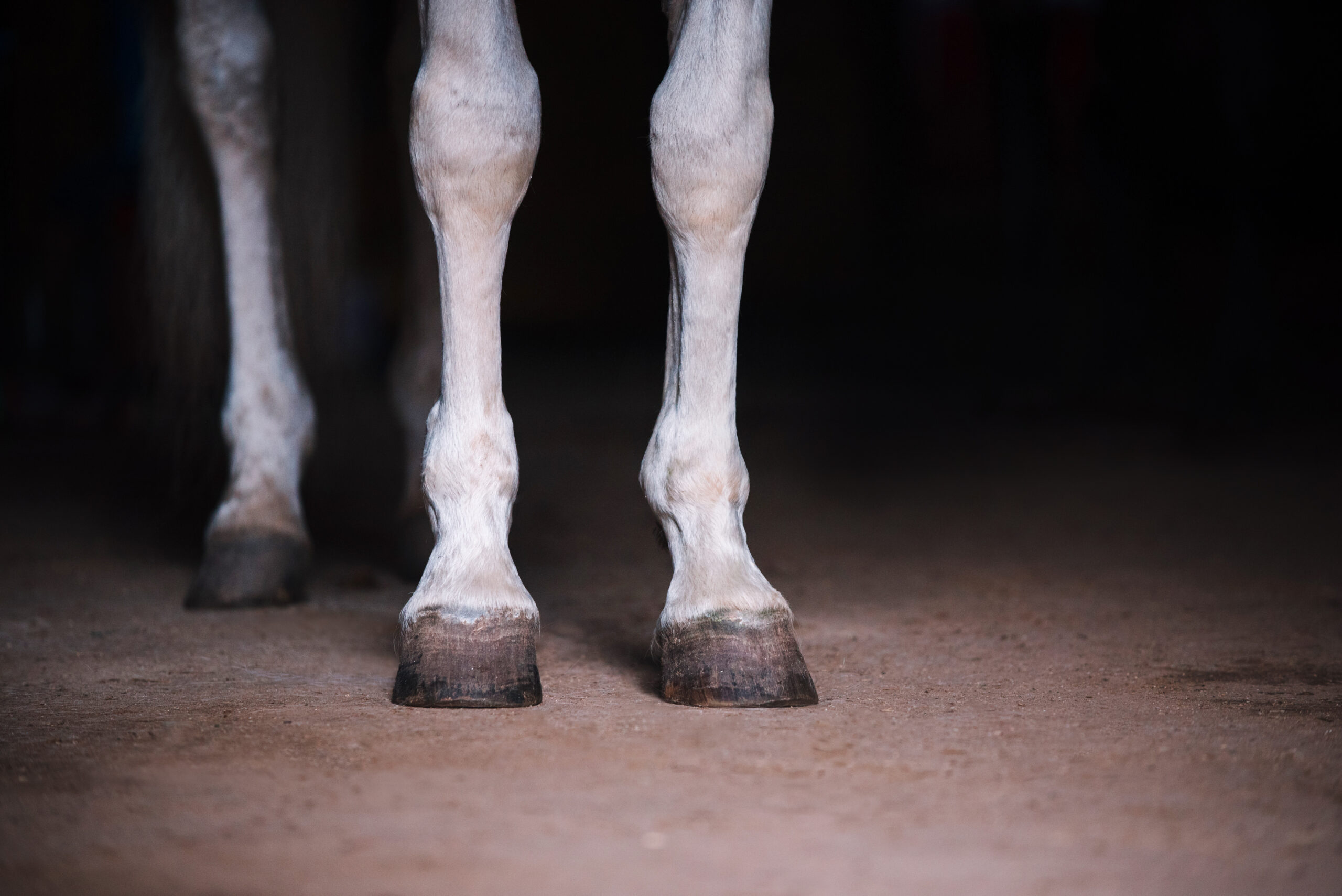
The anatomy of the horse’s carpus (knee) is comparable to that of the human wrist. This article will explain more about the anatomy and physiology of an equid’s carpus and metacarpus (lower front leg).
(Editor’s note: Information for this article comes from Atlas of Clinical Anatomy. Equine Networks holds the copyright on these illustrations. The copyright holder requires express permission to reproduce this work.)
Equine Carpus and Metacarpus Diagrams
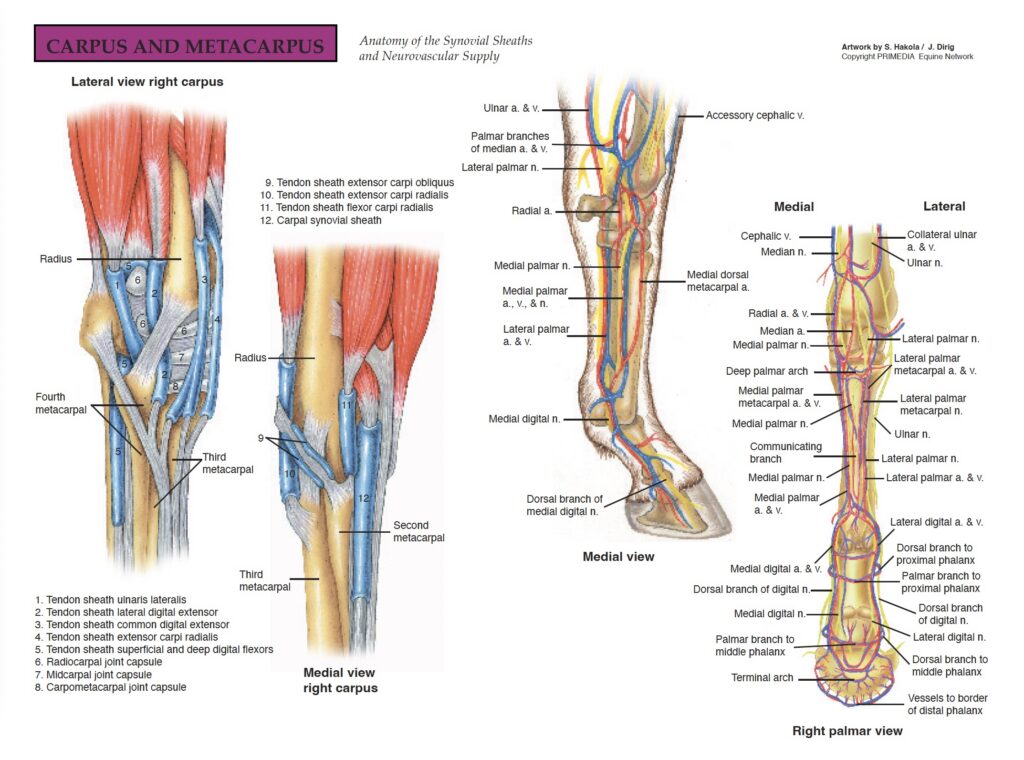
Bones in the Carpus
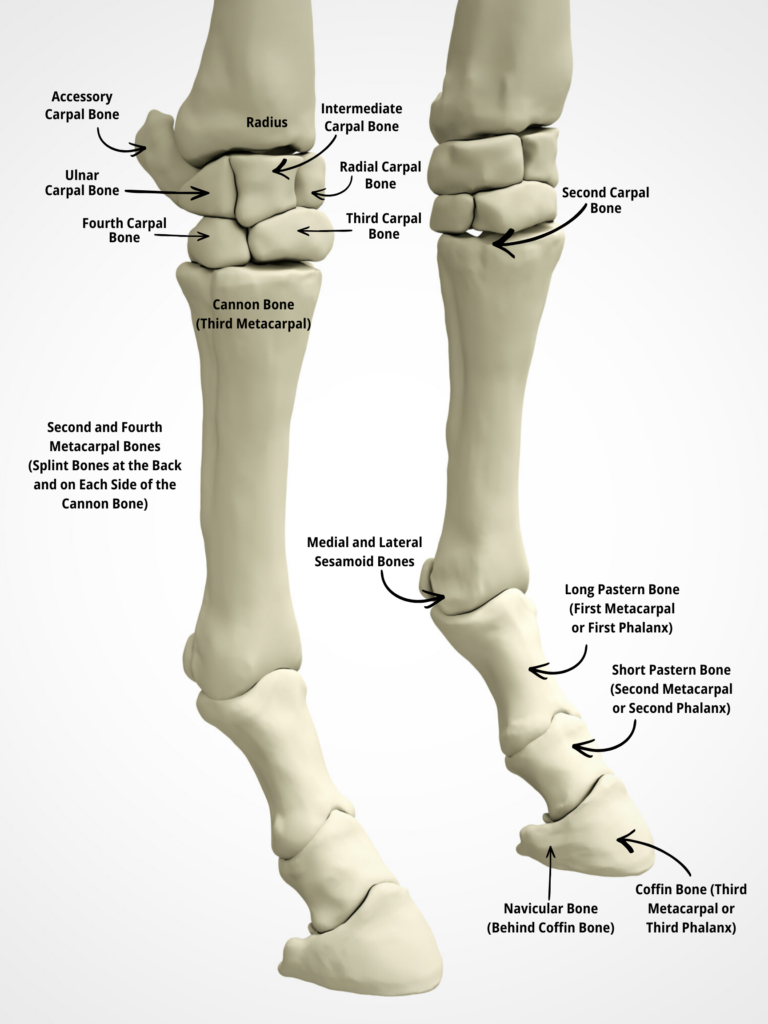
Two rows of bones and three joints comprise the equine carpus (knee). The top row of bones—from the inside to the outside of the horse’s body—are the radial, intermediate, ulnar, and accessory carpal bones.
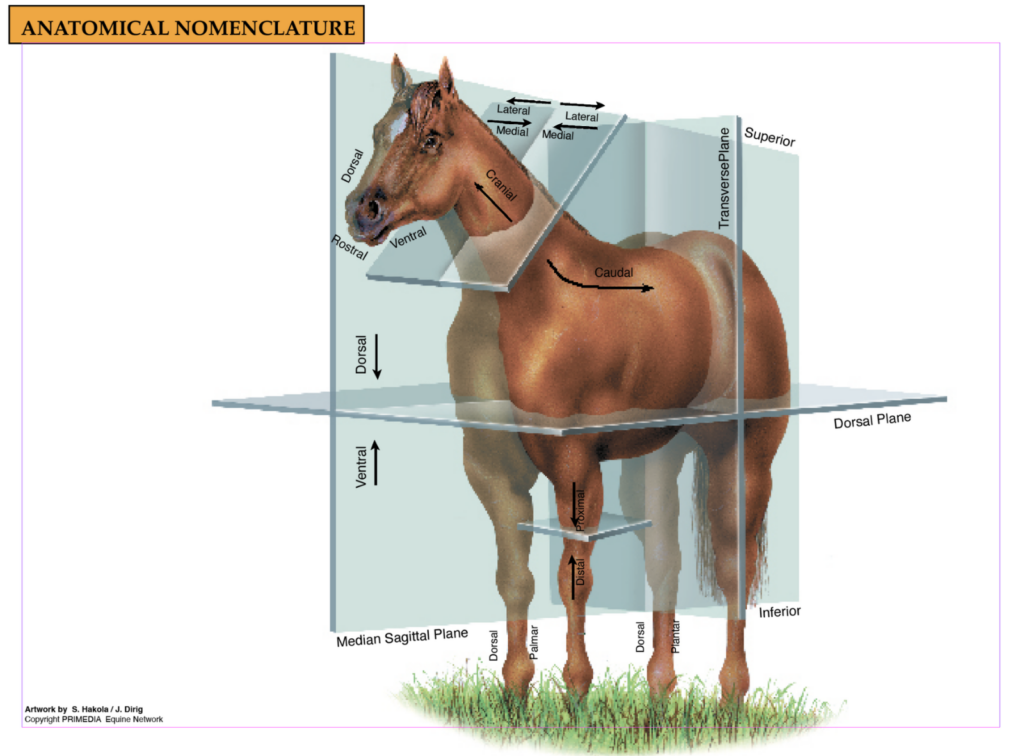
The lower (distal) metacarpal row of knee bones from inside to outside of the leg are the first, second, third, and fourth carpal bones. (Editor’s note: See illustrations at bottom for equine directional nomenclature.)
The radial carpal bone is the largest bone in the top row. It has six sides. The top of this bone articulates with the lower end of the radius. Its lower surface articulates with the second and third carpal bones, and the surface toward the outside of the body articulates with the intermediate carpal bone.
The intermediate carpal bone is wider in front than behind, so it is in the shape of a wedge. The top of that bone has articulation with the middle facet of the bottom of the radius. On the lower side, the intermediate carpal bone articulates with the third and fourth carpal bones.
The smallest bone in the top row is the ulnar carpal bone. It articulates with radius on top and with the fourth carpal bone below (toward the ground).
The accessory carpal bone bears little weight. It is a place for tendon attachment. This bone also provides stability and leverage for the flexor muscles. It is located to the back of the ulnar bone and lower part of the radius.
Unique Aspects of Carpus Region
The first carpal bone of the lower row is a small, pea-shaped bone that is only present in 50% of the horses. It can even be present in one limb and not the other.
The second carpal bone is the smallest in the lower row that is consistent in appearance. It articulates with the radial carpal on top. Toward the outer part of the horse, this bone’s articulation involves three facets with the third carpal bone.
On the lower end, the second carpal bone articulates mainly with the second metacarpal bone (inside split bone) and has a small articulation with the third metacarpal bone.
Third and Fourth Carpals
The third carpal bone forms two-thirds of the lower row and is the largest bone of this row. At the top, it articulates with the radial and intermediate carpal bones. The lower articulation is almost exclusively with the canon (third metacarpal) bone. There is a small meeting point at the inside splint bone (second metacarpal).
At its lower end, the fourth carpal bone articulates with both the intermediate and ulnar carpal bones. At the bottom, it articulates with the third and fourth metacarpals. Medially, it articulates with the third carpal bone.
The Bony Anatomy of the Metacarpus
The cannon bone (third metacarpal) is one of the strongest bones in the horse’s skeleton. At the bottom, it articulates with the first phalanx (P1 or long pastern bone) and the proximal sesamoid bones.
The small splint bones are referred to as the second and fourth metacarpal bones. They are on each side of the cannon bone.
The interosseous metacarpal ligament unites the shafts of the cannon bone with the shafts of the second and the fourth metacarpals. As the animal ages, this ligament undergoes ossification (becomes bone).
How the Carpus Moves
The horse’s knee is actually composed of three joints. The top joint is the radiocarpal joint, which opens almost 90 degrees. The middle joint opens to almost 70 degrees, and the lower joint opens very little if at all.
The three joints are lined with synovial membranes. The intercarpal and carpometacarpal synovial sac communicate between the third and fourth carpal bones. The radiocarpal synovial membrane exists as its own separate entity.
The carpus is stabilized by ligaments on the inside and outside of the joint. As the tendons pass over the carpus, they are surrounded by thin-walled, fluid-filled tubes to protect them from wear. There are only two tendons that are not enveloped: the short tendon of the ulnaris lateralis and the tendon of the carpi ulnaris muscle. One of the most significant of these tendon synovial sheaths is the carpal synovial sheath. It encloses the superficial and deep digital flexor tendons as they pass through the carpal canal.
On the outside of the joint are the tendon sheaths of the lateral digital extensor, the common digital extensor, the extensor carpi radialis, the superficial and deep digital flexors, and the long tendon of the ulnaris lateralis. On the inside of the joint are the tendon sheaths of the extensor carpi obliquus, the extensor carpi radialis, and the flexor carpi radialis.
Directional Nomenclature

The Horse’s Skeleton: Forelimb
Check out this additional information on the horse’s forelimb from our sister publication TheHorse.com.
Final Words
Being familiar with your horse’s anatomy can help you communicate better with your veterinarian and farrier. It also allows you to better understand how your horse moves and what structures might be involved if your horse is injured.
Related Content
- My Senior Horse Anatomy & Physiology Diagrams. MySeniorHorse.com
- Horse Eye Diagram. This horse eye diagram offers you an “look inside” the equine visual system and will be useful when discussing eye issues with your vet.
- Horse Skin Anatomy Diagram. This horse skin anatomy diagram can help horse owners better understand the largest organ (the skin) of the horse.
- Equine Tooth Anatomy Diagram. This equine tooth anatomy diagram can help horse owners better visualize the horse’s dental arcade and is a reference for vet discussions.
- Horse Hoof Anatomy. Horse hoof anatomy is important, especially if you are trying to understand what your veterinarian or farrier is telling you.
Sign up for My Senior Horse’s FREE newsletter to get the latest information about equids 15 years and older delivered straight to your inbox!