In this episode of the My Senior Horse Podcast, Andrew van Eps, BVSc, PhD, MACVSc, DACVIM, joined us to discuss the hoof changes that occur when a horse has laminitis. Van Eps has been involved in many research projects about laminitis. You can read more about him below.
(Editor’s note: The content of this podcast is the expert’s approach to the topic. Please consult with your practitioner if you have questions.)
Early Laminitis
The earliest stage of laminitis can occur without owners noticing any lameness. This is one area of research focus for van Eps and his team.
“What we are really interested in is identifying what that earliest change is that occurs often before they become clinically apparent,” said van Eps. “So, before horses become lame, there’s often activity going on inside the foot that is kind of key to what causes progression of the condition.”
High Insulin as a Laminitis Risk Factor
The underlying cause of laminitis makes a difference in the disease’s progression. Van Eps focused his podcast discussion around high insulin in horses because that’s “by far the most common cause or underlying reason for laminitis” in horses and other equids.
Van Eps explained that when a horse has high insulin, “the excess insulin in the blood seems to trigger the cells within the lamellae. The lamellae are specialized epithelial cells or epidermal cells—a bit like skin. And those cells are responsive to growth factor-type signaling, which is what insulin seems to trigger in them.”
He said the insulin tells those cells to modify their attachments. “It tells them or encourages them to divide,” van Eps explained. “And it also causes those cells to lose their mechanical integrity and stretch. And that’s one of the first things that occurs with high insulin-associated laminitis. Those lamellae that are normally suspending the bone fully within the hoof capsule lose a bit of that suspensory function and become a bit more elastic. And if the weakness is profound enough, then they can actually exceed the mechanical threshold and start to fail in different areas.”
He said that process seems to be what causes the initial pain in acute laminitis.
Early Foot Insult
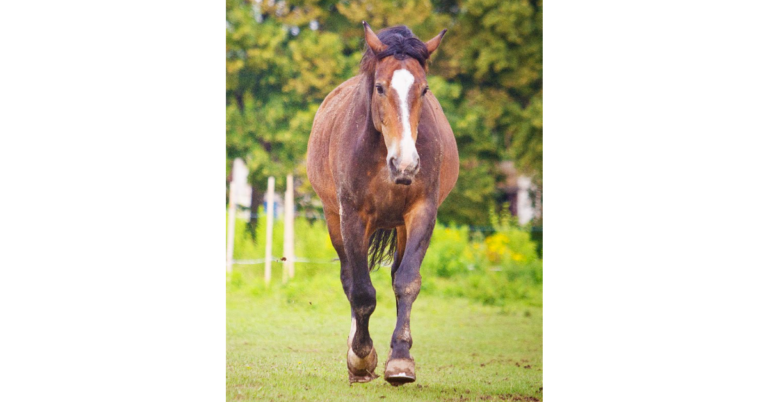
Mild pain can sometimes go unnoticed. “And I think horses in paddocks on soft ground can have some mild foot soreness that isn’t very apparent,” he said. “When you take them onto harder ground and you look at them very carefully, it’s something that you can actually appreciate much more.”
When horses present with their first episode of laminitis, their feet are usually X-rayed. “More often than not, there’s evidence that they’ve had bouts [of laminitis] before that have gone unnoticed. And I’d say that is probably more than 60% or 70% of cases that we see.
“So, the bottom line is that you probably can’t really rely on horses becoming overtly lame to catch this early,” van Eps stressed. “We need to screen animals for risk.”
Screen for Metabolic Disease
Many senior horses are prone to metabolic disease. Equine metabolic syndrome (EMS) is a group of risk factors that together have a strong association with the most common form of laminitis, which is caused by sustained high insulin levels (sometimes termed hyperinsulinemia-associated laminitis or endocrine laminitis).
“I think we need to recognize that screening for metabolic disease is an essential part of just regular health monitoring in horses and ponies, particularly as they start to get older, but also in their younger years,” said van Eps.
“Just as we might do routine health exams and we might do vaccinations once a year, it’s definitely going to help a lot in preventing this problem and early identification,” he continued. He advised owners to add metabolic testing to routine annual health checkups.
“In older animals that are above the age of 10, it’s also worth screening them for PPID—Cushing’s disease—using their ACTH,” van Eps said. “If we do that, then we can identify animals that are at higher risk of developing laminitis.
“Sometimes it’s worth radiographing feet of horses and ponies that might have underlying endocrine disease—but aren’t necessarily lame—to get a baseline on them,” he said. “Then, if we identify higher risk, we can make some management changes, and we can increase the frequency of monitoring to make sure that they don’t get into trouble.”
The Next Step
Horses can get better after an initial bout of laminitis, said van Eps, depending on the underlying damage to the foot structures.
“We tend to see some progressive displacement of the bone away from the inner hoof wall,” he explained. “Classically, the bone rotates away from the inner hoof wall in a kind of a palmar direction. And that’s because of the mechanics of the horse’s foot. The pull of the deep flexor tendon and the position of the digital cushion mean that that bone has a tendency to rotate away because the strain on the dorsal laminae is greater than in other places. That’s a classic chronic laminitis finding.”
Bony Changes in the Foot
Horses with laminitis might also experience coffin bone remodeling in response to the early inflammation within the lamellae.
He said PET scans allow researchers to see some of these changes earlier in the disease progression.
“You get resorption of bone, primarily, but also some remodeling and some laying down of new bone,” described van Eps. “So, the shape and appearance of the bone changes on X-ray with time.”
He said even with very subtle laminitis, changes in the contours of the bone are among the earliest visible signs on X-ray.
“We do feel like that these changes in the bone are important to the horse’s soundness,” he noted. “The changes are an important contributor to lameness, particularly in athletic horses.”
He said those bone changes in mild, subclinical laminitis can limit the horse’s performance in the long term.
Final Words
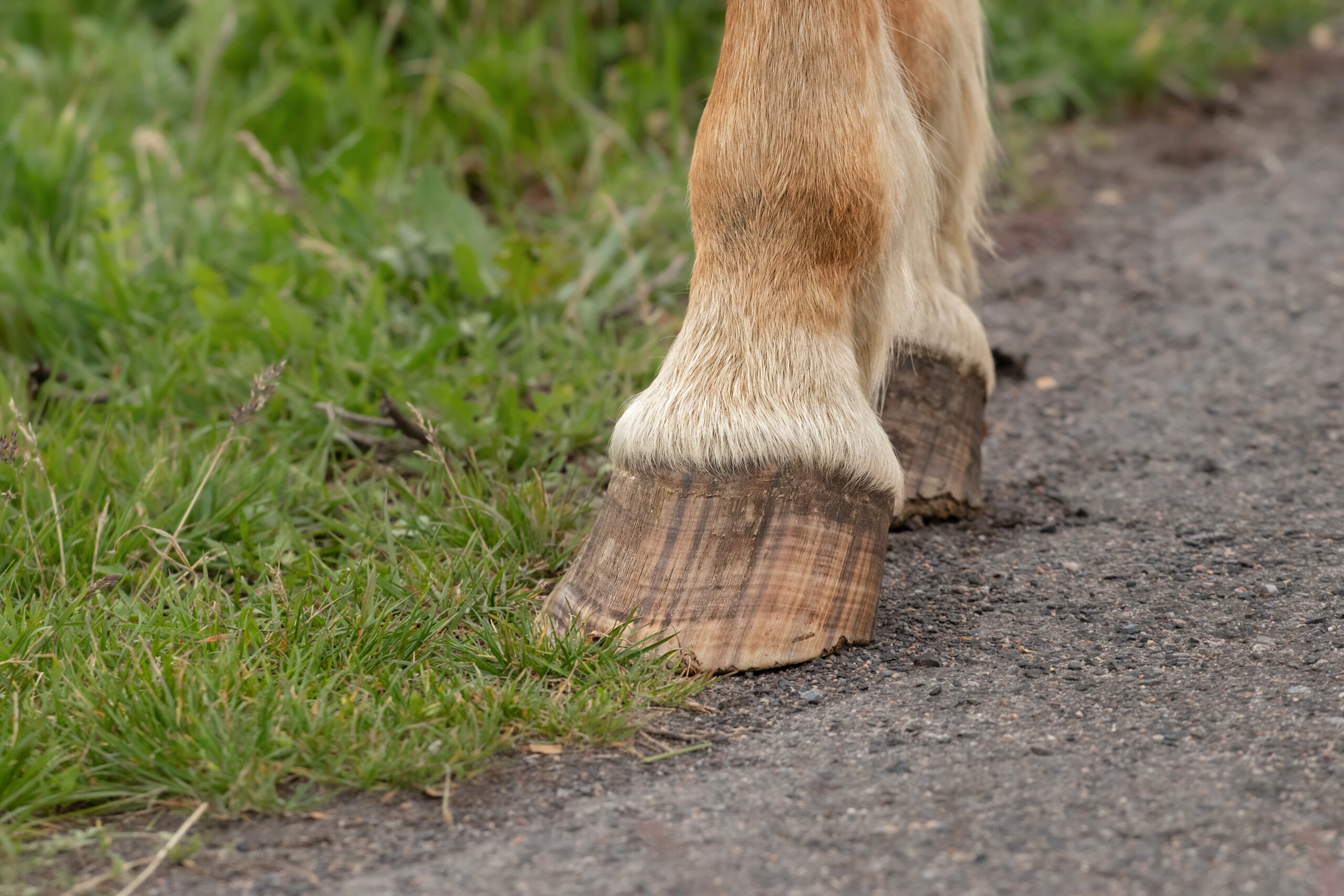
Van Eps said owners should take note of the shape of the feet and the rings of the feet.
“Growth rings are pretty normal in horse feet,” he explained. “The key is normal growth rings should be kind of an equal distance apart as they go down the feet at the toe compared to the heel.
“What we tend to see with laminitis is growth rings that diverge towards the heel,” he described. “So, the rings are farther apart towards the quarters and the heel, and they’re closer together towards the toe. I think if owners are seeing those sorts of changes, they should probably talk to the veterinarian about maybe getting some screening X-rays and do some metabolic testing.
“I think that’s one of the more reliable signs that’s fairly specific to laminitis,” he concluded.
About Dr. Andrew van Eps
Dr. Andrew van Eps is a professor, Section of Large Animal Internal Medicine, and the Dean W. Richardson Endowed Chair of Equine Disease Research at the University of Pennsylvania School of Veterinary Medicine’s New Bolton Center. Dr. van Eps is an internal medicine expert whose research goal is to identify the key mechanisms that lead to different forms of laminitis in order to develop effective strategies for prevention and treatment.
Related Content
- Equine Laminitis: Can You Spot the Signs? Sarah Nelson. MySeniorHorse.com
- The Role of Insulin in Equine Laminitis. Dr. Melody de Laat. MySeniorHorse.com
- Understanding the Three Stages of Laminitis in Horses. Christa Lesté-Lasserre. MySeniorHorse.com
- What Senior Horse Owners Need to Know About Equine Metabolic Syndrome (EMS). Kimberly S. Brown. MySeniorHorse.com
- Feeding Horses With Insulin Dysregulation: Small, Frequent Meals Matter video. Alexandra Beckstett.
- Research on Visible Physical Features and Insulin Dysregulation in Ponies. Kimberly S. Brown. MySeniorHorse.com
Sign up for My Senior Horse’s FREE newsletter to get the latest information about equids 15 years and older delivered straight to your inbox!