Being able to spot the signs of laminitis early maximises your horse’s chance of recovery. It pays to be vigilant, especially because subtle signs like slight reluctance to turn or shortening of the stride are easy to miss.
Can You Spot the Signs?
Potential signs of equine laminitis include:
- Weight shifting
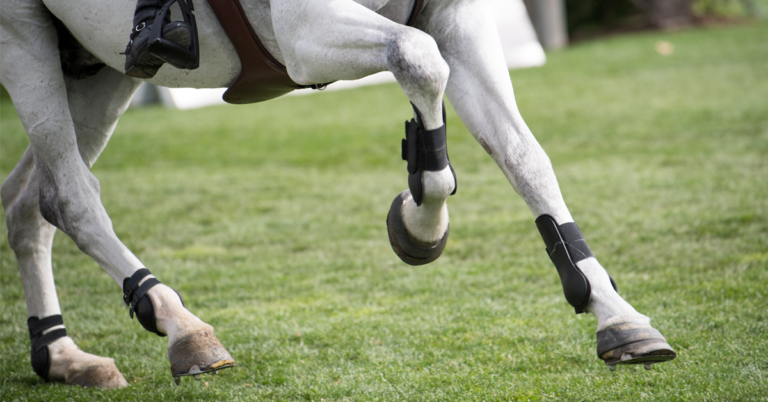
- Changes in gait including a shorter stride or ‘pottery’ movement
- Reluctance to turn or cross the hindlimbs
- Reluctance to walk on hard, stony or uneven ground
- Lameness
- Abnormal stance
- A strong/pounding digital pulse
- Hot feet
- Sweating and increased pulse, temperature, and respiration rates (which may be mistaken for signs of colic)
- Refusal to move or stand in severe cases
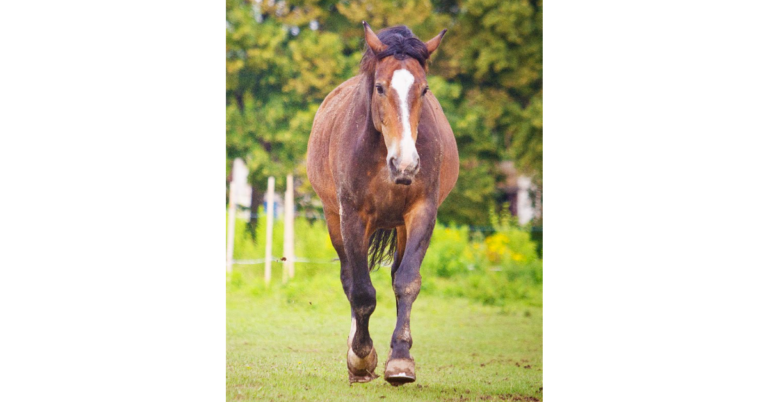
Abnormal Stance in Horses With Laminitis
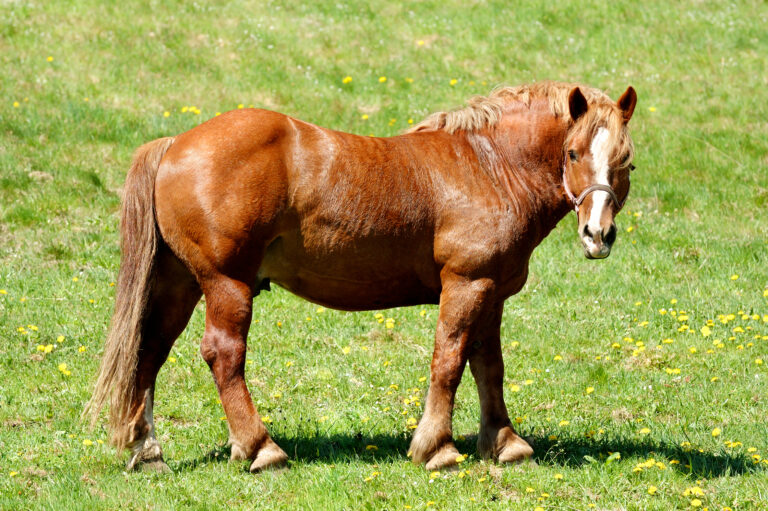
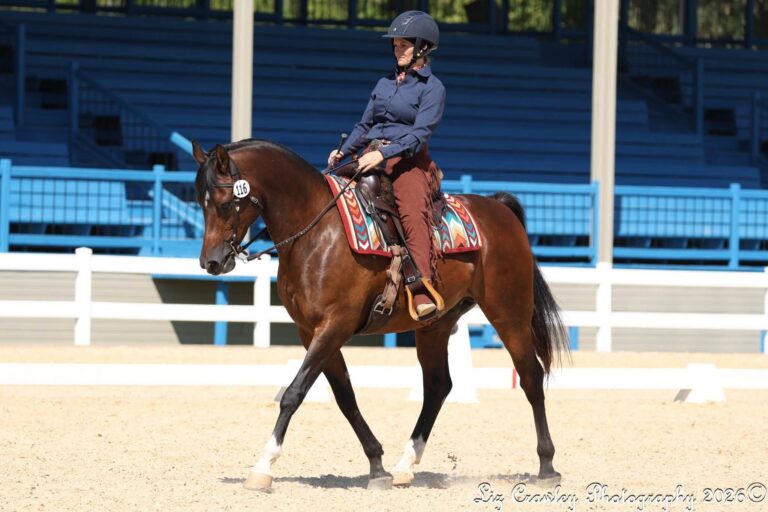
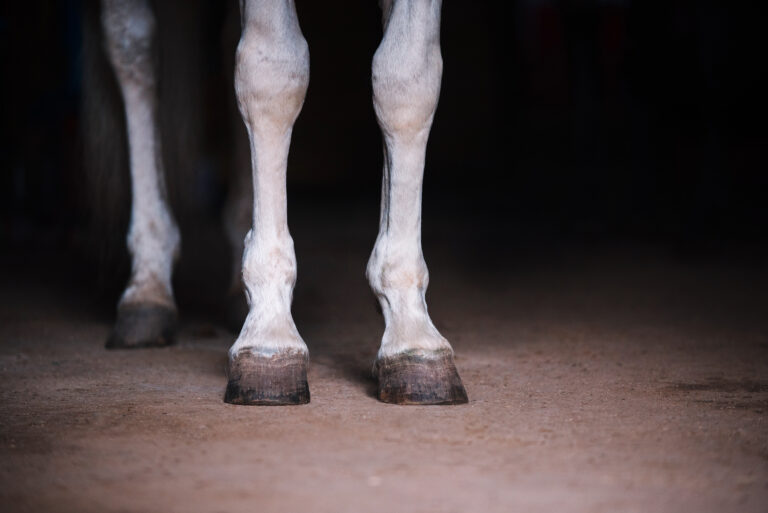
We’ve all seen pictures of the classic laminitic stance, but it’s important to remember that how the horse or pony stands depends on the severity of laminitis and which feet are affected. In fact, if all four feet are affected, the horse or pony might stand normally.
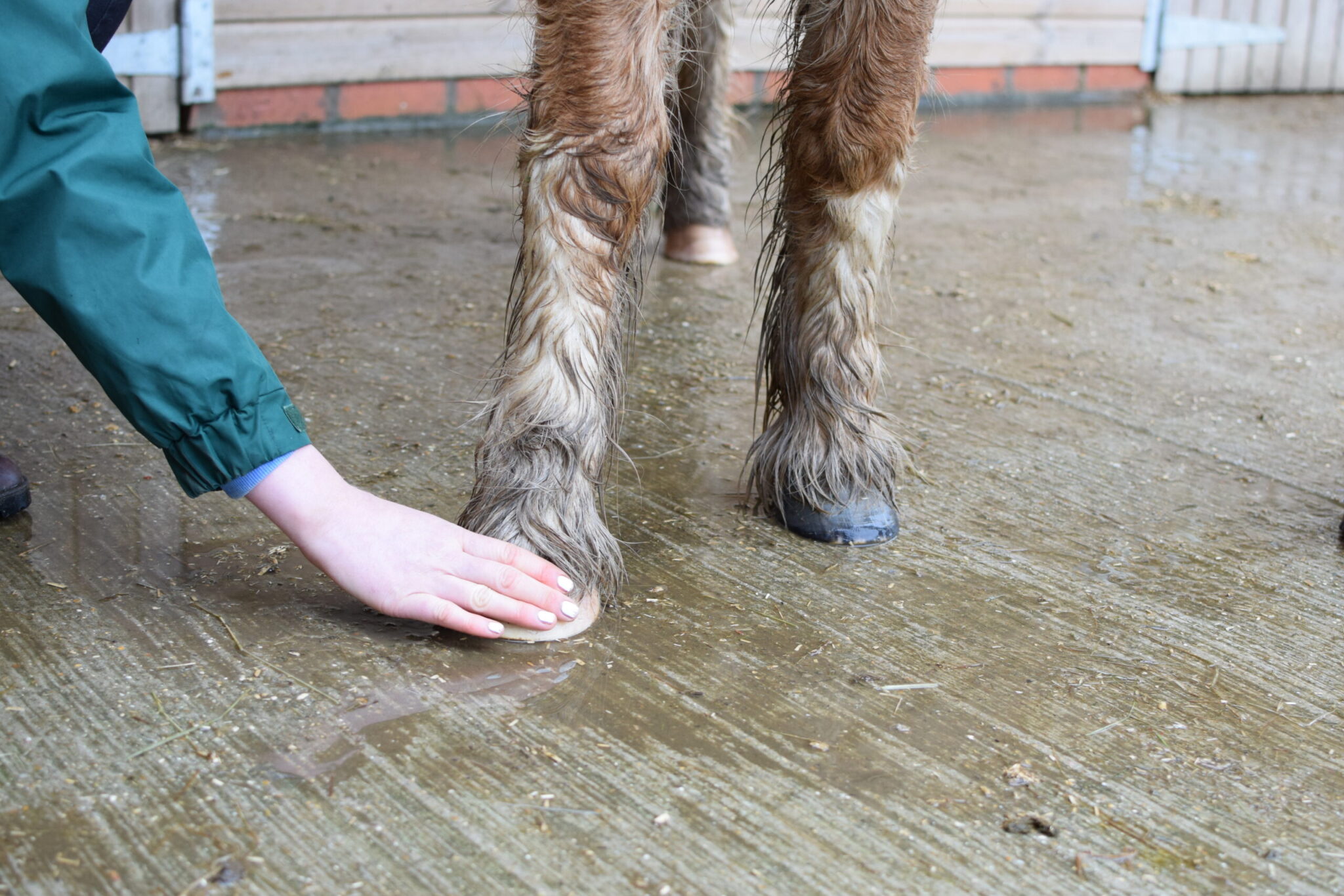
Keeping Your Finger on the Pulse
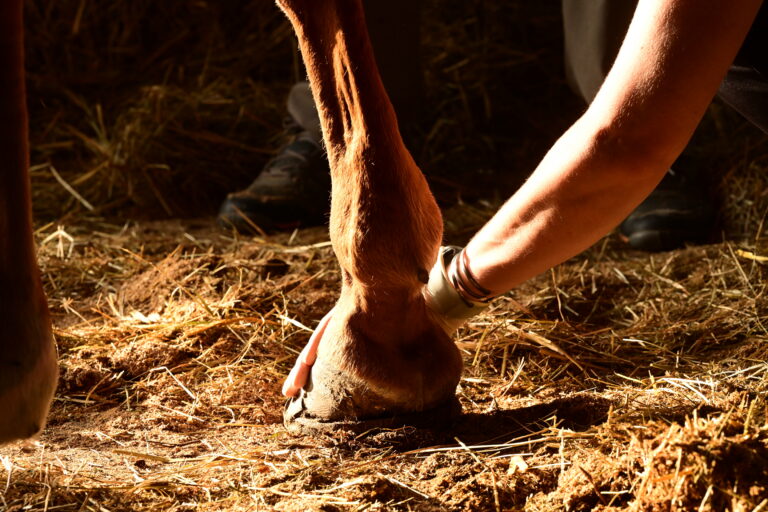
Be sure to monitor your horse’s digital pulse, especially if you suspect laminitis. In a healthy foot, the digital pulse might be faint or impossible to feel. But, it still pays to practice while your horse is sound and healthy. The digital arteries that run down the side of the leg and into the hoof pulse with every heartbeat. The expression ‘pounding’ describes the strength of the pulse as opposed to the speed—it will feel like it’s throbbing. The digital pulse can be felt on the inside and outside of the leg from just above the fetlock (toward the back of the leg), over the fetlock, and in the mid-upper pastern area. Apply gentle pressure. If you press too firmly you can block the pulse.
Hot Feet Caution
Hot feet are not always the most reliable indicator of laminitis. Hoof temperature fluctuates. If your horse has been standing outside in the height of summer, hot feet are not necessarily a cause for concern. However, hot feet for prolonged periods, on a cold day, and/or heat in one or two feet only should raise suspicion.
When Laminitis Strikes
If you suspect your horse or pony has laminitis, stable them on deep bedding that goes all the way to the door and call the veterinarian immediately. Soaking the affected foot or feet immediately in ice water might help slow the progression of laminitis.
Box rest is often essential for preventing further damage to the laminae. The veterinarian will usually prescribe pain relief.
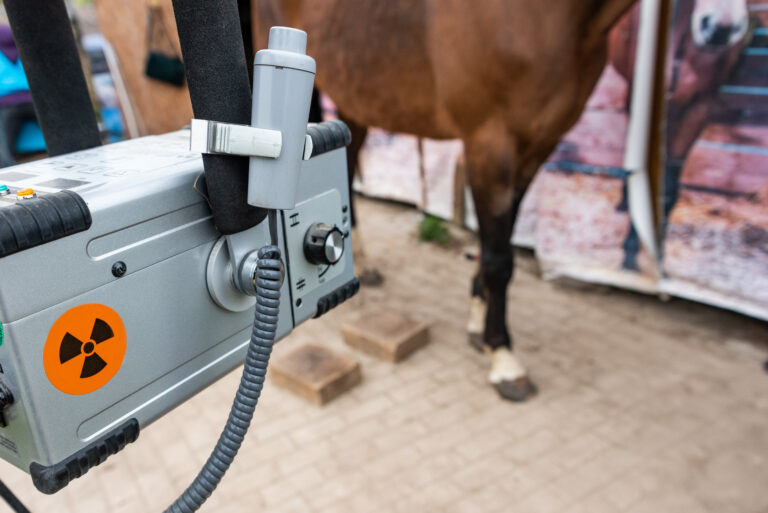
Initial diagnosis is usually made based on clinical signs, but in some cases X-rays, blood tests, or other clinical tests might be needed to provide more information about the severity or potential cause of laminitis. This might include test(s) to assess and later monitor insulin status.
Further Reading
The Role of Insulin in Equine Laminitis. Melody de Laat, BVSc(Hons), PhD, MANZCVS(Pharm), SFHEA GradCertAcadPrac. MySeniorHorse.com
Sign up for My Senior Horse’s FREE newsletter to get the latest information about equids 15 years and older delivered straight to your inbox!