As horses grow older, they slow down and might eventually have to retire. But the timing on those decisions is different for each horse. So, how do you know when it is time for your senior horse to slow down or retire completely?
Alisa Herbst, PhD, of Rutgers University, shares her insights in this podcast episode. Herbst has researched such topics as muscle atrophy, aging and immune function, and the health and management of senior horses. (Also check out our previous podcast with Herbst on a large senior horse study in the U.S.)
Defining Retirement
Many owners have had horses for years, or even decades, before they have to face important decisions that come with an aging equine.
Herbst first discussed different definitions of equine retirement. “We know that senior horses can have a variety of primary uses,” she said. Those can include breeding, competition, or pleasure riding.
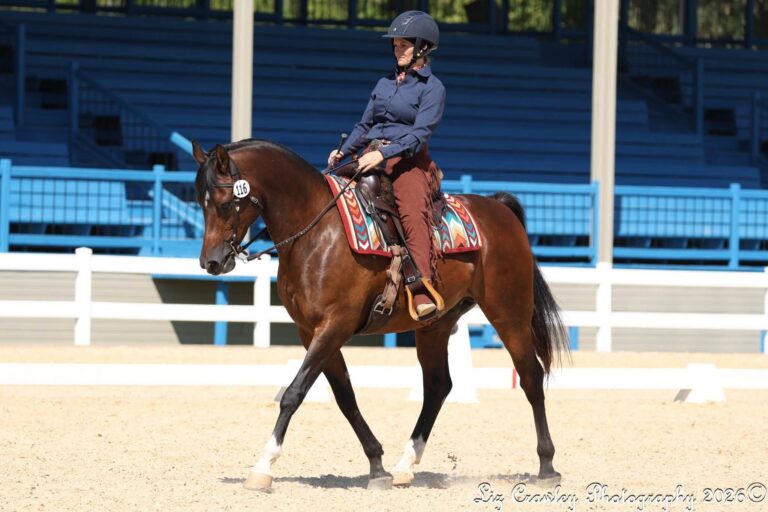
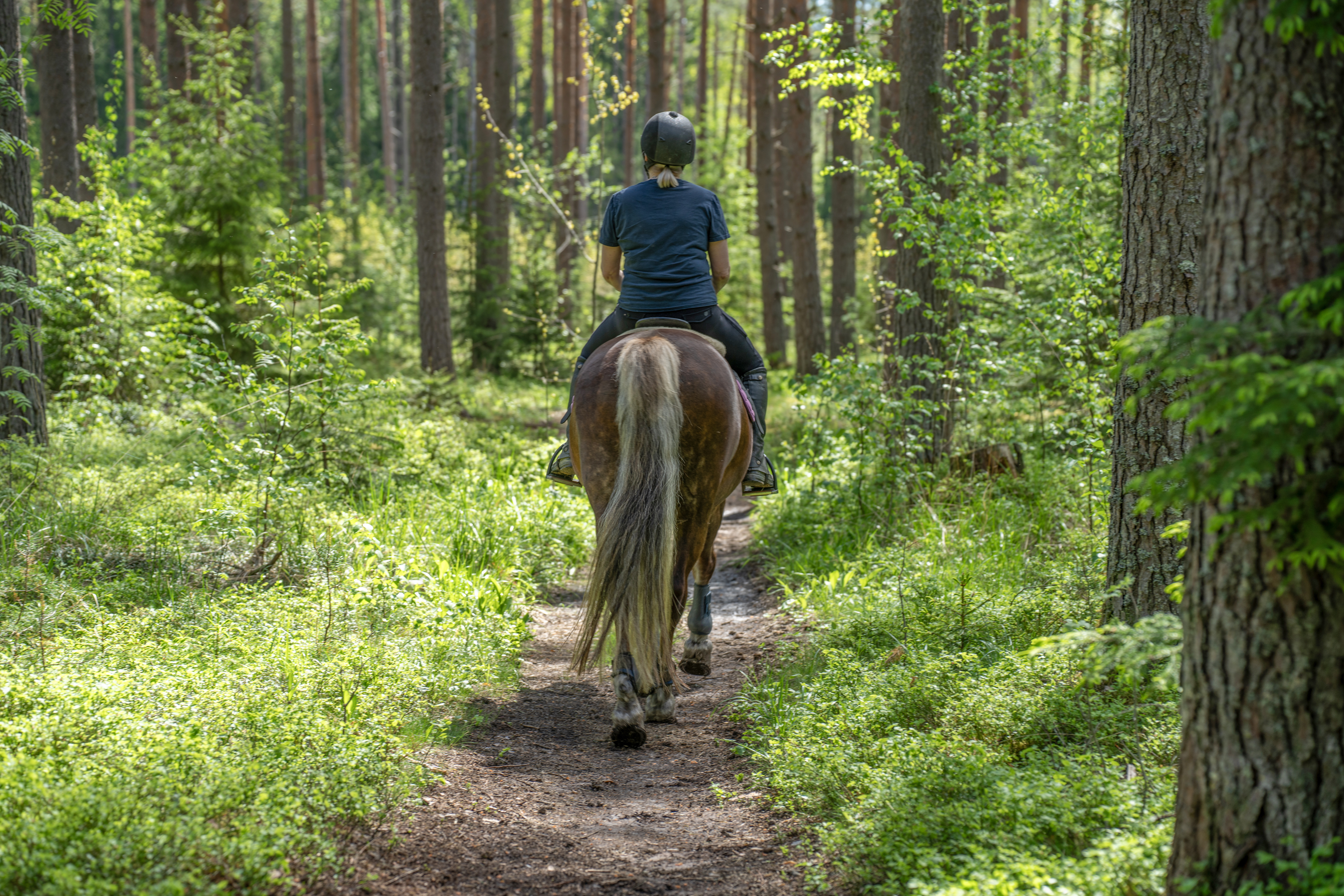
“A horse can be retired from competition and used for pleasure riding. A pleasure horse that is retired could still perform structured exercise such as lunging, long-lining, and hand walking.
“When I’m talking about retirement today, I mean a complete, full retirement where the horse is not engaging in any structured exercise,” she added.
Herbst said the first signs to slow down or retire are similar to those discussed by Dr. Sue Dyson in her podcast about senior horse exercise.
First Signs
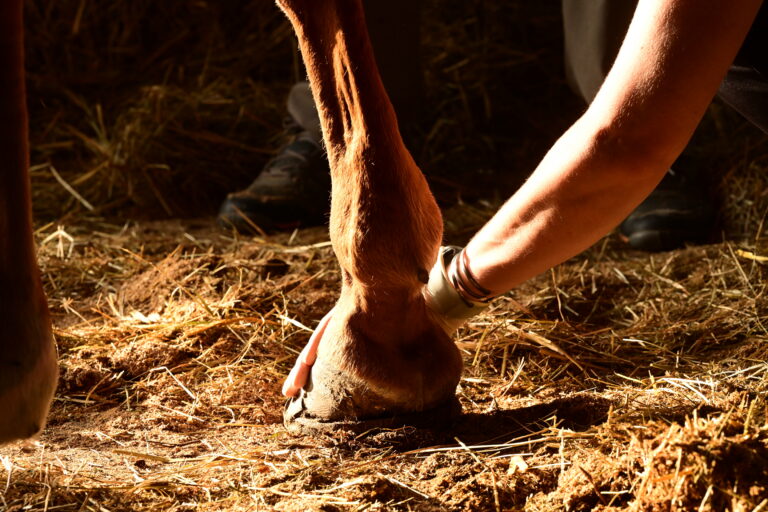
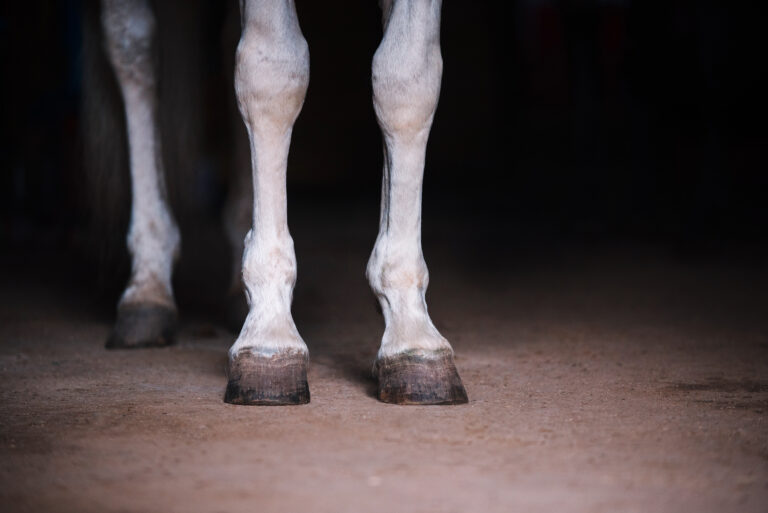
Herbst said it is important to look for signs of discomfort in the senior horse. “I think that a lot of signs of discomfort can be quite obvious,” said Herbst. “We could see a clear lameness. We could see biting behavior when putting on a saddle. The horse may be reluctant to move forward under saddle.
“But, some of these behaviors can also be very subtle, and I think that’s where it gets tricky,” she added. “It could be just tail swishing, an unusual stance, or some avoidance behavior toward people or exercising.”
Also look for signs of fatigue, longer recovery times, or overall changes in the horse’s ability to perform certain exercises.
Herbst said that noticing signs is just the first step in determining if a horse should have its exercise schedule slowed down or discontinued.
“While changes in exercise capacity can be part of a normal aging process, discomfort or reduced exercise capacity can also be a sign of a disease process,” she added. “For that reason, I think it’s important to consult with a veterinarian if you see any of these signs.”
Mental or Physical Decline
Keep a diary of your horse’s daily activities and anything that seems to be different. “It may be hard to see nuanced changes over time in comfort or exercise capacity,” said Herbst. She recommended using videos to help give comparisons over time. “You can compare side-by-side how the horse looked a month ago compared to now,” she added. “If you are unsure if your horse is a little lame, you can show that video diary to your veterinarian to see if there are changes over time.”
Physical capacity is a lot more strightforward to assess than mental capacity, Herbst said. “How do we determine whether the horse is mentally still able to handle the workload?
“I think the best we can do right now is just use the signs of body language and behavior to determine if a horse is in discomfort,” Herbst continued. “That could be from a physical problem or it could be from mental load. I don’t think there’s a lot of research on this topic, unfortunately.”
(Editor’s note: We will have more about mental decline and dementia with Dr. Merry Smith in podcast episode 58.)
Senior Horse Health and Management Survey
A survey Herbst conducted while working on her PhD at the University of Kentucky showed that about 40% of horses in the United States older than 15 years are in full retirement. The main reason for retirement was health problems.
The reasons for full, complete retirement can be centered around athletic performance, a lack of time to exercise the horse, an owner not being willing or able to ride, changing the horse’s career to breeding-only, or the horse deserving retirement because it is old.
One of the most common health problems that leads to retirement is osteoarthritis. But, should a horse be fully retired if it has chronic arthritis? Could it happily live with a lower level of structured exercise and use?
“This has to be decided on a case-by-case basis,” said Herbst. “The exact exercise program should be established with a veterinarian. But there is evidence that controlled exercise can actually be quite beneficial for arthritis. It can help improve and maintain joint stability and balance.”
There is a lot of research on this topic in humans, but not as much in horses. Herbst said human research showed that routine exercise can help prevent, delay, or even improve multiple medical conditions in old age.
Final Words
Owners should look for signs of discomfort and reduced exercise capacity, said Herbst. That could be signs of fatigue, slower recovery from exercise, or not being able to perform certain exercises as well as before.
“Document any changes, possibly using a video diary,” she recommended. “Speak with a veterinarian about identifying sources of changes, and adjust the exercise program appropriately, considering any medical conditions.
“Keep in mind that a carefully drafted exercise protocol can sometimes be superior to full retirement,” she advised.
About Dr. Alisa Herbst
Alisa C. Herbst is a postdoctoral associate at Rutgers University. She obtained her PhD in Veterinary Science from the University of Kentucky, specializing in Immunology. Her dissertation focused on the relationship between muscle mass and immune function in senior horses.
Herbst has conducted research at various institutions, including Rutgers University, University of Kentucky, University of Copenhagen, Massey University, and Purdue University. At Rutgers University, she has been involved in multiple research projects, such as studying the needs of the U.S. equine community, investigating the effects of calcium propionate on insulin concentrations, and assessing the reliability of a muscle atrophy scoring system. At the University of Kentucky, she compared monocyte functions between young adult and old horses, determined the relationship between muscle mass and inflammatory markers in horses, and conducted a U.S.-wide online survey on low muscle mass in senior horses. She has also conducted research on young horse management in the racing industry.
Herbst possesses a range of skills and licenses. She has also received several awards and academic distinctions, including grants to support her research on muscle mass in senior horses. In addition, she has presented her research at various conferences, including the Calgary International Equine Symposium, the Hambletonian Continuing Education Seminar, and the Equine Science Society Symposium. She has also authored or co-authored several manuscripts and works in progress, focusing on topics such as muscle atrophy in horses, aging and immune function in horses, and the health and management of senior horses.
Related Content
- My Senior Horse Podcast: Senior Horse Study. Kimberly S. Brown with Dr. Alisa Herbst
- My Senior Horse Podcast: Senior Exercise. Kimberly S. Brown with Dr. Sue Dyson
- Equine Muscle Mass: Detecting and Monitoring Changes. Alisa Herbst, PhD. MySeniorHorse.com
- Check out multiple articles in the categories under Normal Aging on MySeniorHorse.com
- Owner-reported health and disease in U.S. senior horses. Alisa C. Herbst, Michelle C. Coleman, Erica L. Macon, Patricia A. Harris, Amanda A. Adams. Equine Veterinary Journal. 2024
- Retirement risk factors, exercise management and muscle mass in US senior horses. Alisa C. Herbst, Michelle C. Coleman, Erica L. Macon, Aviv Brokman, Arnold J. Stromberg, Pat A. Harris, Amanda A. Adams. Equine Veterinary Journal. 2023
- Musculoskeletal Disease in Aged Horses and Its Management. Paul René van Weeren DVM, PhD, Willem Back DVM, PhD. Veterinary Clinics of North America: Equine Practice. 2016
- Equine Discomfort Ethogram. Catherine Torcivia and Sue McDonnell. Animals. 2021
Sign up for My Senior Horse’s FREE newsletter to get the latest information about equids 15 years and older delivered straight to your inbox!