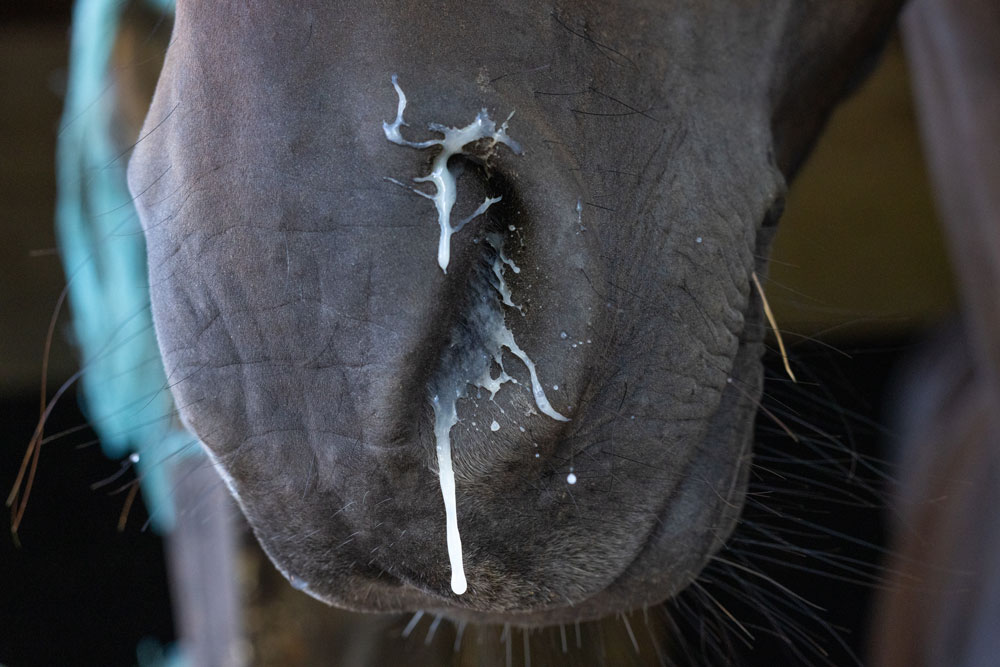
Horses can experience two types of sinusitis: primary and secondary. For this article, we consulted Bo Rainbow, DVM, Dipl. AVDC (Eq), of Kentucky Equine Veterinary Dental Specialists. The team of experts at KEVDS also includes original partner Jack Easley, MS, DVM, AVBP, Diplomate AVDC (Eq), who has advised My Senior Horse on many dental issues through podcasts and articles, and newest partner Miller Thornbury, DVM.
Primary Sinus Issues
Infections of various causes can invade the equine sinus cavities. Bacterial and viral infections in the sinus create an environment that overwhelms the horse’s immune system and its normal physiological functions, said Rainbow. The most common bacterial cause is Streptococcus equi zooepidemicus, but Streptococcus equi equi, more commonly known as strangles, is another cause.
Primary sinusitis is more common in younger horses that have immature or naïve immune systems. Younger horses also tend to travel more often and therefore have greater exposure potential, he said.
Older horses occasionally fall ill to primary sinusitis, said Rainbow. This might be due to increased stress or environmental change/exposure. One important consideration is that comorbities such as pituitary pars intermedia dysfunction (PPID or Cushing’s disease) also affects the immune system. PPID can delay wound healing and the horse’s ability to respond to infection.
Secondary Sinus Issues
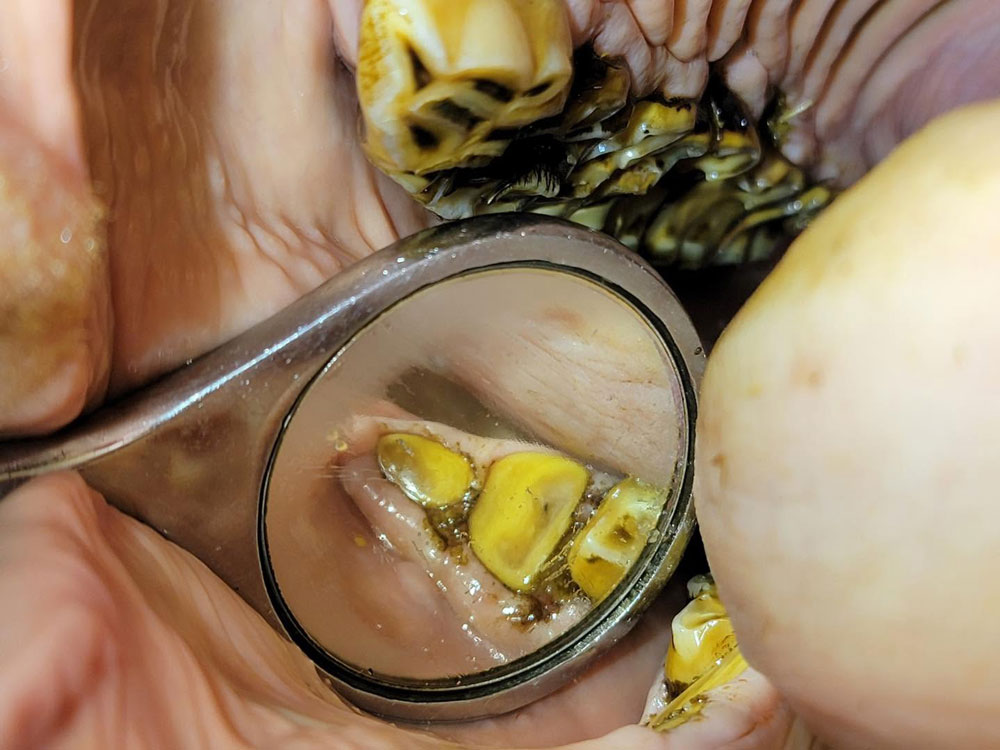
Masses, cysts, and dental disease are the leading causes of secondary sinusitis in horses. Older horses are more prone to this condition. A senior horse might have a mass that has been latent for years or dental disease that started small and went undiagnosed and untreated.
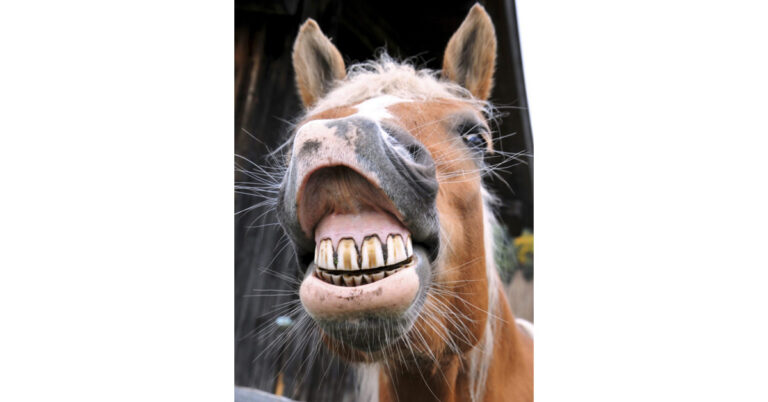
A horse’s teeth start wearing out around age 18. Horses have hypsodont teeth, which means the horse erupts a fully developed tooth throughout its lifetime. Eventually, the additional tooth under the gum or reserve crown pushes into the oral cavity as the chewing surfaces wear down, said Rainbow.
As the teeth get closer to being used up, they have less internal enamel to protect the tooth from chewing grasses and forage. “In addition, they might have other compounding problems—such as infundibular caries or periodontal disease,” said Rainbow. “That may impact the delicate endodontic system and thin layer of bone that separates equine teeth from the sinus cavities above.”
All of these issues can cause tooth fracture, decay, or split, said Rainbow.
An infundibulum in an equine tooth is the funnel-shaped center or cup-like depression filled with cementum. It is located on the grinding surface of a horse’s cheek teeth and incisors.
“In some teeth, the infundibula are not full or are only partially of full of cementum,” explained Rainbow. “In severe cases, large amounts of forage can accumulate in the core of the teeth, setting up an excellent habitat for bacteria. That can cause tooth decay and lead to fracture and sinusits.”
Other Secondary Sinus Diseases
Other types of secondary sinus disease include ethmoid hematomas or tumors. An ethmoid hematoma is a non-cancerous, blood-filled mass that grows in the nasal passages or sinuses. They can be stagnant for years and cause minimal problems. However, they can grow rapidly and inhibit the normal drainage and clearance of the sinus cavities, said Rainbow.
Clinical Signs of Sinus Disease in Horses
Unilateral (one-sided) nasal discharge that has a foul odor is a primary clinical sign of sinus infection, said Rainbow.
The horse might experience decreased airflow out of one nostril. “Wet your hands and put them where the horse would exhale through his nose on them to check airflow,” Rainbow advised.
Check the symmetry of your horse’s face. Sometimes, masses will distort the horse’s face, although not all go through the bone and cause distortion, said Rainbow.
Horses might also display noise coming from the airway, exercise intolerance, or increased respiratory rate.
Rainbow stressed that owners should “get diagnostics before antibiotics.” The horse should be examined by a veterinarian to determine the cause of their clinical signs.
Final Words
Often, the owner is the first person to notice issues with the horse’s mouth or sinuses. Nasal discharge that is foul-smelling or has blood indicates that veterinary intervention is needed.
There are many causes of sinus issues in horses, from trauma to infection to masses. Sometimes, dental issues can affect sinus health. It is important to get a thorough veterinary examination before attempting to treat any sinus-related issue.
About Dr. Rainbow
Bo Rainbow, DVM, Dipl. AVDC (Eq), is from Ocala, Florida, where he grew up on a commercial Thoroughbred farm. Following graduation from Davidson College, he was accepted into the prestigious Darley Flying Start Program to study the Thoroughbred industry around the world for two years. During this time, he knew that veterinary medicine would be his calling, and he was accepted in to the University of Florida College of Veterinary Medicine. After graduation in 2012, he worked for the Hagyard Equine Medicine Institute, then did stints in Western Australia and Texas before returning to the Bluegrass. He and his wife, Dr. Jackie Snyder, have a farm in Versailles and two feral little boys Liam and Logan.
Related Content
- Understanding EOTRH: A Common Dental Disease in Senior Horses. Kimberly S. Brown with Dr. Jack Easley. MySeniorHorse.com
- My Senior Horse Podcast: Tooth Removal. Dr. Jack Easley with Kimberly S. Brown. MySeniorHorse.com
- Understanding EOTRH: A Common Dental Disease in Senior Horses. Kimberly S. Brown with Dr. Jack Easley. MySeniorHorse.com
- My Senior Horse Podcast: Feeding Senior Horses With Dental Issues. Kimberly S. Brown with Drs. Pat Harris and Nicky Jarvis. MySeniorHorse.com
- My Senior Horse content on Teeth
Sign up for My Senior Horse’s FREE newsletter to get the latest information about equids 15 years and older delivered straight to your inbox!