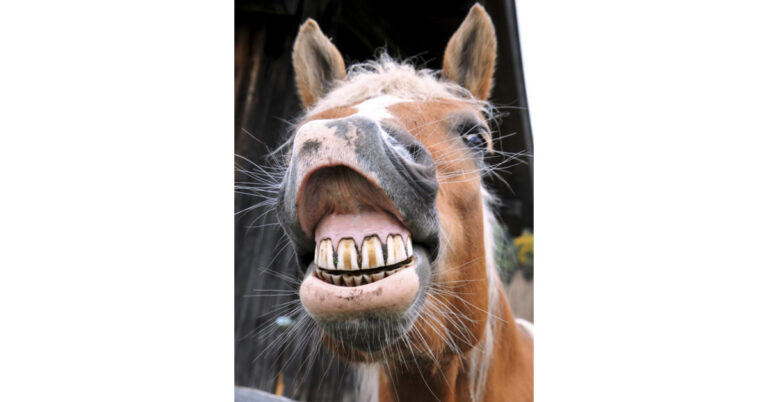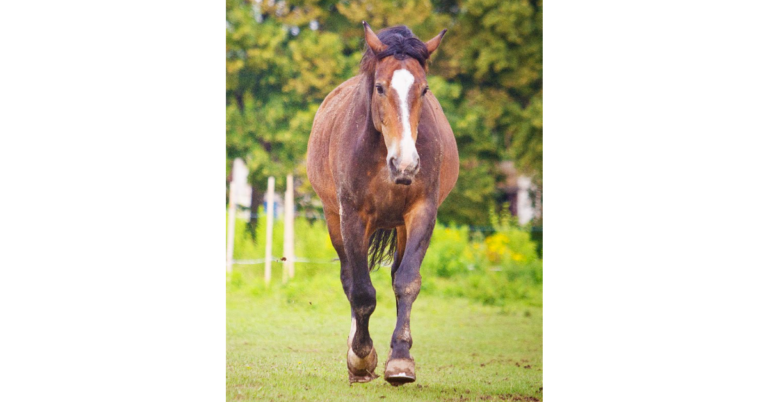

Nearly all senior horses will have dental issues as they age. This is because horses have hypsodont teeth that gradually wear out with age.
In Episode 42 of the My Senior Horse podcast, we talked with veterinary dentist Dr. Jack Easley about common dental issues in senior horses. In this podcast, we follow that with a discussion about feeding horses with dental issues. Our guest experts for this podcast are veterinarians Dr. Pat Harris and Dr. Nicky Jarvis. You can learn more about them in their About sections at the bottom of this article.
(Editor’s note: The content of this podcast is the expert’s approach to the topic. Please consult with your practitioner if you have questions.)
Observing Your Horse
Harris first pointed out that changes in a horse’s ability to chew can happen even when they are young.
“I always recommend that everybody should periodically just spend time watching their horse chewing and importantly swallowing,” recommended Harris. This is true whether the horse is on grass or fed preserved forage.
She said this can help you detect signs of potential problems before they become bigger issues.
“I think that you want to also know what’s normal for their feces,” Harris said. You should know what’s normal throughout the year and what type of fiber length is normally in each horse’s manure.
Recognizing Dental Issues
Weight loss is another potential indicator that your horse might have dental issues. Harris said you also might see “quids” or “dollies.” This is when the horse cannot properly chew and swallow forage or feed and rolls it around in their mouth before dropping it. Sometimes horses will try to swallow inadequately chewed feed or forage and choke or develop impaction colic.
Keep in mind that other horses may gladly pick up and eat these partially chewed wads of forage, noted Harris.
Having annual or more frequent dental checks is increasingly important as horses age, she added.
Feeding Tips from Redwings
Redwings Horse Sanctuary has nearly 1,200 equids under their direct care, noted Jarvis. Thirty of those horses fall into the “no long fiber” category. “These are the ones having very, very, very special care when it comes to their feeding,” she noted.
When horses first start to struggle to chew long-stem forage, they will join a “pre-no-long-fiber group” at Redwings. Jarvis said that means they receive extra nutritional support, especially in winter when pastures are not enough. But they still have access to forage.
However, once a horse has issues such as choke or colic determined to be caused by decreased ability to chew, the long-stemmed forage has to be removed from the diet altogether, she said.
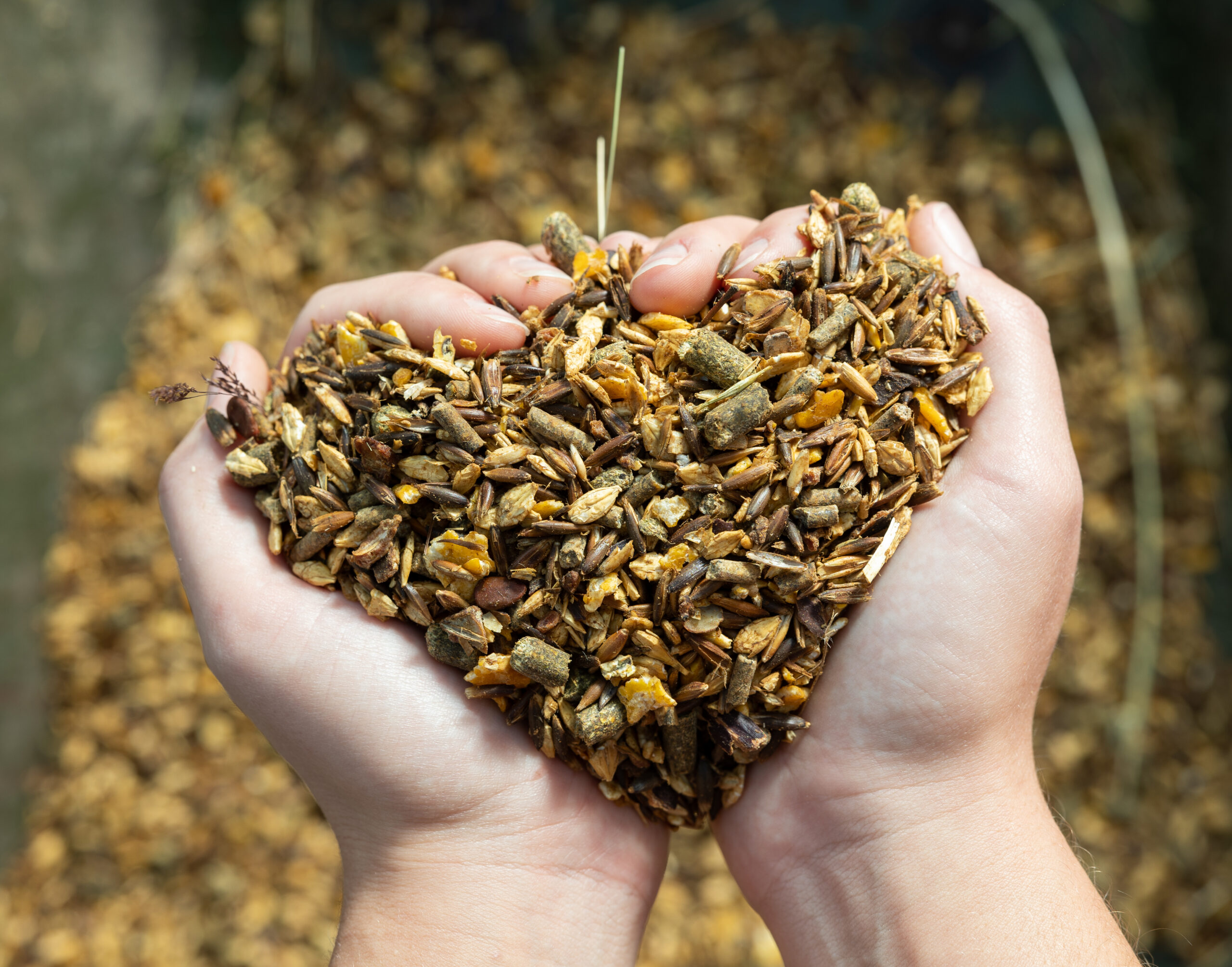
“Those horses require extra high-fiber feeds,” Jarvis explained. “That can be a dry format or mashes.”
Poop Patrol
Jarvis said she’s a big fan of “kicking around in horses’ droppings” to determine if there are long-fiber particles in there. The only way horses can shorten fiber is by chewing it.
She said, “we tend to find that horses that cannot chew their forage properly often pass lovely normal droppings, but then it’s accompanied by what I politely call a little bit of a ‘jus’ or a ‘gravy.’ The droppings themselves are normal, but you get this extra liquid that tends to come out afterwards or during, and very often owners will notice it as stickiness down the hind legs and in the tail. So, not diarrhea per se, but actual normal droppings with this extra little bit of jus.
“And again, as Dr. Harris has mentioned, if we’re seeing those signs or if we’re seeing weight loss and there’s no other obvious cause, we would straight away go to a dental examination,” added Jarvis.
Fiber Is Core
“Some form of fiber has to be the core of the diet,” said Harris. “A lot of older horses, even with quite severe dental issues, can manage very well on pasture. You then need to work out whether the pasture they have been on is the right thing for them. Because as they get older, they may develop PPID. They may have PPID with insulin dysregulation. Then we have to be careful of the type of pasture they can be on. So it’s not simple.”
Some horses will still be able to be on pasture, even though they swallow very little grass. As long as they don’t choke or develop colic, the movement of being out and grazing is good for the animals.
If the horse cannot chew long-stemmed fiber, it might be able to handle short-stemmed fiber, said Harris. She noted that horses have evolved with the need to chew.
But there are some dental conditions that can make feeding short-chopped fiber impossible, said Harris. That would include certain horses with diastema (spaces between the teeth where feeds can be trapped).
Mashes
Some senior horses get to the point where they need their feed/forage to be provided throuth wetted mashes. Harris said you probably will have to separate the horse receiving a mash at mealtime in order for it to have sufficient time to eat without being run off the feed by its friends!
You also have to make the mashes warm in the winter so they won’t freeze, and cool in the summer to be appetizing and not become rancid.
Mashes have to contain sufficient vitamins, minerals, and protein to provide the horse an adequate diet, noted Harris. The feedings should be spread out to multiple meals during the day, Jarvis advised.
“We are trying to get them a lot of fiber in a few meals,” Harris summed up.
Final Words
Harris and Jarvis offered many more tips on feeding horses with dental issues during the podcast. You also will want to hear the stories from Jarvis about Rascal and Orwell. Those are two residents at Redwings who were challenges to the staff to address dental and feeding issues.
They stressed the need to observe your horses regularly. That includes watching them eat and chew and examining their feces. Senior horses need regular dental exams and might need those exams more frequently as they age.
Management and feed changes are inevitable as horses age. This is because if a horse lives long enough, it will run out of teeth to chew feed and forage.
About Dr. Pat Harris
Dr. Pat Harris is a past president of the British Equine Veterinary Association and is a European specialist in veterinary and comparative nutrition. She is the Equine Nutrition and Science advisor to Mars Horsecare & WALTHAM TM Equine Studies Group, Waltham Petcare Science Institute. Harris has spent much of the last 30 years working to help improve the care and nutrition of older horses. She also is passionate about seniors because of her dedication to her own older horses. Harris has advised on the care of many senior equids and has authored numerous articles on their care. Her involvement in several global senior research teams gives her special insight into some of these studies. Harris is also on the Executive Advisory Council for My Senior Horse.
About Dr. Nicky Jarvis
Dr. Nicky Jarvis is head of Veterinary and Care at Redwings Horse Sanctuary in Norfolk, England. She qualified from the Royal Veterinary College, London, in 1990 and worked in mixed practice for two years before moving to Newmarket, where she completed a two-year internship at Rossdales Equine Hospital. Dr. Jarvis then joined Redwings Horse Sanctuary in Norfolk in 1996. She is now head of Veterinary and Care, working with what she calls an “incredible” team of veterinary surgeons and nurses to care for more than 1,200 resident horses, ponies, donkeys, and mules. Dr. Jarvis attained her RCVS Certificate of Advanced Veterinary Practice in Equine Medicine in 2012 and her CertAVP in Equine Surgery Soft Tissue in 2013. She has a keen interest in equine nutrition, geriatric medicine, internal medicine, and colic.
Related Content
- Tips on Feeding Older Horses with Dental Issues. Dr. Pat Harris. MySeniorHorse.com
- Help! My Senior Horse is Losing Weight! Dr. Nettie Liburt. MySeniorHorse.com
- 10 Tips for Feeding Forage to Horses. Dr. Pat Harris. MySeniorHorse.com
- My Senior Horse Podcast: Managing Senior Herds Part 1. Drs. Pat Harris and Nicky Jarvis with Kimberly S. Brown. MySeniorHorse.com
- My Senior Horse Podcast: Managing Senior Herds Part 2. Drs. Pat Harris and Nicky Jarvis with Kimberly S. Brown. MySeniorHorse.com
- My Senior Horse Podcast: Managing Senior Herds Part 3. Drs. Pat Harris and Nicky Jarvis with Kimberly S. Brown. MySeniorHorse.com
- Feeding Horses that Can’t Eat Long Fiber. Alexandra Beckstett. MySeniorHorse.com
- Dental Problems in the Older Horse
Sign up for My Senior Horse’s FREE newsletter to get the latest information about equids 15 years and older delivered straight to your inbox!