Protecting horses from the highly contagious disease strangles has been an issue for centuries. The bacterium Streptococcus equi subspecies equi (S. equi) causes strangles. It was one of the earliest equine diseases that was written about in veterinary medicine, making its named appearance around 1270.
About Equine Strangles
Strangles has high rates of morbidity (illness), with mortality rates between 1-10%. It is highly contagious from horse to horse and through fomites (contaminated objects). Those objects can include human hands, grooming and cleaning tools, water supplies, shared food sources, and inanimate objects in the environment (i.e., stalls and fenceposts). The bacterium doesn’t live long outside of the horse. However, horses can get strangles from a contaminated environment in the right conditions.
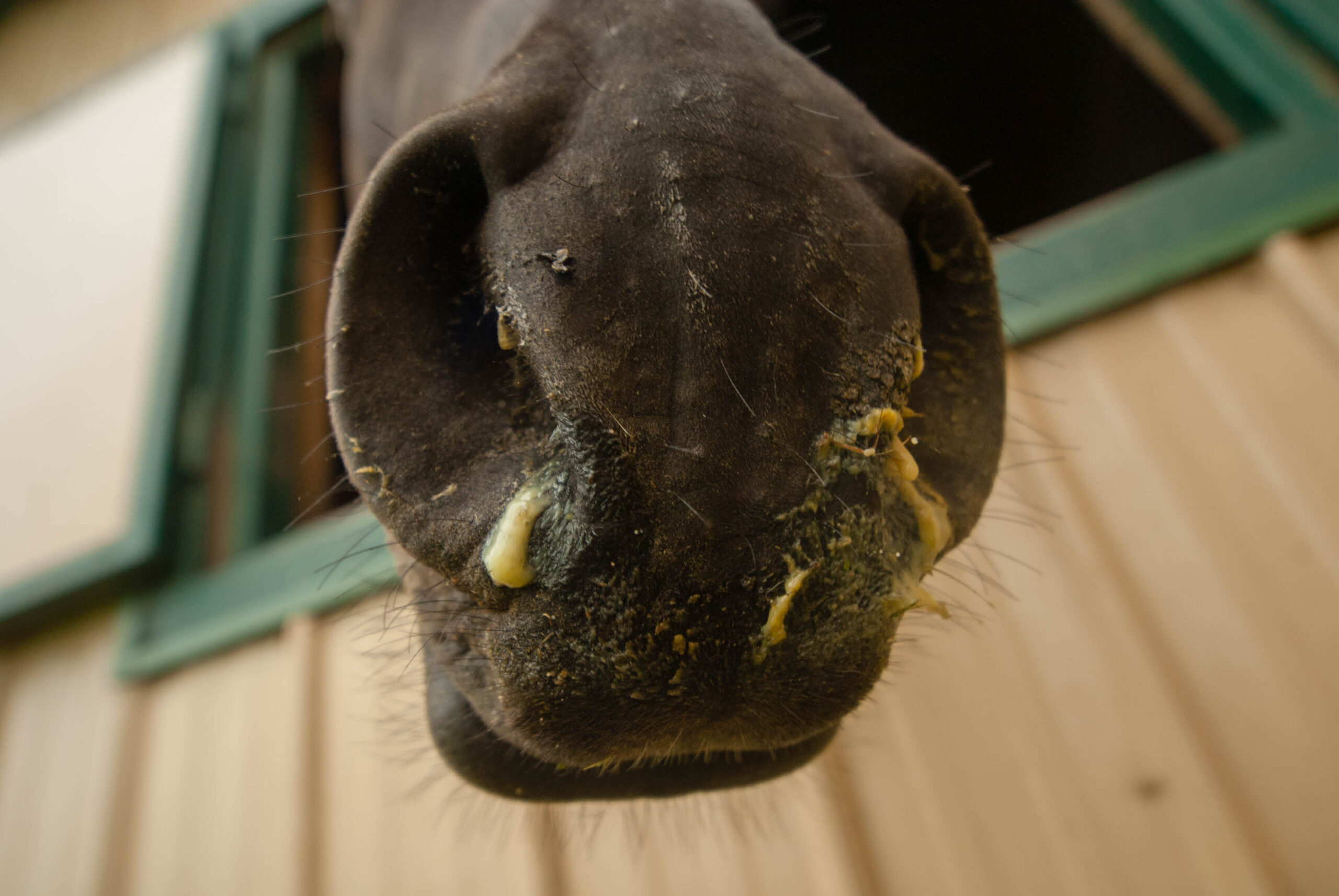
Clinical signs of strangles include fever, a thick nasal discharge that contains the bacterium, and swollen or abscessed lymph nodes under the jaw. Signs of strangles typically appear 2-14 days after exposure, but can appear up to three weeks after exposure. Early clinical signs include depression, loss of appetite, and a fever greater than 103°F (39.4°C). Abscesses might rupture after 1-2 weeks, putting highly contagious pus into the environment.
Horses can be silent shedders of the strangles bacterium. A subclinical carrier state can result in long-term retention of infection within the guttural pouches, often with limited or no clinical signs. Horses remain infectious for weeks after their clinical signs have resolved.
Management and biosecurity are necessary even with vaccinated horses to prevent the spread of strangles.
The United Kingdom has a dedicated system for strangles surveillance (SES; https://app.jshiny.com/jdata/ses/sesview/). From 2019–2023, that system reported 1,427 laboratory-confirmed strangles diagnoses by 315 veterinary practices across 93 U.K. counties.
Study: Strangvac Strangles Vaccine
In a study published in August 20241, researchers evaluated a subunit strangles vaccine called Strangvac, which is created from fusion of recombinant Streptococcus equi proteins. This vaccine is currently available in Europe.
Various strangles vaccines are on the market around the world. The researchers cited issues with other vaccine products, including being unable to tell if a positive strangles test result was due to infection or vaccination. With the Strangvac vaccine, practitioners can differentiate between a vaccinated versus an infected horse.
Researchers noted in the paper that, “At times, the authors’ recommendations deviate from those that were initially put down in the summary of product characteristics. This comes as a result of clinical experience that has been gained since the initial experimental studies were performed prior to registration. Veterinary surgeons using the vaccine outside of the regimen set down in the summary of product characteristics should be cognisant of their local legal framework and should ensure that they have informed consent to do so.”
Which Horses to Vaccinate
The researchers listed several risk factors for S. equi exposure. They said vaccination is indicated for horses in the following scenarios to reduce the risk of infection and transmission:
- Horses kept on any premises that have poor levels of biosecurity.
- Premises that frequently receive new horses.
- Premises with large numbers of horses transiting through for lessons or exercise.
- Premises with large numbers of foals and young horses.
- Livery yards with horses of mixed ownership, particularly if there are frequent movements of horses onto the yard.
- Equestrian businesses where the risk of disease would threaten its commercial viability or have an unacceptable impact on competition or other business-related schedules.
- Horses that attend “enthusiastic amateur” competitions where biosecurity and knowledge are sometimes suboptimal.
- Studs that accept walk-in mares and the mares that visit them.
Reactions to Injections
The researchers reported that in the experimental studies of Strangvac performed by Robinson et al. (2020), “localized heat, pain, or swelling at the injection site in the neck occurred in a quarter of horses after the first dose of vaccine and around half of horses that were receiving repeat injections and these reactions resolved without treatment within five days in all horses.”
Final Words
Horse owners in Europe where the Strangvac vaccine is available should discuss its use with their veterinarians. Intervacc has applied for a permit to distribute the vaccine in the United States. It is not yet authorized for sale or distribution in the U.S., but the process for USDA approval is ongoing.
Reference
- Strangles vaccination: A current European perspective. David Rendle, Mark Bowen, Jessika Cavalleri, Nicolas De Brauwere, Gittan Grondahl, K. van Maanen, J. Richard Newton. 2024. Equine Veterinary Education
Related Reading
- Update on a New Strangles Vaccine. Dr. Nancy S. Loving. EquiManagement
- Commonly Asked Questions About Strangles in Horses. Dr. Nic de Brauwere. MySeniorHorse.com
- Horse Fever and Normal Temperatures. Kimberly S. Brown. MySeniorHorse.com
- Biosecurity Planning for Equestrian Events. Dr. Katie Flynn. MySeniorHorse.com
- Detecting Equine Respiratory Pathogens in Healthy Performance Horses. Kimberly S. Brown. MySeniorHorse.com
Sign up for My Senior Horse’s FREE newsletter to get the latest information about equids 15 years and older delivered straight to your inbox!