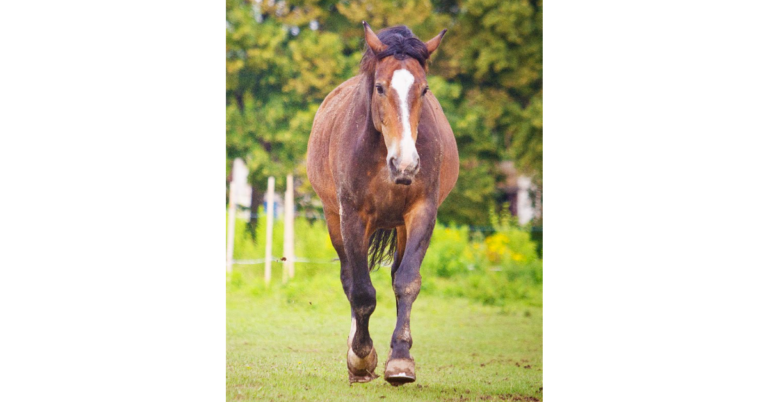

Breeding senior mares can be a challenge. In this podcast and article, we address some of the challenges with Dr. Karen Wolfsdorf. She is a veterinarian and equine reproduction specialist. Dr. Wolfsdorf is a partner at Hagyard Equine Medical Institute in Kentucky.
(Editor’s note: The content of this podcast is the expert’s approach to the topic. Please consult with your practitioner if you have questions.)
General Observations
Wolfsdorf said senior mare owners should stand back and look at the whole horse. “Not just think, ‘I want to breed her, so I need to find out what’s on her ovaries and how her uterus is doing,’ ” she said. “There’s so much more that goes into it because a healthy mare will be more reproductively sound than one that has feet problems, or metabolic problems.”
She likes mares to be a body condition score of about 5 on the 1-10 scale. She also likes mares to be increasing body condition going into breeding season rather than losing condition.
“I like to be able to feel ribs, but not see ribs,” Wolfsdorf explained. “So looking at their health, diet, and what they’re doing metabolically is the first place to start.”
Perineal Area of Mares
When assessing an older mare for the first time, Wolfsdorf starts by getting history on the mare and performing a general examination. She checks that the mare has routine dentals, deworming, and other basic care.
“We need to look at the whole horse first,” said Wolfsdorf. After that, she focuses on the reproductive system.
“We need to remember that like humans, as we get older, everything gets a little baggier and saggier,” explained Wolfsdorf. “So, we want to look at their perineal conformation.”
She stressed that the perineum (vulva area) is the “window” into the reproductive system. There are conformation issues that can cause a mare’s reproductive tract to become contaminated with feces or through “sucking air” into the reproductive tract.
Wolfsdorf said that once contamination gets into the vagina, “it can get into the uterus. Then we’re setting ourselves up for chronic endometritis and infection within the uterus. Looking at the perineal region is really,
really important.”
The caslick’s procedure can help correct perineal issues and reduce contamination, said Wolfsdorf. She described this procedure in detail in the podcast. She reminded owners that mares with caslick’s procedures need them opened before they foal.
Internal Reproductive Tract
The senior mare’s cervix needs to open and close properly for her to get pregnant and maintain a pregnancy, said Wolfsdorf.
She gave the example of a retired 17-year-old performance mare that the owners now want a foal from.
“These [performance] mares have had a very tight cervix for a very long time,” explained Wolfsdorf. “Now, we’re expecting it to relax just because we want to get them pregnant. We have to remember that the tight cervix can be helpful, but also when we are tying to breed them and it’s not relaxing, it is not very helpful because they’re not able to clear their uterus of debris, dead sperm, and inflammation once they’re bred. So, we need to make sure that we think about the cervix.”
A mare that has had several foals over the years will have a uterus that is more baggy and saggy, explained Wolfsdorf. That means it’s going to be harder for the mare’s uterus to contract and get unwanted fluid out. “We want to try and address that, too,” she said.
She noted that as mares mature, they have increased fibrosis that can cause problems when trying to get and keep them in foal.
Other Issues
Neonatal isoerythrolysis (NI) is usually a fatal condition for a foal. This happens when a mare’s colostrum contains antibodies that destroy the newborn foal’s red blood cells, causing acute anemia, jaundice, and weakness.
“What happens is that if the red blood cell type of the foal is different to the mother, then the mother produces antibodies against that foal’s red blood cell,” Wolfsdorf explained. “However, that foal is okay because the colostrum or the good antibodies are already in the mare’s colostrum, and it takes time to make the bad ones. It’s with the next foal that mare is going to build those antibodies against the foal’s red blood cells and put them in the colostrum.
“To identify a foal at risk and prevent NI, a blood test prior to foaling about the same time the caslick is opened can screen for the bad antibodies,” she continued. “If they are identified, the foal should be restricted from nursing the mare (muzzled), provided with good negative antibody-tested colostrum, and the colostrum stripped off the mare. You can do a jaundice foal agglutination test (cross match of the foal’s blood with the mare’s colostrum) when the foal is born. If it’s negative, the foal should be able to nurse.”
Wolfsdorf said NI is one thing breeders and veterinarians can easily prevent by identifying early.
Final Words
Wolfsdorf went through a checklist of items that should be done or checked before or during a senior mare’s pregnancy:
- Get a good history on the mare’s health.
- Aid in uterine clearance.
- Biopsy the mare’s uterus before breeding.
- Keep watch on mammary development on a daily basis as she nears her foaling date.
- Look for discharge from the vulva.
- Open the caslick.
- Screen for NI.
- Treat any issues that arise.
- Work closely with your veterinarian.
Wolfsdorf said keeping the mare in a good plane of nutrition and monitoring her daily are important aspects of routine care that can help you get a foal on the ground. She added that reproduction specialists like herself are available for consultation if you or your veterinarian have concerns about a senior broodmare.
Related Reading
- Breeding Maiden Senior Mares Video. Dr. Karen Wolfsdorf. MySeniorHorse.com
- A Guide to Equine Body Condition Scoring. Sarah Nelson. MySeniorHorse.com
- Body Condition Scoring: Body Condition Index and Other Techniques. Sarah Nelson. MySeniorHorse.com
- Can I Breed My Older Mare? video with Dr. Maria Schnobrich. MySeniorHorse.com
- Reproduction Tips for Senior Mares Video. Dr. Maria Schnobrich. MySeniorHorse.com
- Exercise and General Health of Senior Breeding Equids Video. Dr. Mariah Schnobrich. MySeniorHorse.com
- Second Careers for Broodmares Video. Dr. Rachel Doenges. MySeniorHorse.com
- Mare Reproductive System Diagram. MySeniorHorse.com
Sign up for My Senior Horse’s FREE newsletter to get the latest information about equids 15 years and older delivered straight to your inbox!