A New World screwworm (NWS) outbreak began migrating north from South and Central America toward the United States in 2023. The United States Department of Agriculture reported the first confirmed U.S. case in the ongoing outbreak in early June.
In response, the American Association of Equine Practitioners (AAEP) released new guidelines for this invasive parasite (see PDF below). In this article, we will explain what horse owners need to know about NWS and share insights from Texas Department of Agriculture Commissioner Sid Miller.
What Is New World Screwworm?
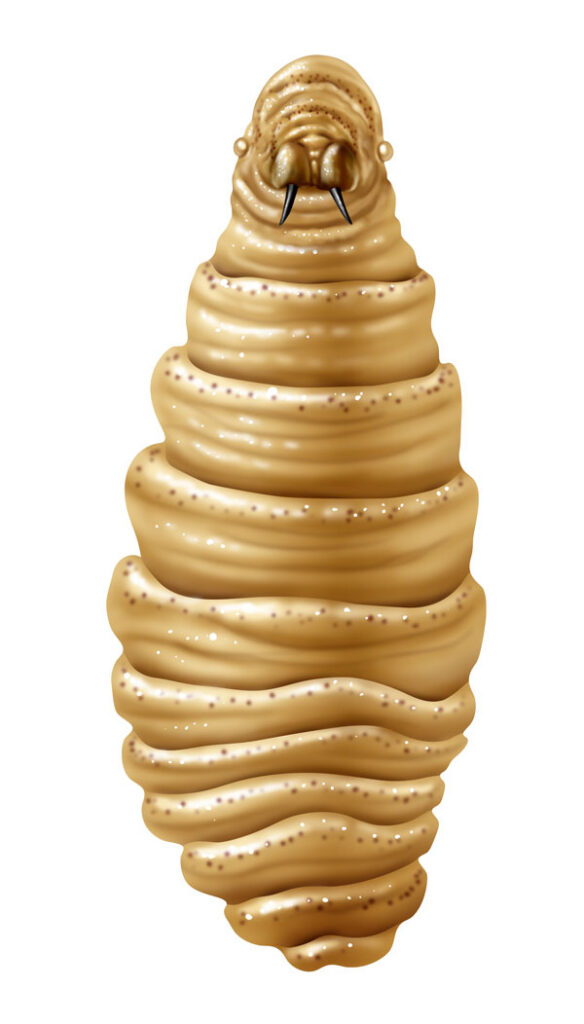
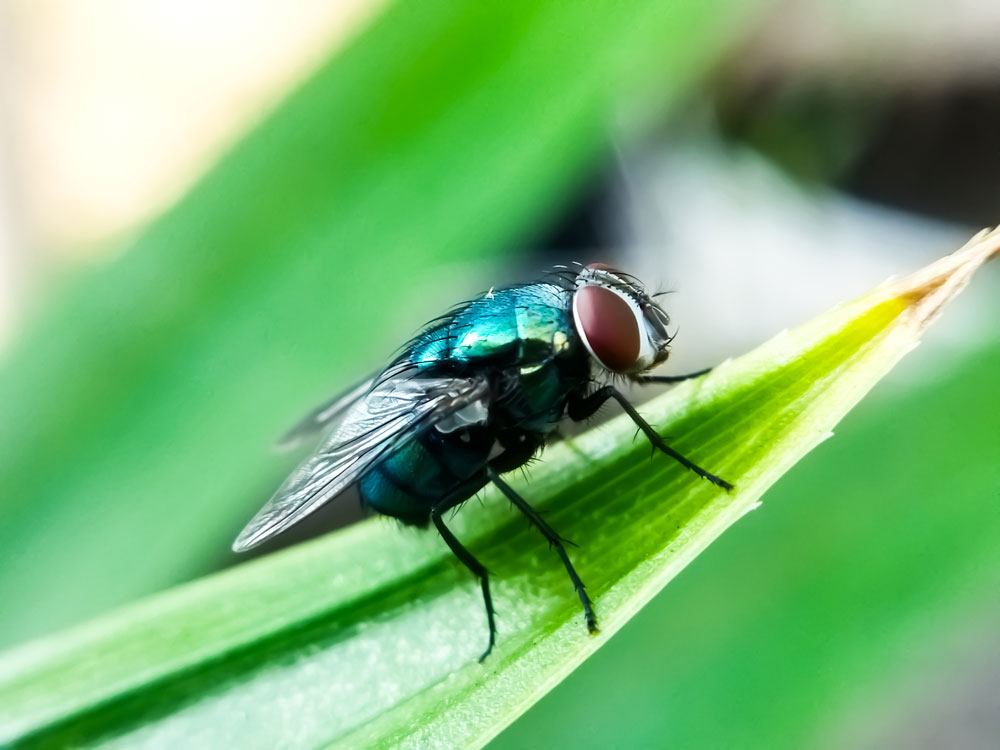
New World screwworm (Cochliomyia hominivorax) is a species of parasitic blowfly. NWS larval maggots feed on the living tissues of warm-blooded animals (including humans, in rare cases). This causes painful, foul-smelling wounds, according to the USDA. “If not treated early, they can lead to extensive tissue damage and potentially death,” the USDA stated. (See The Facts About New World Screwworm PDF from the USDA/APHIS below.)
Female New World screwworm flies lay eggs in or around wounds and mucous membranes. Then, larvae burrow (screw) themselves into the animal’s body as they consume flesh. Their sharp mouth hooks cause wounds to expand. This is how they earned the name “screwworm.”
The USDA urges residents in at-risk areas to check their pets and livestock for signs of New World screwworm. “Look for draining or enlarging wounds and signs of discomfort,” experts stated. “Also look for screwworm larvae (maggots) and eggs in or around body openings, such as the nose, ears, and genitalia or the navel of newborn animals.”
Contact your state veterinarian’s office or USDA area veterinarian in charge immediately if you suspect a screwworm infection.
According to a USDA fact sheet, “The USDA is leading an aggressive response to keep New World screwworms out of the United States. Thanks to strong surveillance and rapid response programs, the current risk to animals and people in the United States remains very low. ”
New World Screwworm Outbreak History
Officials in Panama and Costa Rica identified a New World screwworm outbreak in 2023, according to the Centers for Disease Control (CDC). Previously, countries in Central America and Mexico had effectively controlled this invasive insect. However, the recent outbreak has resulted in new infestations in livestock, pets, wildlife, and humans.
The USDA reported the first North American case of New World screwworm from this outbreak on June 3, 2026, in a bovine in Zavala County, Texas.
On June 4, the CDC reported that Mexico and Central America have seen more than 185,000 cumulative New World screwworm cases in animals and more than 2,100 cases in people.
In 2025, doctors diagnosed NWS in a U.S. traveler who had recently returned from El Salvador.
Federal officials have been working to reduce the threat of New World screwworm by releasing sterile male screwworm flies (female flies mate only once, and mating with sterile males disrupts the life cycle) and setting surveillance traps.
Frequently Asked Questions
- Where is the risk of NWS infestation highest? Horses are at the highest risk of infestation in geographic regions where the presence of the NWS fly has been confirmed. Go to screwworm.gov to see current maps of confirmed cases.
- What should horse owners watch for? In addition to good wound management and checking wounds for larvae, owners should routinely check their horses’ genitalia and other mucocutaneous junctions, such as the corners of the eyes.
- What should horse owners do if they suspect infestation by NWS larvae? Call your veterinarian right away so they can examine the horse and collect larvae for laboratory submission. Pick up any larvae that have fallen off the horse. Place them in a sealed container to give to your veterinarian. Do not throw larvae in the trash. Do not dispose of any bedding where the larvae might have fallen in the stall.
- What management tips can help prevent infestation? Cover any wounds that can be bandaged, or use protective fly sheets, masks, and/or fly leggings to help prevent flies from accessing wounds. Use multiple methods of fly control to make your farm, barn, paddocks, and horses less attractive to all flies. For example, keep stalls, barns, and paddocks free of manure. Dispose of all trash and refuse in covered containers. Use fly baits/traps in barns and areas where horses congregate. Frequently apply fly sprays and repellents that are labeled for use on horses (such as permethrins and pyrethroid products).
- What insecticides work best against the NWS fly? Permethrin and pyrethroid products are readily available as common fly sprays and are safe for use on horses. A specific list of products that are effective against NWS are available at this link.
- Is there systemic treatment for horses? While ivermectin is safe to give horses, no clinical studies have shown it to be effective against NWS in horses. Veterinarians also worry that increased use of oral ivermectin might cause increased drug resistance in common GI parasites. Doramectin (Dectomax) has received Emergency Use Authorization by the FDA for the prevention (not treatment) of NWS in horses. However, this is an injectable product that might cause injection site reactions or other side effects. Horse owners should consult with their veterinarians before administering any systemic drugs to their horse.
Comments From Texas Agriculture Commissioner Sid Miller
On the morning of June 18, My Senior Horse spoke to Texas Department of Agriculture Commissioner Sid Miller, who was visiting the White House to request that the USDA use the Screwworm Adult Suppression System (SWASS), “a proven USDA-developed program that uses targeted bait to kill fertile adult screwworm flies before they can reproduce,” he noted. (Read more in this release.)
“You simply put out the fly bait, and it kills 80-95% of the screwworm flies,” he stated. “Then you follow it up with the sterile flies.”
Miller said we now have tools that weren’t available during previous outbreaks in the ’70s and ’80s, including parasiticides such as ivermectin and Dectomax. “They are our best defense,” he said.
(Editor’s note: FDA has issued an Emergency Use Authorization for Dectomax, from Zoetis. It is the only nonprescription product conditionally approved by the FDA for prevention and treatment of infestations caused by New World screwworm larvae in cattle and prevention of reinfestation for 21 days. It also is approved under this use for the prevention of infestations caused by Cochliomyia hominivorax larvae in horses aged one year and older.)
He also questioned the efficacy of the current sterile fly release strategy. He noted that officials released approximately 8 billion sterile flies over the past 19 months without achieving the desired results.
Miller said the USDA cited environmental concerns and availability of the original insecticide as reasons for not using the SWASS system.
“It is important to note that neither I nor the Texas Department of Agriculture have advocated for the use of Dichlorvos [insecticide] in SWASS,” Miller said in a press release. “While that insecticide worked well to eradicate the New World screwworm from Texas in the 1970s, it has since been determined to be a carcinogen.
“Nevertheless, there are alternative insecticides available for SWASS, which … can be used to safely combat the screwworm as part of the SWASS strategy,” Miller continued. “The cost of prevention is measured in millions. The cost of an outbreak in Texas would be measured in billions. The science is settled. The tools are available.”
(Editor’s note: Dichlorvos—DDVP—is still on the market in the U.S.)
Miller stressed that the SWASS system proved effective in the field during the ’70s and ’80s and that at that time they found no negative environmental impact.
New World Screwworm Resources
Various organizations have published resources about New World screwworm, which can help horse owners and veterinarians navigate the current outbreak:
- AAEP New World Screwworm Infestation Guidelines
- AAEP resource on Prevention and Treatment Options
- FDA page outlining drug availability information for veterinarians
- USDA/APHIS Fact Sheet
- You can learn more about what the Texas Department of Agriculture is doing to address New World screwworm here. Texas residents can find answers to common screwworm questions here.
Related Reading
- New World Screwworm Threat. Equine Disease Quarterly. MySeniorHorse.com
- Equine Insect Repellents for Horses. Dr. Nancy S. Loving. MySeniorHorse.com
- 6 Tips to Decoding a Fly Spray Label. MySeniorHorse.com
Sign up for My Senior Horse’s FREE newsletter to get the latest information about equids 15 years and older delivered straight to your inbox!