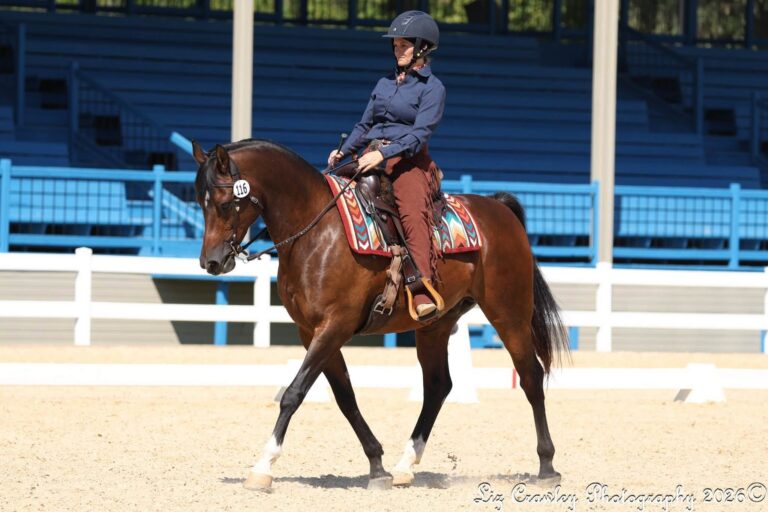
Whether you are an experienced competitor, are moving up from the lower ranks, or are getting your first competition horse, you might end up with a senior equid through preference or circumstance.
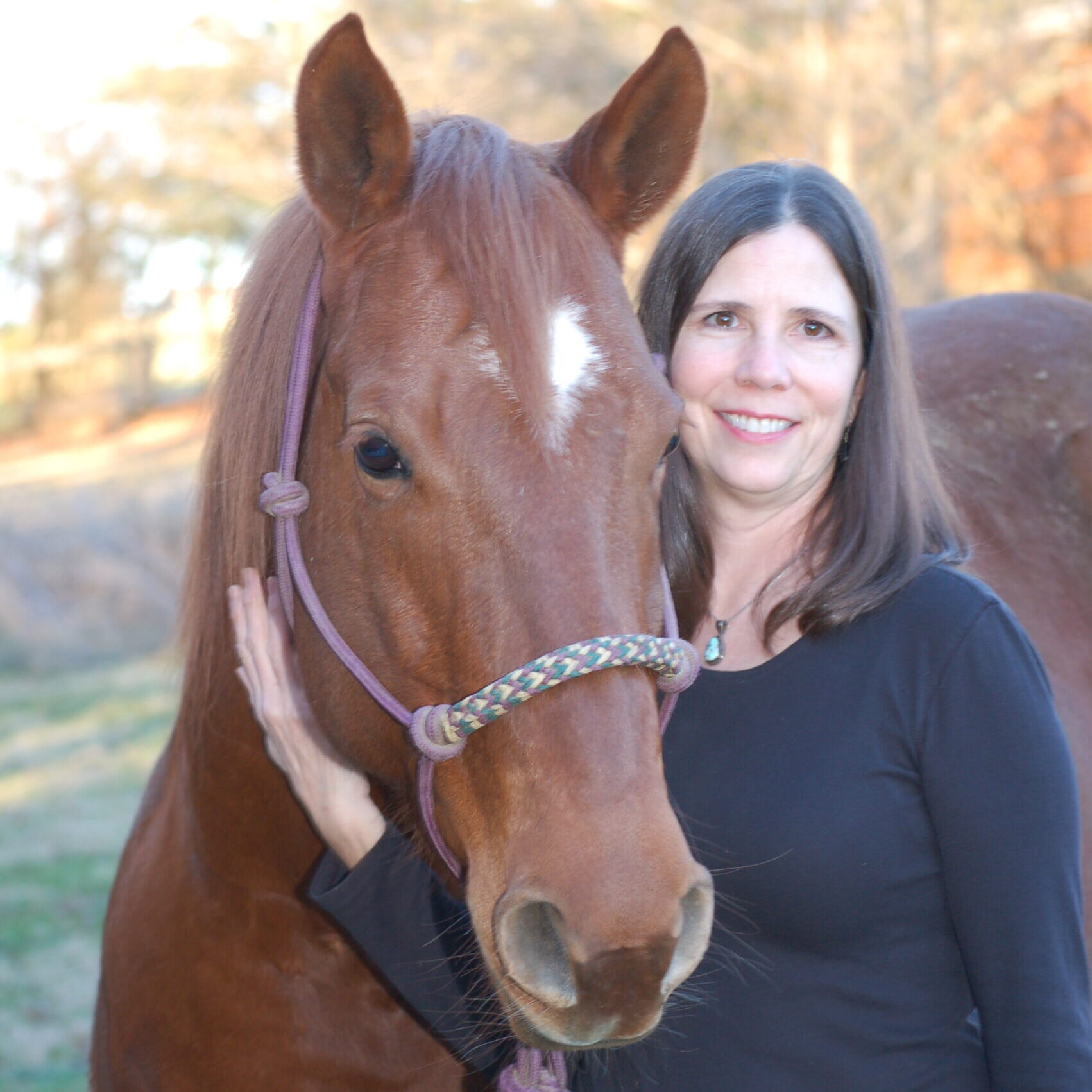
Competing a senior horse requires a different set of management rules than working with a younger horse. In this article, experienced veterinarian, researcher, and competitor Sue Dyson, MA, Vet MB, PhD, DEO, shares more insights.
Why Choose a Senior Competition Horse?
“It’s really interesting looking at the FEI World Championships in Aachen, Germany, across all disciplines,” said Dyson. “The number of late teenage horses that are competing there and doing well, I think that demonstrates survival of the fittest.”
(Read more about senior horses at the FEI Aachen event here.)
Lameness studies have shown that the median lameness age is about 8-9 years, Dyson explained. “If you get beyond that, then you’ve got a good chance of progressing and being okay,” she added.
Many people select a senior competition horse because they think the horse has “been there, done that” and has the experience needed to succeed. Often, that experience also makes them safer and can help the rider build confidence, said Dyson.
“I think that is hugely important if you’re coming back into riding and you haven’t been doing it for some time,” Dyson added. “You unquestionably are not as brave as you used to be, and also you don’t bounce as well if you do fall off. So, you are more apprehensive about falling off. You need a safe horse with experience that knows its job.”
Dyson pointed out that even fit older adults who work out might not have the same core strength and stability as when they were younger. Older adults might fatigue quicker and develop physical issues such as arthritis. These age-related changes affect their ability to maintain synchrony and rhythm with the horse. As such, some might prefer a steady and reliable senior mount.
Managing Orthopedic Issues in Senior Competition Horses
As horses age, they often develop accumulated wear-and-tear musculoskeletal issues, said Dyson. “The musculoskeletal system is not as inherently strong in the older horse, and the recovery time from minor injury is going to be longer,” she noted.
“If you exercise an older horse, it may sustain minor injury that a younger horse would recover from very quickly,” Dyson added. “The effects in an older horse may be cumulative, and the horse can develop overt problems.”
She reminded owners of senior competition horses that if the horse has low-grade osteoarthritis, you should expect it to come out of the stall a bit stiff and require a proper warm-up.
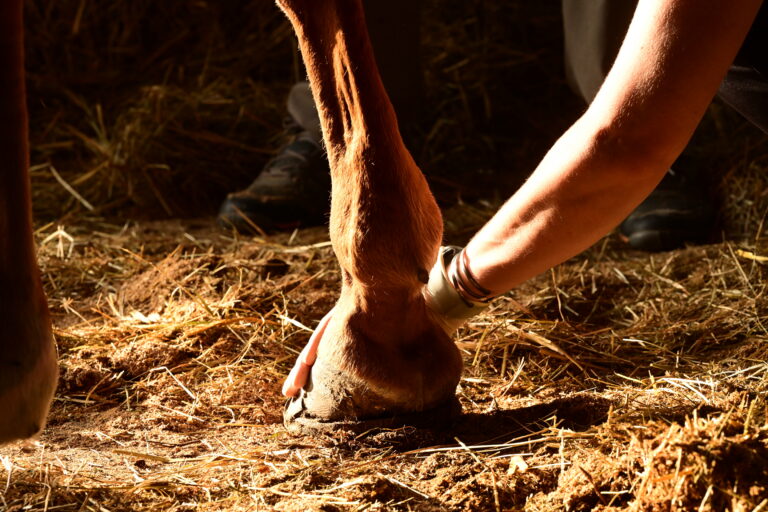
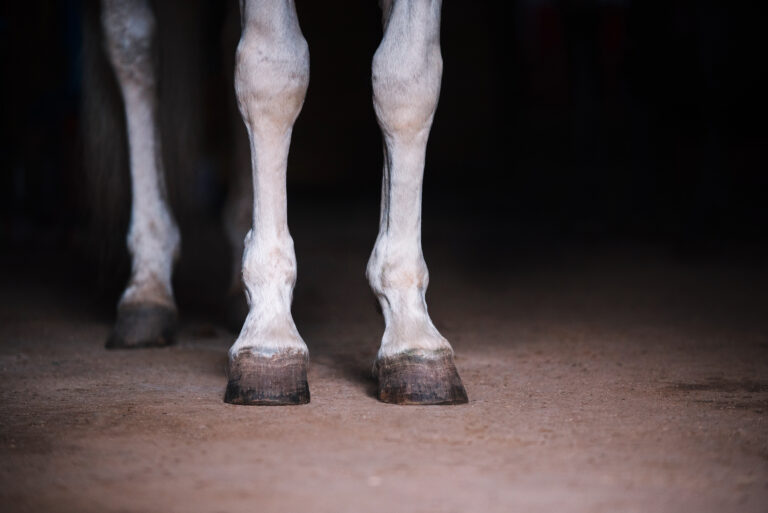
Owners should also take care to prevent joint injuries, which starts with good hoof care. “For me, it’s the way in which the horse is trimmed that is by far the most important thing, and that tends to get overlooked in some quarters,” Dyson noted.
Experts suggest that the optimum time between trims is about five weeks. “Longer than that, and the hoof capsules are going to get progressively longer, and that’s going to delay breakover (the way the horse takes its foot off the ground),” said Dyson.
Recognizing Signs of Discomfort
“I think horses are inherently communicators, but they communicate via rather subtle aspects of their behavior that tend to get overlooked,” said Dyson. “We call a horse grumpy because maybe it fidgets while being groomed. But, a normal horse is not a grumpy horse. It’s really important to appreciate that.”
Normal horses that are not mentally or physically uncomfortable should stand quietly and engage with us, she noted. “They don’t start pawing the ground. They don’t start swishing their tails. They don’t start putting their ears back. All those are signs that the horse is trying to display to us it is uncomfortable,” said Dyson.
Horses can anticipate discomfort. For example, the horse might not actually be uncomfortable during grooming, but it knows that grooming is followed by tacking up and riding.
Dyson emphasized that owners should pay attention to any change in behavior, rather than writing it off as the horse having a bad day.
“There’s always a reason why a horse acts as it does, so we should be curious,” she added.
Girthiness
Most horse people have encountered “girthy” horses that show displeasure when having the girth tightened. That response could be subtle or aggressive to the handler.
“If we’re doing it in a way that is comfortable for the horse, it shouldn’t react,” said Dyson. “It shouldn’t paw or turn its head to the girth. It shouldn’t try to bite you or toss its head up and down. None of those are normal. They’re all signs that the horse is either anticipating the fact that the tack is uncomfortable or it’s going to experience discomfort during ridden exercise.”
Horse-Friendly Mounting
“Every rider has a responsibility to mount in a way that is horse-friendly,” Dyson said.
If your horse walks off at the mounting block before asked, it could be a training problem or a sign of discomfort.
Dyson emphasized that riders must always mount in a manner that is comfortable for the horse. Mounting from the ground, pulling the saddle over, or landing hard on the horse’s back can cause discomfort.
When the horse is asked to move off once mounted, it should display regular strides without dipping or humping its back. “Those usually reflect the horse is experiencing some degree of discomfort,” noted Dyson.
Regular Exercise and Turnout
It’s beneficial for senior competition horses to live outside with companions, said Dyson. This allows the horse to graze with its head and neck down, which promotes constant chewing and saliva production, helping to line the horse’s stomach.
Outdoor living also allows the horse to move constantly, which is especially important for horses with low-grade arthritis. Joint movement facilitates the passage of synovial fluid (the fluid within the joint that keeps it lubricated and provides nutrition to the cartilage), explained Dyson.
Nutrition for Senior Competition Horses
“The nutritional requirements for a senior competition horse are actually not that high,” said Dyson. “If you have good-quality forage and you’re using a balancer, that may be all the horse needs.”
However, if the horse is lean, the owner might have to supplement the forage diet with a commercial feed, such as a feed designed for a senior horse to meet its nutritional requirements.
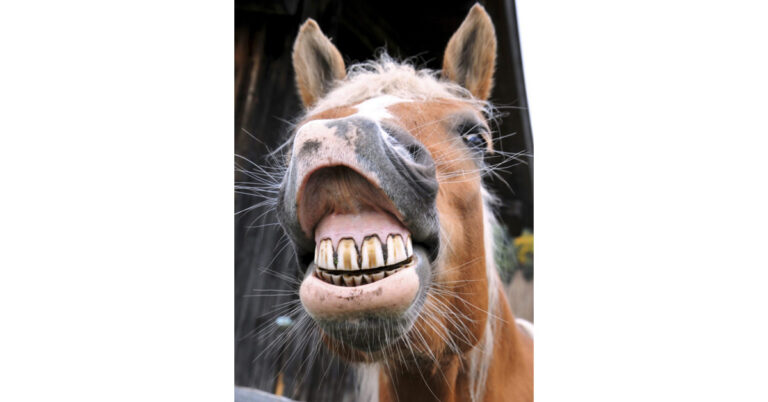
Ensuring the senior horse has good dental care is another important element. If a horse can’t chew properly, it will have more trouble getting nutrients out of the feedstuffs. Poor dentition can also cause mouth pain. Horses can express mount pain by avoiding bridling, tossing its head during riding, or resisting the bit.
PPID and Laminitis
Pituitary pars intermedia dysfunction (PPID or Cushing’s disease) is common in older horses. There are several issues associated with PPID, including a thick haircoat that doesn’t shed, which can lead to poor thermoregulation, noted Dyson.
Horses with PPID can be predisposed to laminitis, which can be insidious in onset, she added. “In fact, it can be subclinical,” Dyson said.
Taking annual radiographs to look at the hoof wall could help catch early-onset laminitis. This is especially important if you are considering administering corticosteroids to manage a different health issue, as these drugs can sometimes cause severe laminitis in at-risk horses.
“So, knowing the horse has subclinical laminitis in advance is of benefit” when managing any senior horse, Dyson said.
Horses being treated for PPID with pergolide (Prascend) must continue receiving that medication daily for the rest of their lives. This can add to the cost of the senior competition horse’s management.
Recovery Time After Exercise
Senior horses will probably need more recovery time after exercise or competition. “It’s important to realize that if the horse is working maximally for its capabilities, it does run the risk of having low-grade injuries,” said Dyson.
Traveling to competitions, warming up, competing, and traveling home can all be stressful to the older horse.
However, it’s important for the horse to remain mobile.
It’s normal to be excited about getting out and attending events with your new senior horse. However, if you ride the horse in a three-day clinic, for example, a previous problem could resurface because the horse did so much work in a short period of time.
“You need to temper your enthusiasm and limit your stresses to what the horse can do,” Dyson advised. “You, as the rider, might need the practice jumping, for example. But, does your horse need to do the bigger fences? Can you do this over small fences or with poles on the ground? The small jumping courses are less impactful on the horse’s limbs than jumping bigger fences.”
If your horse is overweight, that also adds stress, especially on arthritic joints.
Final Words
It’s important for owners to remember that senior competition horses require a different set of management rules than younger horses.
Talk to trusted advisors and your veterinarian to ensure you are working within your horse’s limits. Then, maintain that horse based on its potential. Senior horses can make great competitors at any level, but they sometimes need a little extra TLC.
About Dr. Sue Dyson
Sue Dyson, MA, VetMB, PhD, DEO, initially worked in the United States after graduating veterinary school, then returned to England and ran a clinical referral service for 37 years. Dyson is active in clinical research and has published more than 450 scientific papers related to lameness, ridden horse behavior, and diagnostic imaging. She also is a rider and has produced horses to top national level in eventing and show jumping. Dyson is a British Horse Society Level 5 Coach and Stable Manager.
Related Content
- Observation and Palpation of an Older Horse’s Limbs. Dr. Sue Dyson
- Managing the Senior Performance Horse video. With Dr. Ali Broyles
- My Senior Horse Podcast: Senior Exercise. Dr. Sue Dyson
- Horse Behavior During Tacking and Mounting. Dr. Sue Dyson. MySeniorHorse.com
- Horses and the Science of Contentment. Dr. Sue Dyson. MySeniorHorse.com
- My Senior Horse Podcast: Horses and the Science of Harmony. Dr. Sue Dyson. MySeniorHorse.com
- The 24 Behaviors of the Ridden Horse in Pain: Shifting the Paradigm of How We See Lameness. Dr. Sue Dyson with Padma Video.
- Ridden Horse Performance Checklist: Behaviors in Ridden Horses that Might Signify Discomfort. Dr. Sue Dyson. MySeniorHorse.com
- How An Uncomfortable Horse Might Feel to a Rider. Dr. Sue Dyson. MySeniorHorse.com
- Study: Older Horses Might Outperform Mature Horses in Showjumping. Kimberly S. Brown. MySeniorHorse.com
- Senior Horse Fitness: A Balancing Act. Coby Bolger. MySeniorHorse.com
- Observation and Palpation of an Older Horse’s Limbs. Dr. Sue Dyson. MySeniorHorse.com
- Caring for Senior Horses’ Joints in Cold Weather. Dr. Sue Dyson. MySeniorHorse.com
- My Senior Horse Podcast: Senior Exercise. Dr. Sue Dyson. MySeniorHorse.com
- Senior Horses in the 2024 Olympics. Kimberly S. Brown. Dr. MySeniorHorse.com
- My Senior Horse Podcast: Senior Competitors. Dr. Tracy Turner. MySeniorHorse.com
- Managing Chronic Pain in Senior Horses. Carly Sisson with Dr. Alison Bennell. MySeniorHorse.com
- How to Recognize Early Signs of Joint Issues in Horses. MySeniorHorse.com
- What Is a Healthy Equine Joint. MySeniorHorse.com
- What You Should Know About Equine Osteoarthritis. Kimberly S. Brown. MySeniorHorse.com
- Older Horse Pain Management Research. Dr. Rebecca Smith. MySenior Horse.com
Sign up for My Senior Horse’s FREE newsletter to get the latest information about equids 15 years and older delivered straight to your inbox!