Chronic pain can be defined as pain that persists for longer than three months, pain that persists after the initial cause has been resolved, or pain that occurs every day or most days and restricts at least one daily activity. This condition is common in senior horses, especially those with osteoarthritis, laminitis, or other painful pathologies.
During a session at the 2025 British Equine Veterinary Association Congress, Alison Bennell, BVMS, CertAVP(EM), MRCVS, discussed strategies for managing chronic pain in horses.
Sources of Chronic Pain in Horses
According to Bennell, common sources of chronic pain in horses include osteoarthritis, back pain, laminitis, dental issues, and ophthalmic pain. “I would describe these as chronic secondary pains,” she said. “There’s been a primary pathological process which has led to ongoing pain, and even if we get on top of the initial problem, that pain needs treatment in its own right.”
For example, a horse with back pain probably had an initial injury, which triggered the upregulation of various neurotransmitters, leading to an ongoing pathological process and alteration of the architecture of the horse’s nervous system. “Then, things that shouldn’t be painful are perceived as painful because pain and nociception are not the same thing,” Bennell explained.
Chronic pain is prevalent, especially in seniors. Bennell reported that more than 98% of working equids have gait abnormalities, with 51% of horses older than 15 and 77% of horses older than 30 exhibiting lameness1,2,3,4.
Treatment and Management Options for Chronic Pain
There are various pharmacological and nonpharmacological treatment and management options for chronic pain, but “there is no silver bullet,” Bennell said.
Regular, controlled exercise is one important nonpharmacological management strategy. Even on days when the horse is in pain, it’s important to allow them to move and stretch rather than locking them in a stable. A controlled exercise program can also incorporate physiotherapy and hydrotherapy.
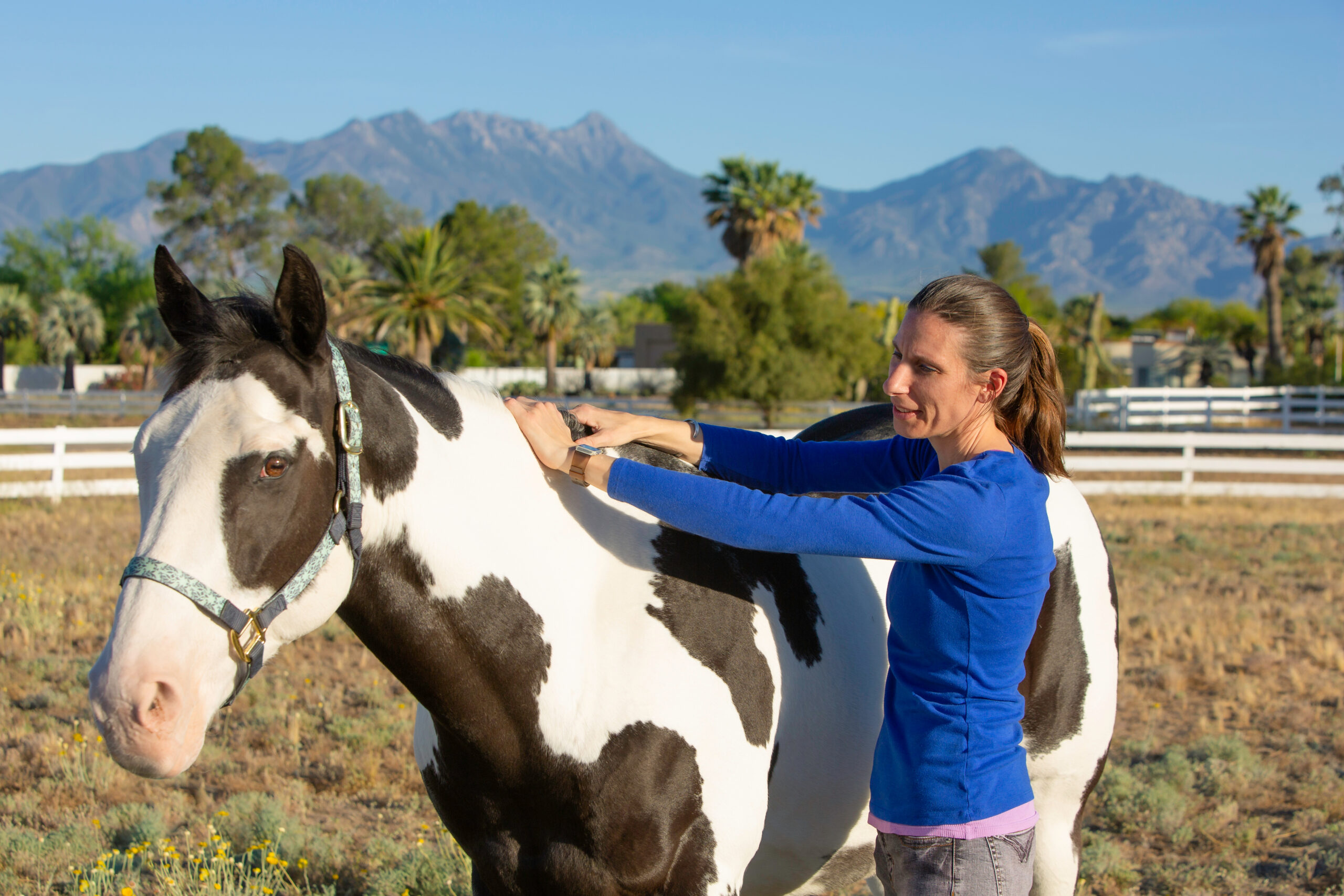
Other nonpharmacological management strategies include heat and cold therapy, bandaging, extracorporeal shockwave therapy, laser therapy, manual therapies (such as massage and myofascial release), acupuncture, regular farriery, saddle fitting, and herbal products. Environmental enrichment can also make an important difference. “We need our patient to be as happy as they can be,” Bennell said, pointing out that owners with multiple horses often spend more time with the ones they can ride. “The horse that is painful maybe doesn’t have the same level of interaction and grooming and TLC that it used to have, and these things will definitely help.”
Pharmacological options include non-steroidal anti-inflammatory drugs, paracetamol (acetaminophen), oral NMDA-antagonists (e.g., ketamine), gabapentinoids, CBD, and injection with steroids or local anesthetics. Autologous therapies such as PRP and IRAP can also help horses with chronic pain related to osteoarthritis.
Final Thoughts
In closing, Bennell advocated for using objective pain scales to gauge the horse’s pain level and response to treatment. Several pain scales exist, including the Composite Pain Scale (CPS), Horse Grimace Scale (HGS), Equine Utrecht University Scale of Facial Assessment of Pain (EQUUS-FAP), Visual Analog Scale (VAS), and more.
Bennell reminded the audience to pay attention to behavioral changes. A horse that misbehaves when you pick up its feet might be in pain. She also advocated for moving away from the narrative that the old horse that’s a “bit lame” is OK. “These horses are in pain, and from a welfare point of view we want to try to manage that,” she said.
Finally, Bennell stated that “euthanasia is always an option, and it’s the ultimate option for pain.”
References
- Merridale-Punter MS, Wiethoelter AK, El-Hage CM, Hitchens PL. Prevalence and Factors Associated with Working Equid Lameness in Low- and Middle-Income Countries: A Systematic Review and Meta-Analysis. Animals (Basel). 2022 Nov 10;12(22):3100. doi: 10.3390/ani12223100.
- van Weeren PR, Back W. Musculoskeletal Disease in Aged Horses and Its Management. Vet Clin North Am Equine Pract. 2016 Aug;32(2):229-47. doi: 10.1016/j.cveq.2016.04.003. PMID: 27449390.
- Ireland JL, McGowan CM, Clegg PD, Chandler KJ, Pinchbeck GL. A survey of health care and disease in geriatric horses aged 30 years or older. Vet J. 2012 Apr;192(1):57-64. doi: 10.1016/j.tvjl.2011.03.021. Epub 2011 May 6. PMID: 21550271.
- Ireland JL, Clegg PD, McGowan CM, McKane SA, Chandler KJ, Pinchbeck GL. Disease prevalence in geriatric horses in the United Kingdom: veterinary clinical assessment of 200 cases. Equine Vet J. 2012 Jan;44(1):101-6. doi: 10.1111/j.2042-3306.2010.00361.x. Epub 2011 Jun 13. PMID: 21668494.
Related Reading
- Research Report: Acupuncture to Treat Chronic Equine Laminitis
- How to Recognize Early Signs of Joint Issues in Horses
- Older Horse Pain Management Research
Sign up for My Senior Horse’s FREE newsletter to get the latest information about equids 15 years and older delivered straight to your inbox!
-
View all posts
Carly Sisson is a horse owner (including one senior horse, aged 22) and the managing editor of EquiManagement and My Senior Horse.