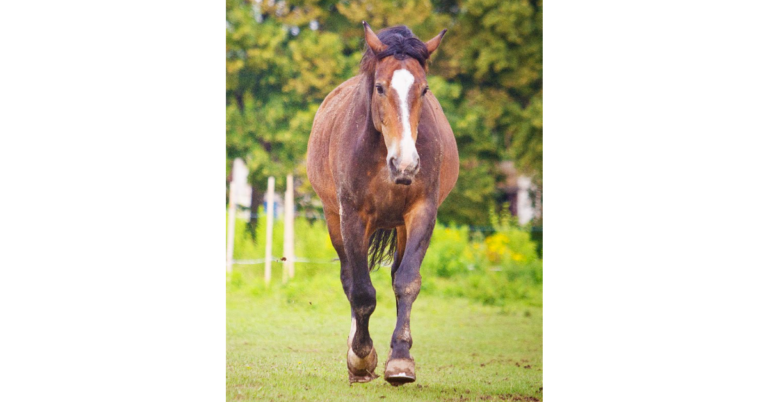

Painful musculoskeletal conditions are common in horses, especially in seniors.1 The failure to recognize or treat pain early can lead to long-term welfare issues.
Perceptions of the horse being in pain are reportedly relevant to owners’ decision-making regarding their animal’s management and are influential in end-of-life decision-making.2
However, owners’ and veterinarians’ perceptions of pain and its severity appear to vary. This can have implications for equine welfare.
Study: Chronic Pain Management in Horses
The Horse Trust funded research at the University of Liverpool in the UK about chronic pain management in horses.
While many people might play a role in managing a horse’s pain, veterinarians are especially important because of their ability to diagnose, prescribe, and perform technical procedures.
The study investigated what led horse owners to consult a veterinarian. It looked at how interactions during the consultation impacted on decision-making regarding pain management.
The study was based in Great Britain. It involved observations of veterinary consultations as well as interviews with veterinarians and horse owners who had sought veterinary services for their animals.
Key Findings
- Owners’ everyday interactions with their animals was the foundation of what was “normal” for a horse. This formed the basis of what owners perceived to be “issues” or “pain-related issues” in their horses.
- Owners interpreted their horses’ behaviors or movements alongside their knowledge of the individual animal, as well as other contextual factors such as recent management changes. These interpretations influenced whether they considered the horse to be in pain and what action, if any, they adopted to remedy it.
- Owners generally consulted a veterinarian if an issue or pain-related issue was identified and previous attempts to remedy it had failed. Owners often attempted management adjustments or sought other sources of advice before consulting a veterinarian.
- During consultations, veterinarians spoke to the owner and used their assessments of the horse to identify (potentially painful) problems. Veterinarians’ perceptions of pain were informed by their knowledge of clinical conditions.
- The extent to which an owner’s concerns or priorities were attended to by the veterinarian during the consultation affected the nature of the veterinarian-owner relationship. It also reflected the extent to which the owner considered the veterinary advice they received to be relevant to the individual horse.
Take-Away Messages
- Personal experiences and context-specific factors shaped pain identification and management.
- Both the owner’s and veterinarian’s knowledge of a horse can be valuable in identifying painful problems.
(Author’s note: Thanks to The Horse Trust for funding this research.)
References
- Disease prevalence in geriatric horses in the United Kingdom: veterinary clinical assessment of 200 cases. Ireland, J.L.; Clegg, P.D.; McGowan, C.M.; McKane, S.A.; Chandler, K.J.; Pinchbeck, G.L. Equine Vet J. (2012) 44:101–6. doi: 10.1111/j.2042-3306.2010.00361.
- Owners’ perceptions of quality of life in geriatric horses: A cross-sectional study. Ireland, J.L.; Clegg, P.D.; McGowan, C.M.; Duncan, J.S.; McCall, S.; Platt, L.; Pinchbeck, G.L. (2011) Anim. Welf. 20, 483-495.
Further Reading
- Ridden Horse Performance Checklist: Behaviors in Ridden Horses that Might Signify Discomfort. Dr. Sue Dyson. MySeniorHorse.com
- Additional Behavior and Musculoskeletal Pain Signs in Ridden Horses. Dr. Sue Dyson. MySeniorHorse.com
- Anti-Inflammatories for Horse Barns. Dr. Nancy Loving. MySeniorHorse.com
- Tips on Using Bute Video. MySeniorHorse.com
Sign up for My Senior Horse’s FREE newsletter to get the latest information about equids 15 years and older delivered straight to your inbox!
-
View all posts
Dr. Rebecca Smith is a veterinarian and interdisciplinary researcher in the field of human-animal interaction. She completed her PhD at the University of Liverpool. Rebecca’s research adopts social scientific approaches to study peoples’ decision making in relation to animal care. As a research associate, her current work uses ethnographic methods to study owners’ and vets’ understanding of, and approaches to, the management of chronic pain in horses. Alongside her research, she is undertaking specialist training in welfare, ethics, and law with the European College of Animal Welfare and Behavioural Medicine.