Horses are more likely to need their teeth removed as they age. In this podcast and article on tooth removal, we turn to Dr. Jack Easley, a board certified specialist in equine dentistry. In a recent article on EOTRH (equine odontoclastic tooth resorption and hypercementosis) and horse dentistry podcast, Easley discussed issues senior horses face that might result in tooth removal.
You can learn more about Easley in the “About” section below.
(Editor’s note: The content of this podcast is the expert’s approach to the topic. Please consult with your practitioner if you have questions.)
Horse Teeth Wear Out
Easley said if you are dealing with a group of horses in their late teens, it is rare that one of them will need to have a tooth or teeth removed. “But, in horses that get into their 20s and even 30s, they all wear their teeth out over time,” he explained. “They have more problems with different types of dental disease, which can lead to having their teeth removed.”
Horses have hypsodont teeth. A horse’s teeth continue to erupt from the gums throughout its life until there is no more tooth the horse can use to chew.
“All horses will eventually lose their teeth or wear their teeth completely out if they live long enough,” explained Easley.
Tooth Types and Issues
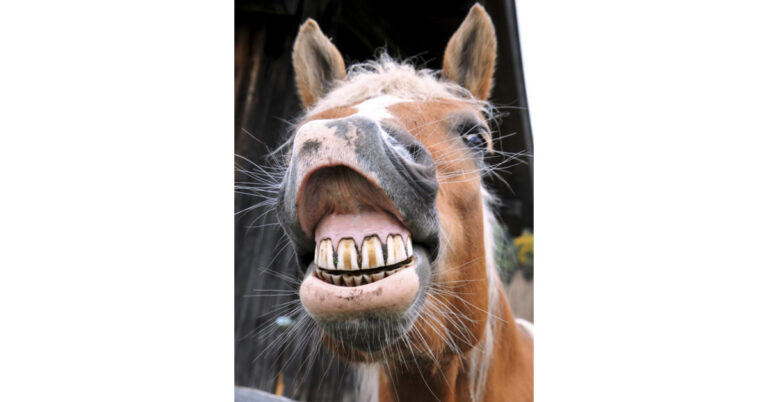
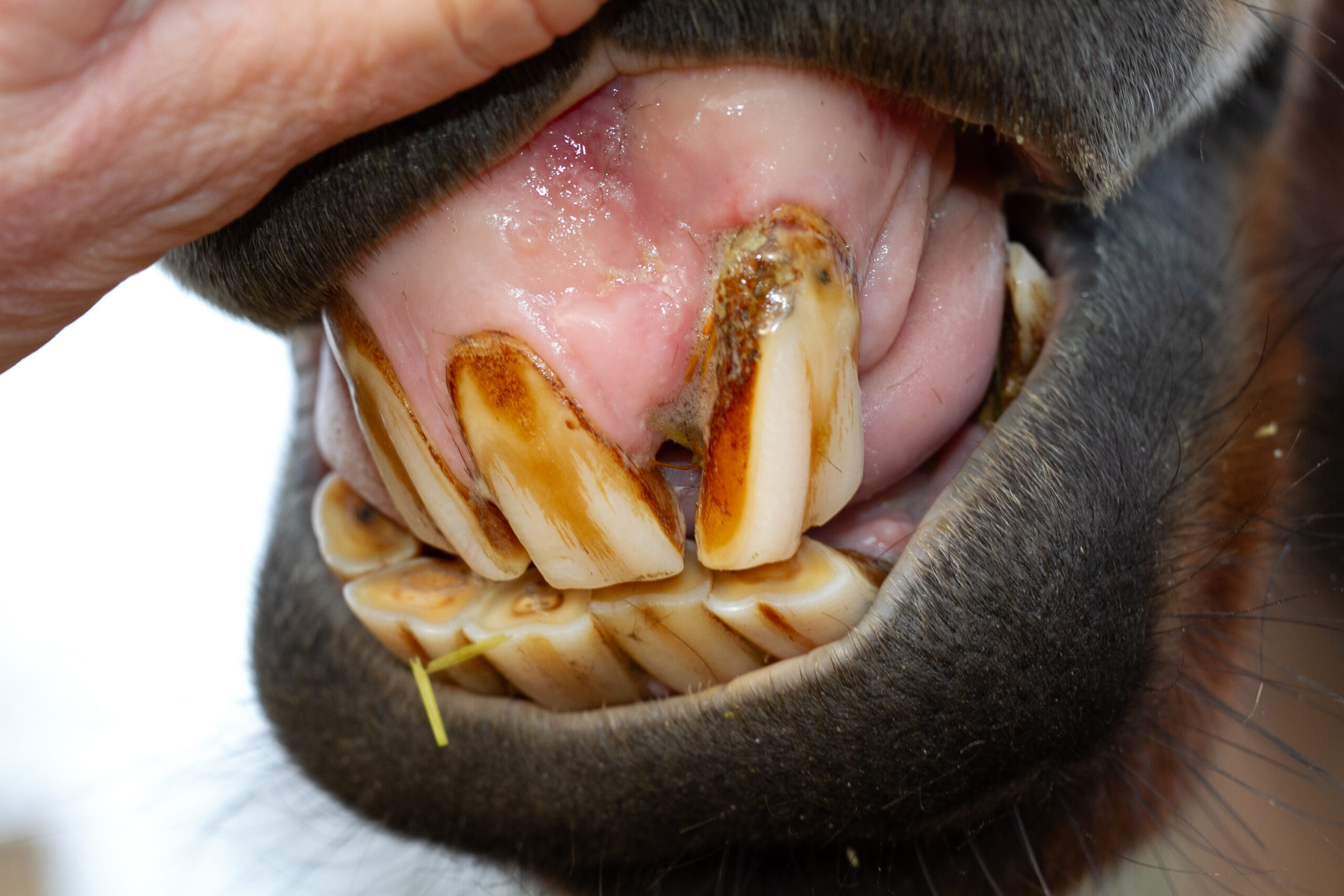
Easley said that each type of tooth can have different issues that result in tooth removal. The incisor teeth and canines in the front of the mouth can develop resorptive issues (i.e., EOTRH) and hypercementosis. Those issues can lead to gum disease and tooth loss.
He said fractures can also occur in those teeth from injuries.
Easley said the most common issues in premolar teeth are periodontal disease and endodontic disease. Periodontal disease is the leading cause of tooth loss, mostly due to food packing into gaps between teeth (diastemata). Endodontic disease is inflammation or death of the dental pulp inside the tooth. This is where nerves and blood vessels reside.
Some issues that affect a horse’s teeth begin in the sinuses or bones of the head.
Tooth Removal Process
Easley said tooth removal is generally done in the standing, sedated horse. He uses a local or regional nerve block around the problem tooth or teeth to eliminate pain.
“Occasionally, we’ll have a horse that we need to put under anesthesia to remove teeth, but that’s rare,” said Easley. “But, it is important that when we put a horse through any procedure that we evaluate the whole health status of the horse and get an idea of whether it has good functional kidneys and a healthy heart and lungs.”
He will also evaluate whether the horse can comfortably stand under sedation for the time needed to remove the tooth or teeth. Some tooth removals are very quick, and some horses require more advanced extraction techniques.
Radiographs of the area of interest can help the veterinarian prepare for the surgery ahead of the procedure. Images are also taken after surgery to ensure the problem has been fully addressed.
In the podcast, Easley discusses strategies for each type of equine tooth removal.
Tooth Removal Aftercare
“Older horses have a fairly shallow dental sockets, so there’s very little aftercare that needs to be done,” said Easley. “Usually, we’ll end up cleaning the socket out, examining it, getting some X-rays, and packing it with some temporary material that either resorbs or comes out on its own.”
He said with a secondary sinusitis or when he has to do a more advanced extraction technique, “We’ll need to have the horse on antibiotics for a period of time.” He said the horse might need to have several packing changes done in the socket. “We pack these sockets to prevent food material from getting in there before they start to develop some granulation tissue [in the socket].”
In those cases, the packing material will need to be changed for a week or two after surgery so the socket can completely heal.
Feeding Management
Easley said horses can still eat even when they have multiple teeth removed. What they can eat depends on the location and number of teeth the horse had removed and what teeth it has remaining.
Owners might not need to do much once the horse has healed. Some horses can still graze grass. If horses can’t chew long-stemmed forage, they might need a short-chopped forage or a pelleted complete feed that contains forage. Sometimes horses will need to have their pelleted feed soaked to make it easier to chew and swallow.
Soaking feed for horses that can’t chew normally is important to prevent choke (food getting stuck in the esophagus).
Other Mouth Issues
Sometimes senior horses have soft tissue or bone issues in their mouths, such as cancers or cysts.
“We always do a complete oral exam, and that requires that the horse is mildly sedated and that we’ve got the mouth rinsed out,” said Easley. Equine dentists use a mouth speculum and a mirror or an endoscope to completely evaluate the inside of the horse’s mouth.
“If we find abnormalities, typically we’ll do radiographs,” said Easley. “With radiographs, you can pick up most of the dental problems and make a proper diagnosis. But occasionally, we will have to go to some other imaging technique, and the most common one of those is a CT (computed tomography).”
Easley explained that CT provides a three-dimensional image of the horse’s skull, “You can see all the different areas of the tooth. You can see the pulp chambers inside the tooth as well as all of the roots and the bones and soft tissue around the tooth. So, it gives you a lot better picture than just a two-dimensional radiograph.”
He noted that ultrasound and MRI are also useful for looking at soft tissues.
Take It Out, or Leave It In?
Some senior horse owners are worried about tooth removal in the older animal. Easley explained that with older horses, owners often have an extremely high emotional connection.
“People are reluctant sometimes to have a procedure done on an old horse because they think that because the horse is old, it’s going to be more stressful, or the horse isn’t going to be able to handle the procedure,” explained Easley. “But these older horses typically do really well with handling a standing sedation for a tooth extraction.
“The reason for taking a tooth out is to make the horse more comfortable,” reminded Easley.
“It’s always an emotional decision, and it’s a hard decision for them, but I can tell you that removing bad teeth in old horses is one of the most rewarding things that I do,” emphasized Easley. “And I’ve had owners come up to me and give me a hug two weeks after we’ve taken the tooth out when we come for a recheck. They say, ‘You’ve given me my horse back!’ “
He said these horses feel so much better after the bad teeth are taken out than they did with the bad teeth in their mouths.
“It’s seldom that I’ve ever had an owner think that they made a wrong decision by having a bad tooth taken out,” Easley concluded.
About Dr. Jack Easley
Dr. Jack Easley is a veterinarian and a boarded equine dentistry specialist. Easley strived for more than 20 years to create a specialty board for equine dentistry. Then, in 2013, Easley and 18 colleagues from around the world passed the first boards given to 24 veterinarians. He received Diplomate status in the spring of 2014. That is when the American Veterinary Dental College Equine Specialty was formally recognized by the American College of Veterinary Dentistry and the AVMA.
Related Content
- Understanding EOTRH: A Common Dental Disease in Senior Horses. Kimberly S. Brown with Dr. Jack Easley. MySeniorHorse.com
- My Senior Horse Podcast: Dental Care. Kimberly S. Brown with Dr. Jack Easley. MySeniorHorse.com
- Tips on Feeding Older Horses with Dental Issues. Dr. Pat Harris. MySeniorHorse.com
Sign up for My Senior Horse’s FREE newsletter to get the latest information about equids 15 years and older delivered straight to your inbox!