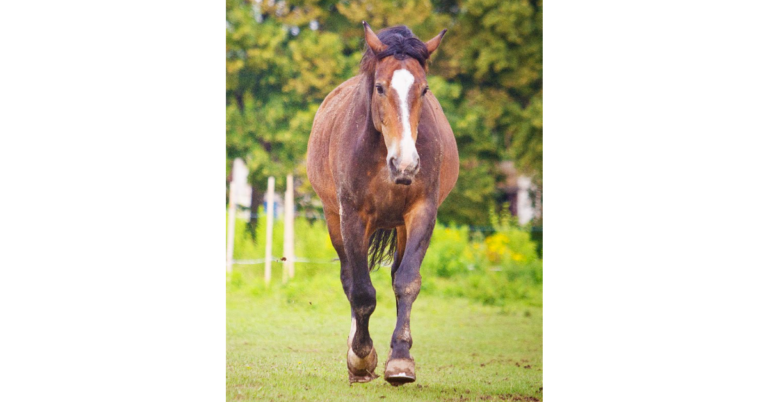
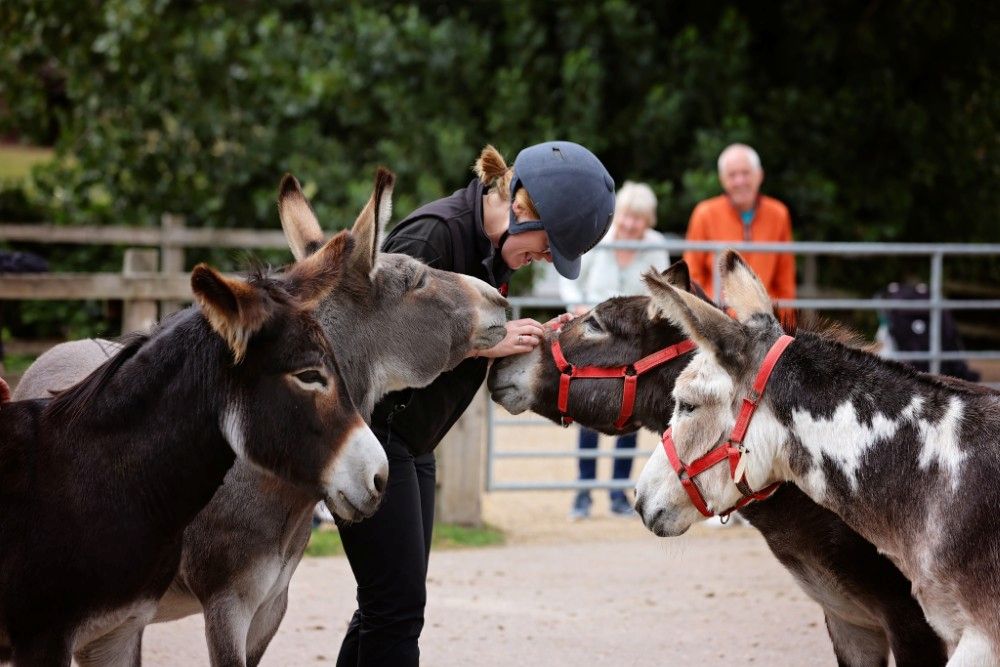
As we discussed in Part 1 of this article series, donkeys and horses have evolved differently. As flight animals, horses will try to run from sources of perceived danger, whereas donkeys are more likely to stay put and assess the situation. This pause to “weigh things up” has in part lead to their “stubborn” reputation, when in fact they are just cautious, explains Sarah Hallsworth, Equine Behaviour Manager at Redwings Horse Sanctuary, in the U.K. She oversees the behaviour rehabilitation of approximately 1,000 rescued residents across the charity, including more than 100 donkeys. She and her colleagues have lots of experience managing the differing needs of both horses and donkeys.
Donkeys are also more stoic by nature and less demonstrative in their behaviour. In a training or handling scenario, says Hallsworth, this might result in your donkey looking like he’s coping before “suddenly” having an explosive reaction, because their signs of distress or discomfort are more subtle.
Training Donkeys for Care

“As donkeys (particularly in the UK) tend to be smaller than horses, there can be a thinking that you can ‘hang on and get the job done,’ but we must remember that every day we ask our donkeys (and horses) to do things that are completely unnatural for them—from stepping foot onto a horsebox to allowing us to give them worming medication,” says Hallsworth.
Donkeys are still large, strong animals. This “hang on” approach risks not only causing harm to them or us but also creating negative experiences that become learnt and practiced behaviours to try to avoid the same situation and fear happening again.
“Some of the horses and donkeys at Redwings have had difficult experiences with people as a result of abuse or neglect, and these fear responses can never be ‘deleted,'” Hallsworth explains. “Retraining after negative experiences is much more difficult than familiarisation so they are set up for success for every encounter. That is also what we aim to achieve for our residents who haven’t had any previous human interaction.”
She notes that Redwings training sessions are actually quite similar between horses and donkeys. “For each, we find the right motivator that they will find rewarding to work for,” she says. “This might be a food reward or scratches. If any of our residents are showing especially demonstrative behaviour, we will work with our vets first to rule out pain as a cause before any process of retraining can begin.”
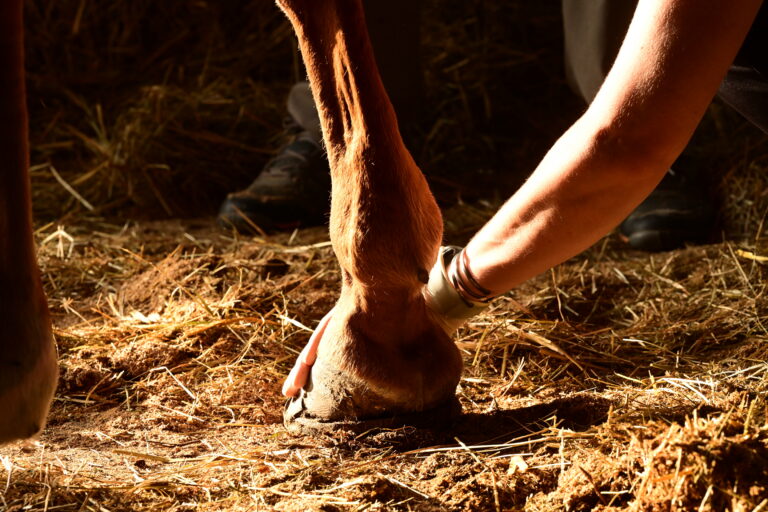
For training sessions, the team at Redwings first finds a suitable location. “It should be separate from their friends so they can’t disturb proceedings, but they should be close by and in sight, and it should be large enough that the donkey doesn’t feel trapped,” says Hallsworth. “When training a new skill (such as worming or practicing leg handling for the farrier), it is important to keep this location and routine consistent. When they can comfortably do the behaviour in this routine environment, we can work on proofing it in new environments and with other people.”
Where Training and Veterinary Care Overlap
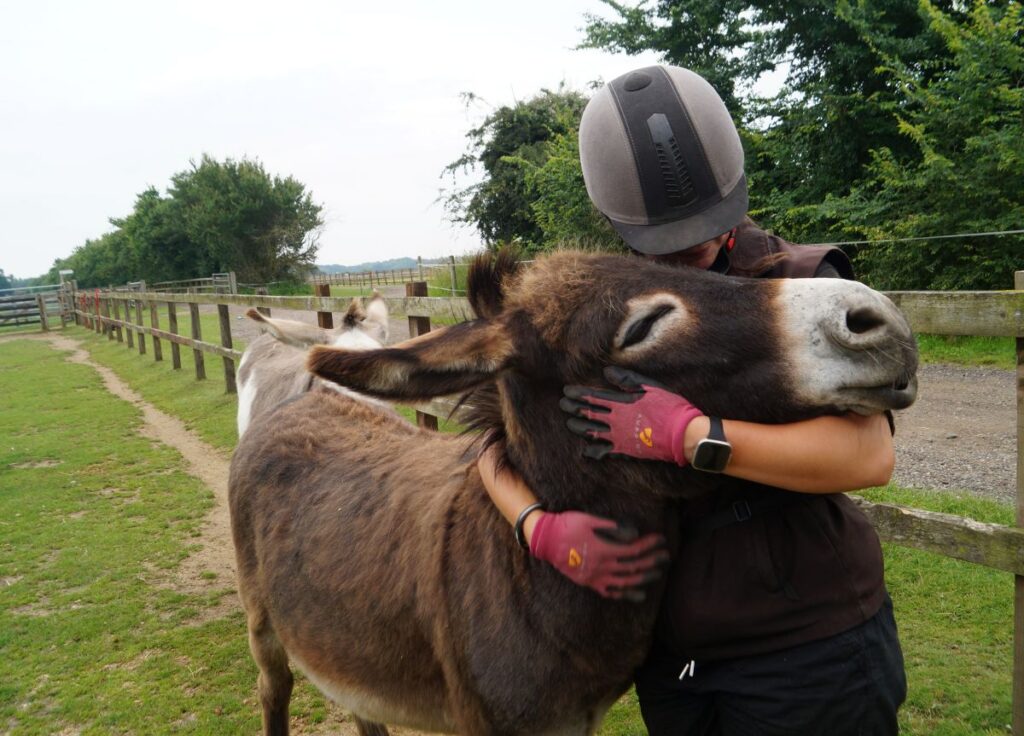
Nicola Berryman, BVetMed, is Redwings Senior Welfare Veterinary Surgeon, and she has worked for 15 years treating both horses and donkeys. When attending a call for a donkey, she says she takes several things into consideration before making a veterinary assessment.
“If safe and appropriate for me to do so for my exam, I would like to keep the donkey with their friend, at home, and in their routine,” she says. “Where possible, I would do this for horses as well, but for donkeys any steps we can take to mitigate stress are key, helping to prevent hyperlipaemia (which you can learn about in Part 1).”
Berryman says she also makes an effort to introduce herself to my patient. “I am likely to be an unfamiliar person to them, so I will offer them some food or provide scratches for a first positive association,” she says. “This moment of pause also gives me a vital opportunity to see how they react to me as a second person and assess how might be best to progress with the visit and exam.”
Berryman advises owners to practice running through the steps involved in a visit from a veterinarian or other equine professional in advance to ensure the donkey is familiar with the process. Donkeys thrive on routine, and a visit from a stranger can interrupt this. Asking your veterinarian about their preferences (for example, do they prefer to see patients in a stable or in the field?) can help you work on familiarising your donkey.
With this familiarisation in place, you are then in the best place to advocate for your donkey. You can explain to your veterinarian/equine professional what you’ve been practicing and the situations in which your donkey feels most comfortable. This, in turn, will help keep you, your donkey, and your vet safe, says Berryman.
As an owner, it is also worth considering what you would do in certain situations. “For example, if your donkey needed referring to an equine hospital for further treatment, would you do that?” she says. “If so, practice loading and traveling on a trailer or horsebox and practice stabling your donkey with their companion, as this will likely be needed for a period of hospitalisation. By preparing and training for the worst, you won’t make an already stressful situation for them (and you!) even worse.”
Berryman reminds us that donkeys (and all equines!) are incredibly intelligent, and it is much better to try and prevent bad experiences than retrain negative learnt experiences. “So, communicate with your vet, and be prepared to set your donkey up for success with unfamiliar people and situations to mitigate stress, which can be so risky for donkeys,” she says.
In Summary
This is an overview of how the experienced members of Redwings’ Behaviour team train and handle the sanctuary’s horses and donkeys. The science of donkey learning and training is incredibly vast. If your donkey has challenging or potentially dangerous behavioural needs, you should consult a professional. The Donkey Sanctuary—one of Redwings’ fellow National Equine Welfare Council members in the UK—also provides a host of useful information on their website: thedonkeysanctuary.org.uk/for-owners/owners-resources/understanding-donkey-behaviour.
Related Reading
- Caring for Senior Donkeys: Understanding Their Unique Needs
- Donkey Domestication, Physiology, and Disposition
- My Senior Horse Podcast: Donkeys
Sign up for My Senior Horse’s FREE newsletter to get the latest information about equids 15 years and older delivered straight to your inbox!