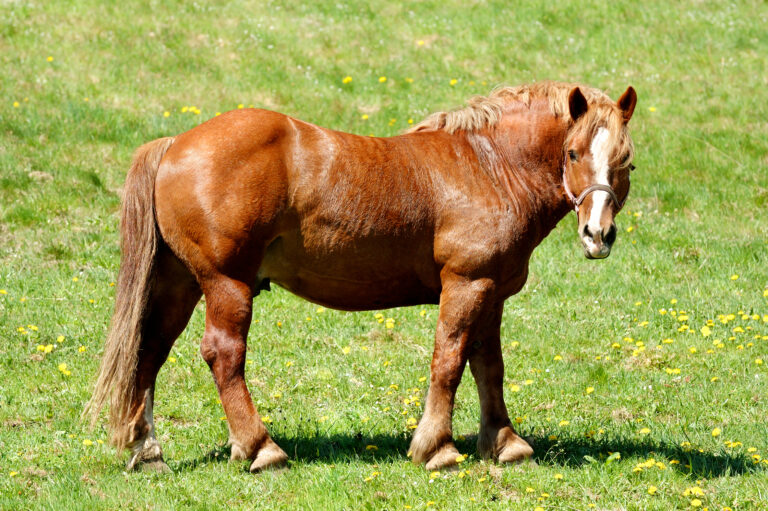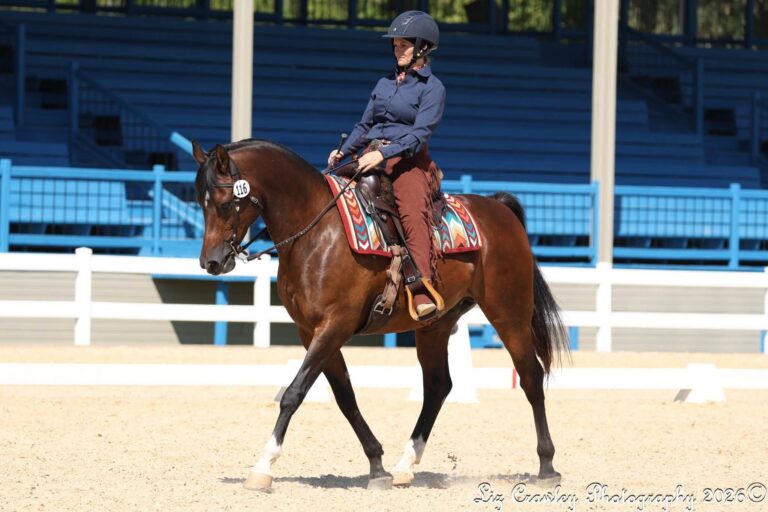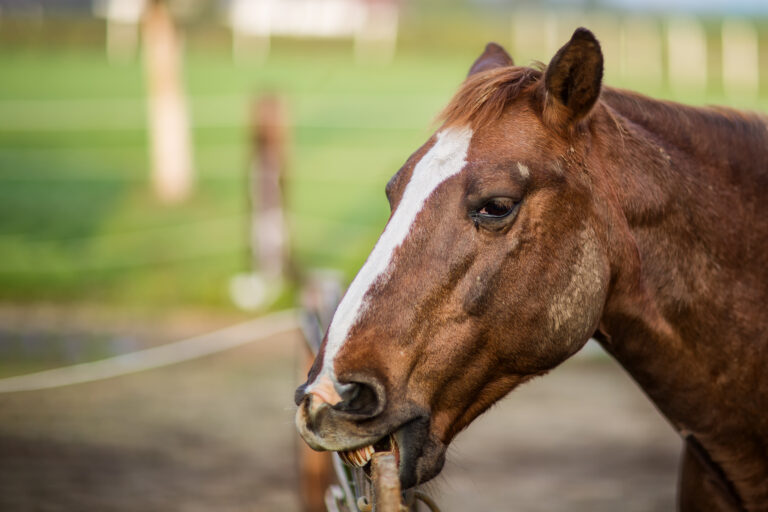
You might think your senior is the hottest horse in the barn. And—quite literally—you might be right.
Aging horses have a harder time regulating their body temperatures while working, likely because of age-related changes in their cardiovascular and sweating systems. That means they’re at greater risk of overheating and need extra help cooling down.
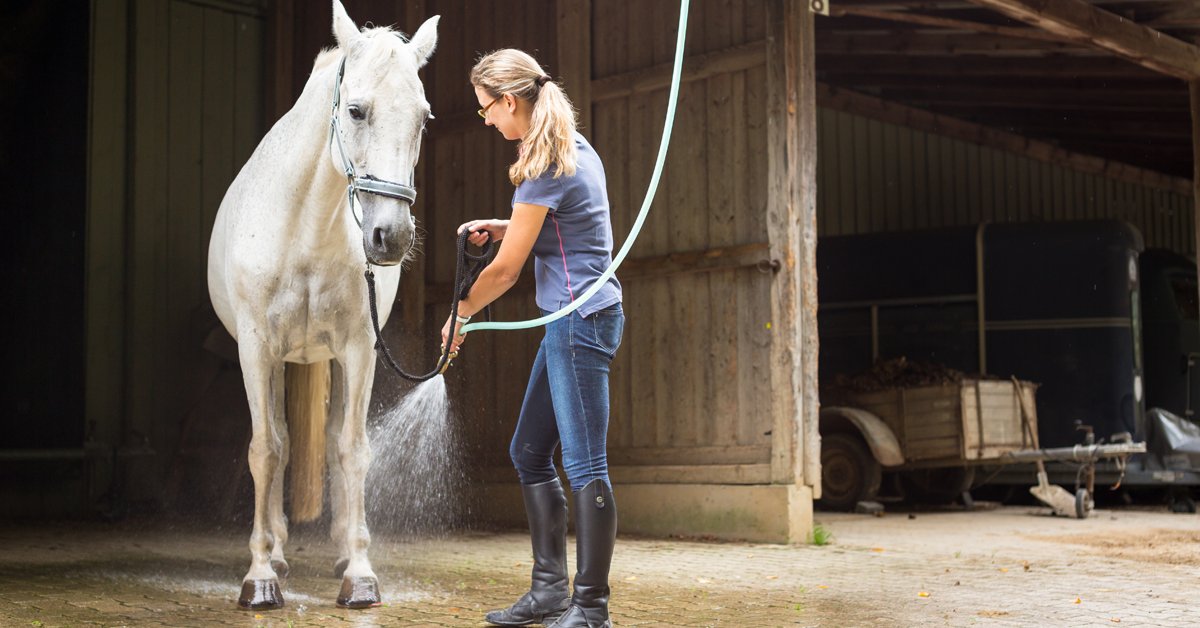
“Older horses may get hotter during exercise, and riders should take care to assist with cooling using cold hosing or other methods,” says Hilary Clayton, BVMS, PhD, Dipl. ACVSMR, FRCVS, professor and McPhail Dressage Chair emerita at Michigan State University, in East Lansing.
Exercise’s Effects on Older Horses’ Thermoregulation
Despite the increasing number of senior horses continuing to work or compete under saddle or harness, there’s little scientific research into how older horses handle exercise-related heat, and even less about how they deal with heat in general, according to our sources.
The foundational study on senior horse thermoregulation—self-controlling efforts to keep body temperatures normal in multiple situations that cause heating or cooling—remains the go-to scientific source on this topic. In 2010, Ken McKeever, PhD, FACSM, FAPS, FESS, Distinguished Professor at Rutgers, The State University of New Jersey, in New Brunswick, published groundbreaking work on the effects of exercise on senior horses’ cardiovascular function and thermoregulation in Equine Veterinary Journal.
“It was interesting scientific stuff,” McKeever says. “It shows that old literature can be good literature.”
In that study, McKeever and his colleagues exercised 11 unfit Standardbred mares—six of whom were about 8 years old and the rest about 26 years old—at the same workload on an inclined treadmill until their internal temperatures reached 40°C (104°F). The seniors hit that mark in approximately 17 minutes, which was roughly half the 32 minutes it took the younger horses. The researchers suspected age-related changes in cardiovascular function left the seniors less able to move heat from their body’s core to their skin and support the sweating needed to dissipate it.
The heart rate results pointed to greater cardiovascular strain in the seniors. When they reached that end point, their hearts were beating 184 times per minute, versus 140 for the younger horses. The faster pulse indicated their cardiovascular systems were working harder, but it does not itself explain why their temperatures rose faster.
“To maintain the same work rate, the older horses’ aerobic systems had to work at a higher relative intensity, so their hearts had to pump harder,” McKeever says. At the same time, their blood was doing double duty delivering oxygen to the working muscles and transferring heat from the core to the skin, where it could escape, he says. The seniors appeared less able to meet those simultaneous demands.
Their faster heat gain might also relate to the amount of fluid available to support circulation and sweating, McKeever says. In a separate experiment, the researchers measured plasma volume (the amount of liquid in the blood) at rest in 34 Standardbred mares, including eight seniors averaging about 27 years old. The older mares had an average of 24.1 liters of plasma, about 15% less than the younger mares’ 28.5 liters. That gave the researchers one possible explanation for the treadmill results.
“Plasma helps maintain cardiovascular stability, but it also provides fluid that horses can use for sweating,” McKeever says. The researchers did not directly test whether the lower plasma volume caused the seniors to heat faster.
Caring for Senior Horses in Hot Weather
To protect senior horses, owners should reduce the intensity or duration of exercise during hot weather, allow plenty of recovery time between workouts, and ensure the horses are well-hydrated, McKeever says. Fans can increase airflow over wet skin, helping sweat and water evaporate.
After exercise, continue cooling the horse while monitoring temperature, heart rate, and breathing rate. Within about 30 minutes, heart and breathing rates normally return close to baseline, and rectal temperature begins to fall. If the temperature has not started dropping by then—or remains above 40.6°C (105°F) even while falling—keep applying cool water and seek veterinary guidance, advises New Mexico State University’s practical cooling guide.
The University of Minnesota’s equine heat resource warns that weakness, distress, poor coordination, or persistently elevated heart and respiratory rates can signal heatstroke and require immediate veterinary attention.
Related Reading
- 9 Tips for Summer Senior Horse Care
- Tips on Cooling a Hot Horse
- 8 Health Issues for Horses in Summer
Sign up for My Senior Horse’s FREE newsletter to get the latest information about equids 15 years and older delivered straight to your inbox!
-
View all posts
Christa Lesté-Lasserre is a science journalist specialising in animal health and behaviour, life sciences, and evolutionary processes. Her articles and stories have appeared in major science magazines and literary reviews in multiple languages across the globe. Based in France's greater Paris area, Christa holds an MA from the University of Mississippi and a BA from Baylor University in Texas, complemented by postgraduate work in life sciences at the University of Paris René Descartes.
A Pulitzer Center grantee for her coverage of the COVID-19 pandemic for Science magazine and recipient of American Horse Publications awards for her articles on equine behaviour, Christa focuses on shaping scientific studies into the stories they tell.