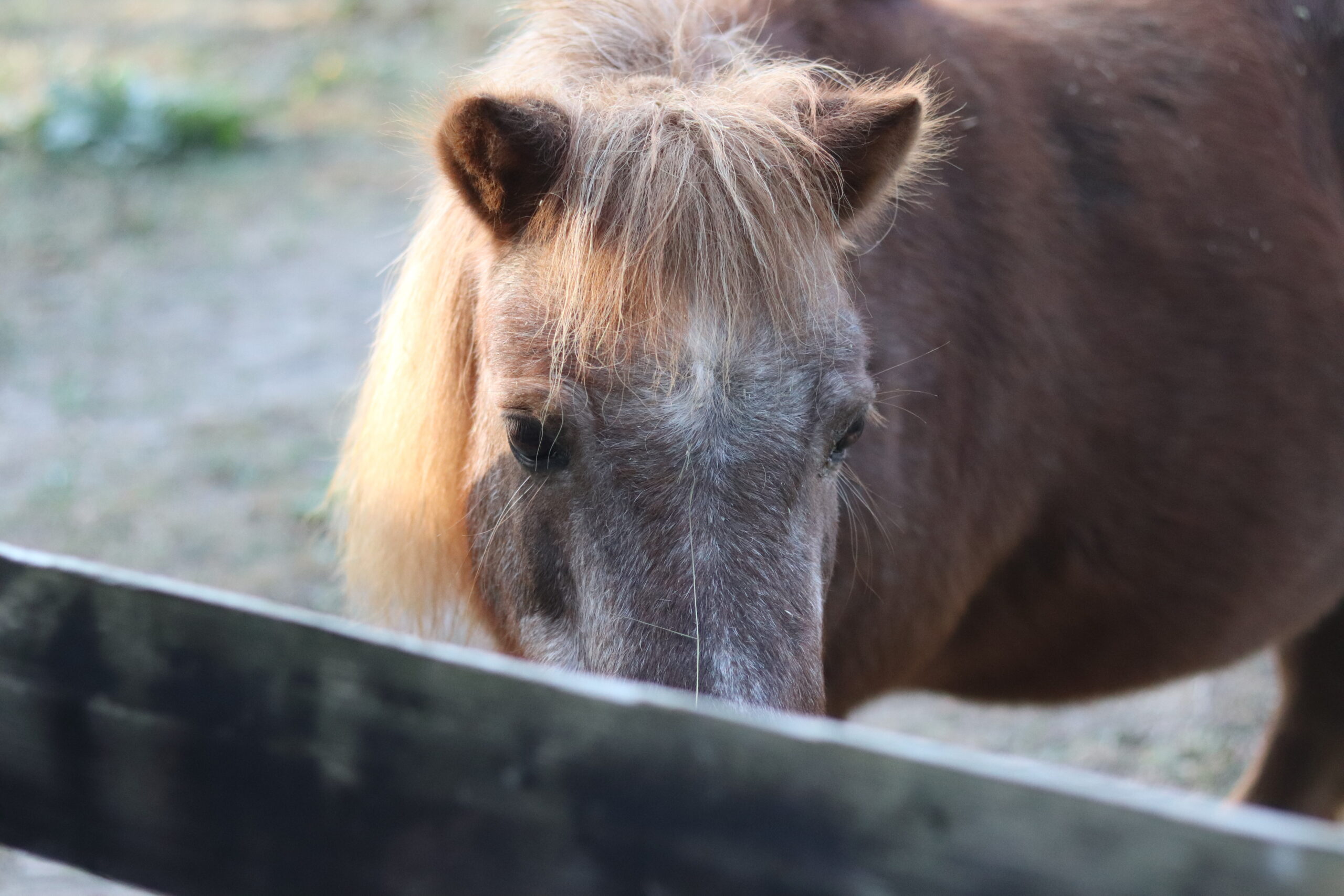
Editor’s note: I’m the owner of a miniature donkey in Wyoming—which can get quite cold and windy. Research about this equid’s physiology and behavior shows these animals are more different from horses than we might think. Here are some facts and tips from the experts.
Domestication of Donkeys
Scientists think donkeys were first domesticated in East Africa about 7,000 years ago, according to an article in Science.1 It is thought that domestication began in East Africa (Kenya/Horn of Africa) from the wild African ass. Within 2500 years, they had spread throughout Europe and Asia, the article noted.
Fiona Marshall, an anthropologist at Washington University in St. Louis, said, “Their domestication transformed society. They were the first land-based transport.” The Science article noted that in many parts of the world, they still serve that role.
New genetic data showed that Romans interbred African and European donkeys to create animals 155 centimeters tall (about 61 inches, a little over 5 feet). The article noted that was about 25 centimeters (about 10 inches) taller than a typical donkey.
Today’s Asses
There are 42-44 million working donkeys in the world.2 World Population Review3 notes that:
- Ethiopia has about 10.7 million
- Sudan 7.7 million
- Pakistan 5.8 million
- Chad 4.7 million
- Mexico 3.3 million
- Niger 1.9 million
- In the U.S., there are about 52,000 domesticated and feral animals
- In the U.K. there are about 27,000, with nearly 3,000 living in sanctuaries (if you include Ireland, Spain, and Italy, there are about 7,000 donkeys living in sanctuaries)
How Donkeys Are Different
Donkeys, horses, and mules belong to the family of animals called equidae. But, they are each a different species. A mule often has a dam/mother that is a horse and a sire/father that is a donkey.
Donkeys have 62 chromosomes, compared to the horse’s 64. A mule is a cross between a donkey and a horse, and it has 63 chromosomes. The resultant offspring can have traits of either parent. Typically, mules will herd with horses because their mothers were horses. Mules usually are sterile, although there have been documented cases of a female mule (called a molly) producing a foal.
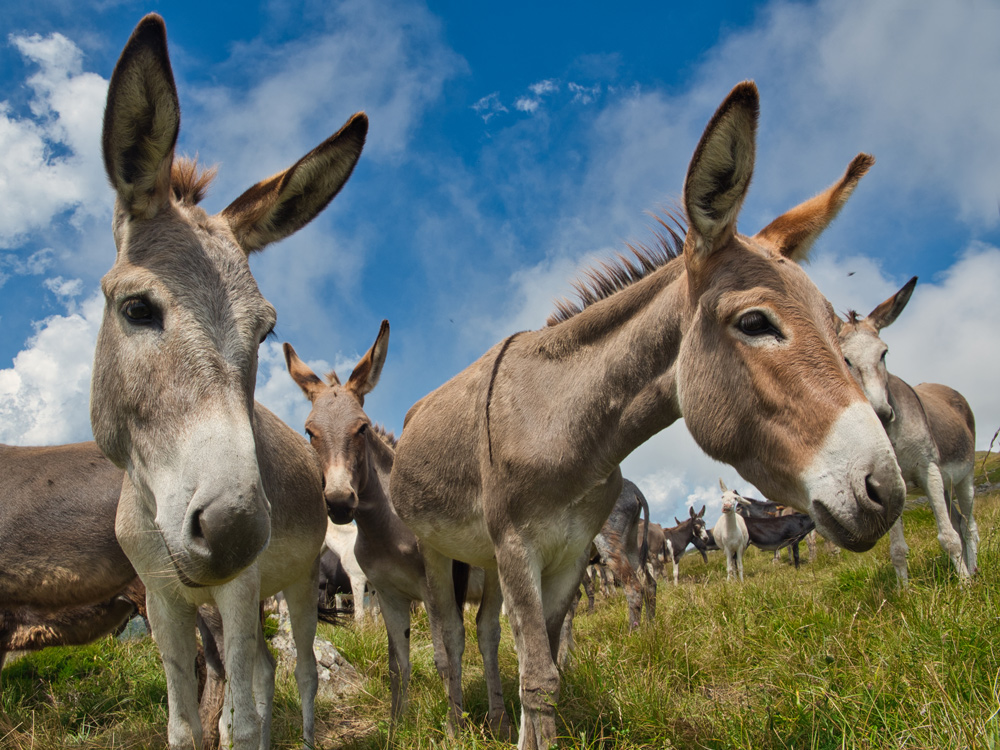
Donkeys form tight social bonds. They usually live in pairs or small herds, and they might be more prone than horses to stand and fight rather than flee. They run slower than horses (15 mph vs up to 40 mph), they have very long ears, and their vocalizations are different from horses.
Research on Physiology
U.K. researchers have studied donkeys and their differences from horses. One published paper4 noted that, “There are clear differences between donkeys and horses in their evolutionary history, physiology, behaviour, and husbandry needs. Donkeys are often kept in climates that they are not adapted to and as such may suffer impaired welfare unless protection from the elements is provided.”
The researchers wanted to compare some of the hair coat properties of donkeys, mules, and horses living outside year-round in the temperate climate of the U.K.
The insulation properties of a hair coat are affected by the thickness of the hair layer, the hair weight, and diameter, and by external factors such as air movement and moisture, noted the researchers. Their study aimed to provide the first comparative scientific data on hair coat properties of the three species in a temperate climate.
Study Hair Samples
In the U.K. study, hair samples were taken from 42 animals. There were 18 donkeys (4 females, 14 males), 16 horses (6 females, 10 males), and eight mules (5 females, 3 males). The samples were taken in March, June, September, and December.
The weight, length, and width of hair were measured in each of the four seasons as indicators of the hair coat insulation properties.
Research Results
The researchers found that donkeys’ hair coats do not significantly differ across the seasons. “All three measurements of the insulation properties of the hair samples indicate that donkeys do not grow a winter coat.” They found that the donkeys’ hair coats were significantly lighter, shorter, and thinner than that of horses and mules in winter.
“In contrast, the hair coats of horses changed significantly between seasons, growing thicker in winter.”
The conclusion of this study was that donkeys, and to a lesser extent mules, appear not to be as adapted to colder, wet climates as horses. Donkeys might require additional protection from the elements. This includes access to a windproof and waterproof shelter in order for their welfare needs to be met.
Shelter and Hair Density Comparison
Another study from the U.K. compared shelter use and hair density in donkeys, horses, and mules.5
The researchers made 1-2 observations per per week of each animal for behavior. This included location, activity, insect harassment, and time of day. They also observed horses for behavior based on weather. This included temperature, precipitation, wind speed, luminous flux, and shelter conditions.
Hair Density
The study found that donkeys and mules have thinner hair than horses in the winter. In fact, “There was no significant change in hair weight in donkeys” during the year, the paper noted.
They found that horses and mules grow a winter coat, but mules don’t seem to lose it as quickly as horses.
Shelter-Seeking Behaviors
The study found that donkeys spent more time indoors than horses. “Donkeys seek shelter more than horses when it rains. They are more affected by changes in temperature in UK than horses. Donkeys stay inside more when the temperature is below 10ºC (50ºF).”
The researchers found some evidence that horses start to seek shelter more when temperature is above 20ºC (68ºF).
“Although there were no observations in high winds, donkeys may be more affected by changes in wind in the UK than horses,” the research stated. “Donkeys may seek shelter in moderate winds.”
However, it is likely that horses will seek shelter to avoid insects more than donkeys.
Final Words
Donkeys—and mules—are different from horses in their physiology and behavior. If you are new to the ownership or management of donkeys or mules, seek out experienced handlers to get advice.
References
- From a Single Domestication, Donkeys Helped Build Empires Around the World. Science. 2022
- Why Do Working Donkeys Still Matter? Spana
- Donkey Population by Country 2025. World Population Review.
- Hair coat properties of donkeys, mules and horses in a temperate climate. BEVA 2017. Authored by B. Osthaus, L. Proops, S. Long, N. Bell, K. Hayday, F. Burden.
- Protection from the elements – part one: a comparative study of shelter use, hair density and heat loss in donkeys, horses and mules. The Donkey Sanctuary. Authors and contributors: Leanne Proops, Emily Haddy, Sarah Worth, Nikki Bell, Kristin Hayday, Faith A. Burden, and Britta Osthaus.
Further Content
- My Senior Horse Podcast: Donkeys and Mules. Dr. Amy McLean and Kimberly S. Brown. MySeniorHorse.com
- Mule Heart Rates and Variabilities Studied. Kimberly S. Brown. MySeniorHorse.com
- My Senior Horse Podcast: Donkeys. Kimberly S. Brown. MySeniorHorse.com
- Mules and Hinnies, a Scientific Point of View. Dr. Amy McLean. MySeniorHorse.com
- How Long Can a Horse, Donkey, or Mule Live? MySeniorHorse.com
Sign up for My Senior Horse’s FREE newsletter to get the latest information about equids 15 years and older delivered straight to your inbox!