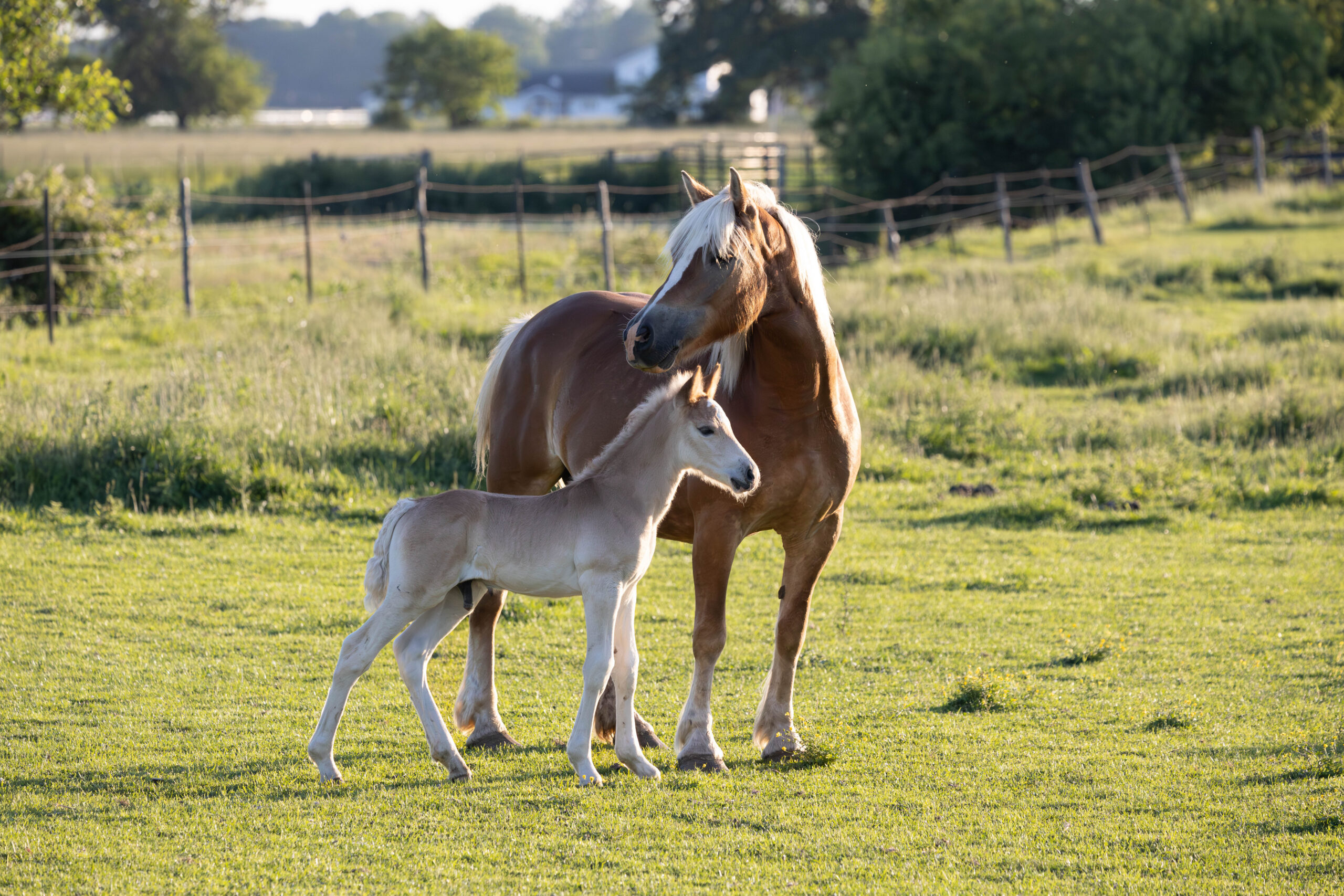
Mares—whether broodmares or not—are over-represented in studies of metabolic disorders, noted Dr. Callum G. Donnelly, Assistant Professor in the Section of Theriogenology and Harry M. Zweig Assistant Professor in the Department of Clinical Sciences at Cornell University’s College of Veterinary Medicine.
“Being a broodmare is necessarily a metabolically expensive task,” he explained. “Pregnancy should be seen as a pretty big metabolic adaptation.”
Because mares are already predisposed to metabolic issues, and pregnancy adds to that metabolic stress, “I think that is why we see more metabolic conditions in broodmares,” Donnelly added. “The two intertwine because a horse without metabolic conditions can adapt to that metabolic stress (pregnancy). But a mare with metabolic syndrome is less equipped to adapt to pregnancy.”
Insulin Dysregulation
One of the key features of equine metabolic syndrome is insulin dysregulation. “Age, independent of any other risk factor, produces more insulin dysregulation,” Donnelly explained. Therefore, as a mare ages, it becomes more difficult for her to maintain glucose homeostasis.
Blood glucose rises after the horse eats a meal as carbohydrates break down into glucose. In response to higher levels of glucose, the horse’s pancreas releases insulin. The insulin allows cells (such as muscle) and the liver to take in glucose from the bloodstream. Then, the glucose level in the bloodstream returns to normal, which switches off the pancreas from releasing more insulin.
Donnelly noted that the pancreas is a very under-studied organ in the horse.
Phenotypes Related to Insulin
There are three main phenotypes related to insulin in horses, Donnelly explained:
- Hyperinsulinemia. This occurs when the horse has abnormally high insulin levels circulating in the blood whether they are eating or not. Hyperinsulinemia is a primary driver of laminitis. “Ponies are the primary ones that get hyperinsulinemia,” Donnelly said. However, he has a hyperinsulinemic warmbood mare that “channels a Welsh Pony.” Hyperinsulinemia can also occur in donkeys.
- Exaggerated insulin. “Horses with metabolic syndrome have what we call an inappropriate postprandial response,” said Donnelly. “They have exaggerated insulin after eating a meal. These horses have an inappropriate pancreatic response.”
- Insulin resistance (IR). Insulin resistance occurs when the horse’s cells stop responding normally to insulin. That, in turn, causes the pancreas to pump out extra insulin and leads to high levels in the blood. IR is most often related to an inappropriate diet, said Donnelly. Rarely do horses have “lone” insulin resistance, where their tissues are not sensitive to insulin and they don’t produce more insulin in response. However, Donnelly treats a mare that only has insulin resistance, and “that’s probably because of age. Her pancreas works the way it’s meant to work, but her tissues aren’t as sensitive to insulin.”
PPID
Pituitary pars intermedia dysfunction (PPID, or Cushing’s disease) and insulin dysfunction can occur in the same horse. “But one is not necessary for the other,” Donnelly noted.
“PPID is a dysfunction of the pituitary pars intermedia,” he explained. “It’s more akin to a neurodegenerative disease than it is to a strict endocrinopathy. It’s a disease of old horses. And, old horses are at risk independently of having poor insulin regulation. So, the two often happen together because they both happen in old horses.”
Owners often see PPID in mares older than 14 years. Horses should be treated for PPID based on a veterinarian’s recommendation, Donnelly said.
Body Condition in Broodmares
Donnelly said it is important to track body condition in all equids, and especially in broodmares. “It would be most helpful in older broodmares,” he noted. Donnelly added that a mare’s body condition and fat deposition changes with age and pregnancy.
He recommended that owners take regular photos of broodmares (or any equid) in the same location, with the same backdrop and lighting, especially in the spring and fall. He also advised taking photos from different angles, such as rump to head, in addition to side shots.
“The first thing you have to recognize is that the horse has a weight problem,” said Donnelly. “You can’t have mares too skinny or obese.”
Management strategies to address weight must be practical for the owner’s situation. “Weighing the animal can be important to get owner buy-in,” he said.
Owners should address body condition in barren mares in the fall. “It’s hard to say in the spring that your mare needs 60 days of weight loss,” he said.
It’s also important to remember that lactation is one of the highest energy demands a mammal will experience. “Mammary tissues preferentially use glucose, so mares that are lactating might be different than those not lactating,” Donnelly said.
Nutrition for Senior Broodmares
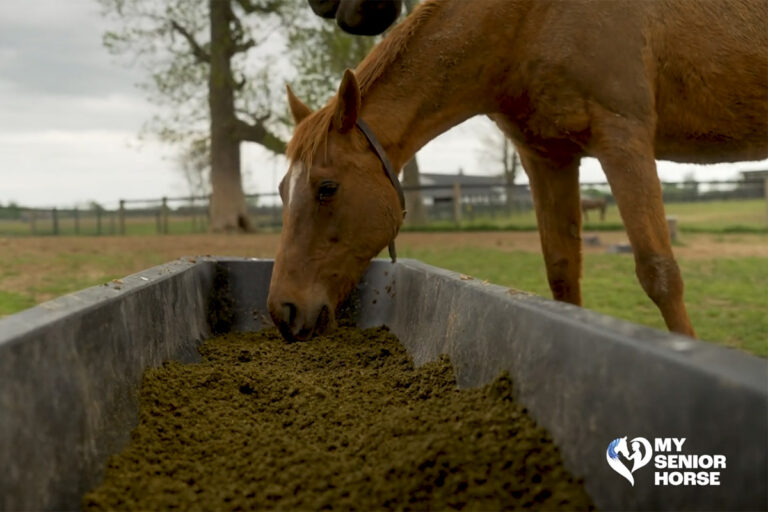
“It’s a good idea to work with a nutritionist,” Donnelly said. “Most feed companies have one on staff.” He also recommended weighing the senior broodmare’s feed. However, not all horses, ponies, and donkeys respond to the same feed the same way. Reaction to a feed can be individual.
Donnelly also recommended using tested hay so you know what the animal is getting in its forage.
“I’m a big fan of ration balancers,” he said. “That becomes an easy way for horses to think that they’re still getting what everyone else is getting, but in a more benign way that gives them the other nutrients that they need.”
Muscle Mass Loss in Broodmares
Mares taken out of competition for breeding often lose muscle.
“We don’t have good data on how much body composition changes in mares as they leave competition, but I think most people would say it’s intuitive that they lose some muscle,” said Donnelly. “And maintaining muscle mass is really important for maintaining good insulin regulation.”
He recommended working with a nutritionist to increase the protein levels in the older broodmare’s diet.
About Dr. Callum G. Donnelly
Callum G. Donnelly, BVSc, PhD, DACT, DACVIM (LAIM), is an Assistant Professor, Section of Theriogenology and the Harry M. Zweig Assistant Professor in the Department of Clinical Sciences at Cornell University’s College of Veterinary Medicine. He practices clinical reproductive medicine and leads a research lab. He has a particular interest in maternal-fetal medicine of horses both in the clinic and in research. Donnelly obtained his veterinary degree in 2013 from Charles Sturt University in Australia. He is boarded in equine reproduction and large animal internal medicine. Donnelly also holds a PhD in integrative pathophysiology from the University of California, Davis. Donnelly is a lifelong horseman and horse sport enthusiast.
Related Content
- Why Proper Body Condition Is Essential for Senior Mares and Stallions. Dr. Karen Wolfsdorf. MySeniorHorse.com
- Mare Reproductive System Diagram. MySeniorHorse.com
- Advice for Breeding Maiden Senior Mares video. Dr. Karen Wolfsdorf. MySeniorHorse.com
- How to Assess the Health of Senior Mares and Stallions video. Dr. Karen Wolfsdorf. MySeniorHorse.com
- Addressing Older Eggs in Senior Mares Video. Dr. Karen Wolfsdorf. MySeniorHorse.com
- Care of the Older Stallion Video. with Dr. Maria Schnobrich. MySeniorHorse.com
- Exercise and General Health of Senior Breeding Equids Video. Dr. Mariah Schnobrich. MySeniorHorse.com
Sign up for My Senior Horse’s FREE newsletter to get the latest information about equids 15 years and older delivered straight to your inbox!