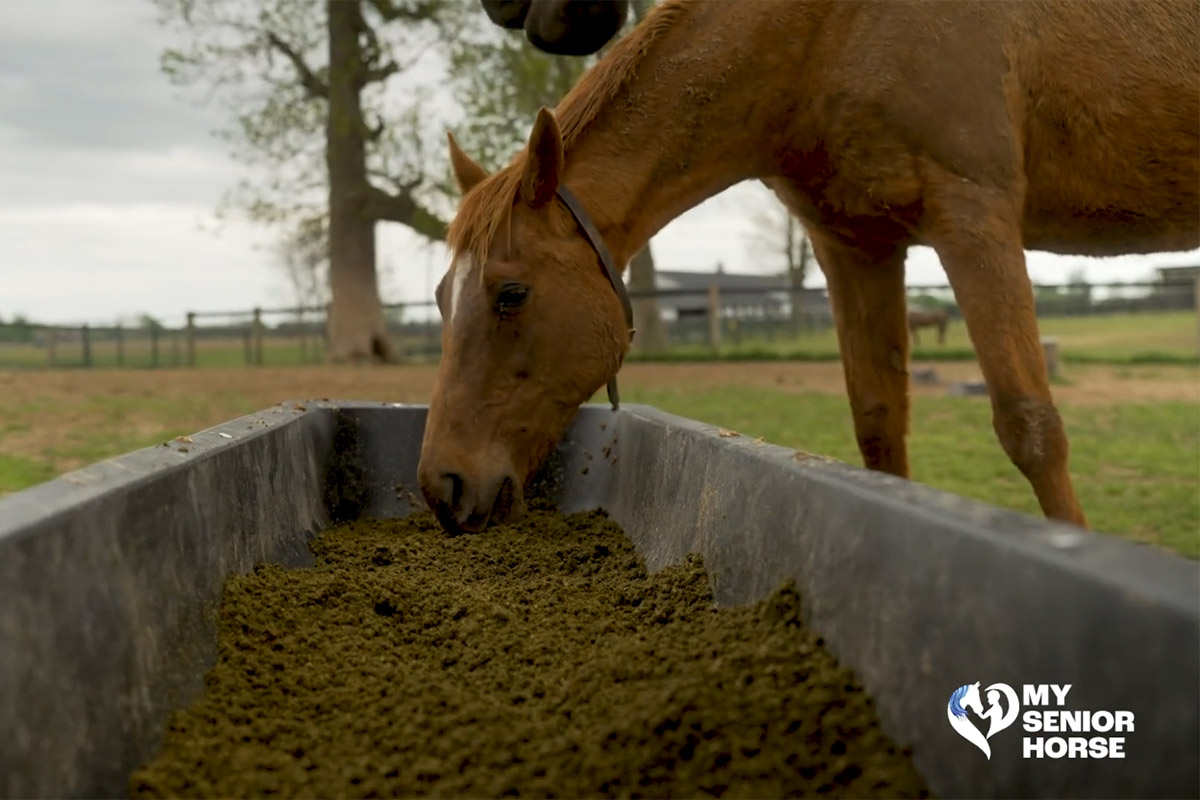
Putting weight on a horse with pituitary pars intermedia dysfunction (PPID) is challenging because you’re trying to increase body condition while staying below a certain threshold of nonstructural carbohydrates (NSCs).
The first thing Bryan Cassill, R&D commercial manager for Buckeye Nutrition, recommends when feeding thin horses with PPID is to find a high-quality hay that’s still low in NSCs, such as a legume or alfalfa hay.
“Build some calories in through your forage, and do it in a low-sugar, safe way,” he explained. “Once you get a good, high-quality forage, then you can build those concentrates on top of that, look for a nice higher-quality protein balancer, and then add your calories with a nice blend of fat.”
Look for a quality protein source with high lysine, methionine, and threonine content (the first three limiting amino acids), said Cassill, and a quality fat source with a higher omega-3 ratio to try to decrease inflammation in the body. He also recommends controlling these horses’ meal size by feeding multiple (3 to 4) meals per day.
“So I’m going to go for a higher-quality fat source and a higher protein source, and I’m going to try to build that diet through those two pieces,” he said.
Related Reading
- Managing NSC Levels in Senior Horses
- Understanding the Different Types of Horse Feed
- Feeding Senior Horses That Are Hard Keepers
Sign up for My Senior Horse’s FREE newsletter to get the latest information about equids 15 years and older delivered straight to your inbox!
-
View all posts
Alexandra Beckstett is a lifelong horse owner and an award-winning writer and editor. She is the editorial director of EquiManagement and MyNewHorse.com, prior to which she spent 13 years with The Horse/TheHorse.com.