As a tribute to our global audience, My Senior Horse brings you this podcast and article on feeding senior horses with Spain-based nutritionist and international competitor Coby Bolger. She founded Horse1 nutrition consulting and has been helping horses and their owners for more than 28 years.
While different countries and regions within countries have different methods of feeding senior horses, Bolger focuses first on the basics, then on some of the differences seen in Spain. No matter where you and your senior horse live, you can find good information in this episode.
(Editor’s note: The content of this podcast is the expert’s approach to the topic. Please consult with your practitioner if you have questions.)
Forages
“I think that the forages in Spain are very similar to the forages that are available in most of Europe and the United States, from what I understand,” said Bolger. “We’ve got fescue and ryegrass and orchard grass and meadow hay mixes and things like that.” She said those are typical of other European countries.
One difference in forages in Spain is that they do “a lot” of analysis. “I have noticed is that there is a tendency to cut the hay a little bit more mature,” she said. “It’s just a tendency of the people who are curing the hay. We’ve got a lot of nice sunshine here in Spain, so it’s very well cured. So in general, you’re going to see a nice equality of hay.”
She added that since their hays are cut at a more mature stage, they can be less digestible. That means the hays are going to have less protein.
“And, of course, the older horse’s digestive system—the digestive enzymes, their teeth, their jaws—aren’t working as well as we would need them,” she explained. “And that’s where you’re going to see some variation. So you’re going to have to adjust your forage and go into more digestible forages in general.”
Older Digestive System
Bolger said she doesn’t start feeding senior horses differently until she notices that they are not absorbing their feed properly. She reminded listeners that the horse’s digestive tract starts in the mouth.
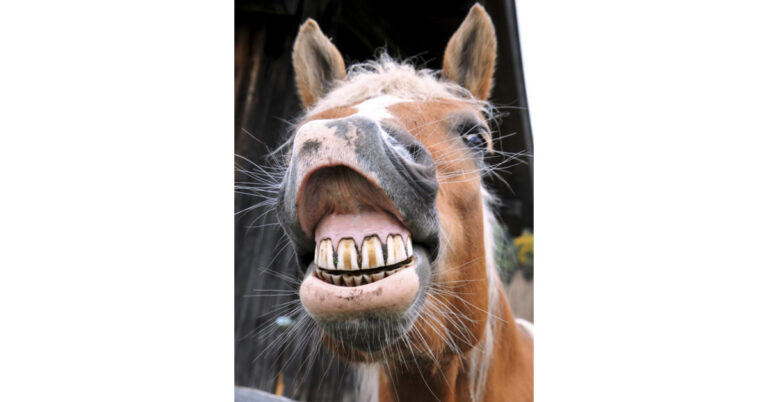
“The first things that are going to go are the horse’s teeth and the horse’s jaw,” Bolger said. “They can have pain around their jaw, and if they have pain or if their teeth are worn and they’re not able to chew properly, that’s the first part in the chain.”
She reminded horse owners that horses need to get feedstuff into 2mm particles to allow efficient absorption of nutrients in the GI tract.
When that happens, Bolger said you will notice their energy level decline. Their toplines will not be the same. Their muscle mass changes.
“You need to adjust the diet before this starts to happen, or right when you notice that it starts to happen,” she said.” You have to be really agile, because when they lose muscle mass, getting that muscle mass back—getting that coordination back—is work.”
Basics of the Diet
Horses should have a total dry matter of ingesta between 1.7%-2.5% of their body weight, she said. Most of that should be in fiber.
But when feeding senior horses, sometimes they cannot chew that fiber due to the reasons discussed above.
“Something that happens on a regular basis is they’ll chew [forage], but they can’t really get it to that 2 millimeters, and they swallow it. But, then you’re going to start to have problems with choke or an increased risk of impaction colic and things like that,” she noted.
Breaking the Rules When Feeding Senior Horses
This is when you have to start breaking the rules, said Bolger. “With any horse, we’re always trying to lengthen the time that they’re chewing, lengthen that time of total ingesta to keep them busy, to keep them away from stereotypies,” Bolger explained. “We’re trying to prevent gastric ulcers by reducing fasting time. There are some rules there. Then all of a sudden, you get to your older horses and the rules change. You have to be able to adjust with that.”
That might mean management changes, she noted. If your older horse is getting pushed away from the best hay, he might be left with the stems that he can’t chew properly. She said there also is the possibility of sand colic because they are seeking that last bit of hay.
“So, I will be checking the horse’s manure for sand on a regular basis.” (See video on checking manure for sand.)
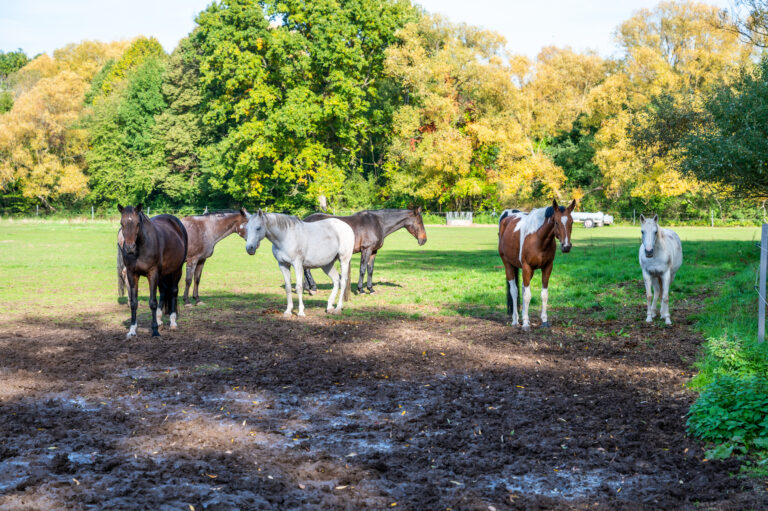
“I might proactively manage the social group to make sure that they eat uninterrupted, because sometimes they’re just a little more tired about life,” she added. “Sometimes we have a little bit of competition, a little bit of resource guarding. You need to make sure that that’s not happening with your older horse.”
Observation and Organization
Bolger said when feeding senior horses, you might have to reorganize your normal routines. One example she mentioned was having feed/hay at one side of a field and a water source at the other side to encourage movement.
“If you have a horse that has pain (such as arthritis), they aren’t going to be be walking as actively,” she said.
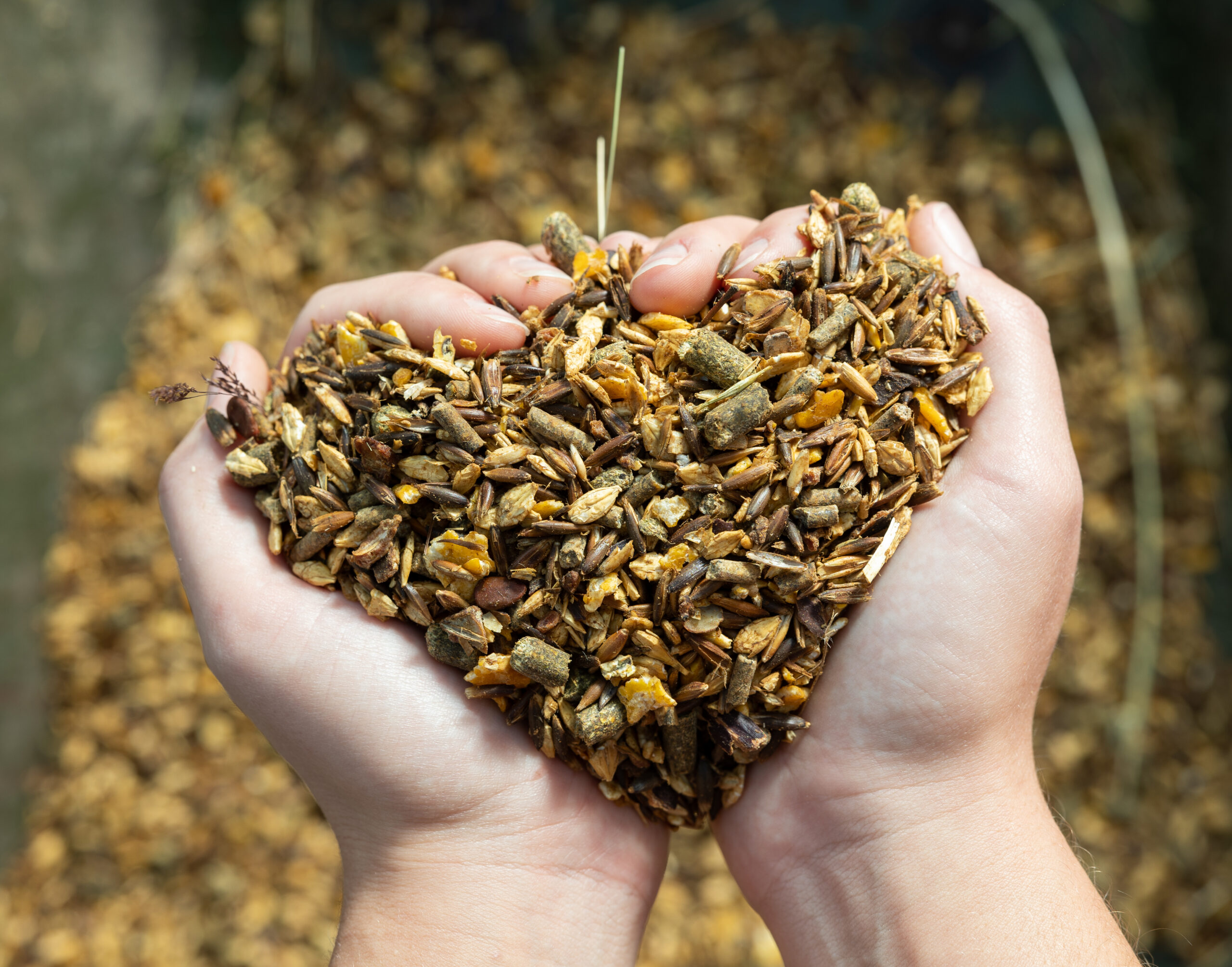
Mashes become a large part of the program for feeding senior horses, said Bolger. She might put the senior in a box stall with a large, soupy mash in the evening. The horse can eat it uninterrupted all night.
“They’re quite happy doing it, and they can be maintained very happily for a very long time like that,” she said.
Senior Competition Horses
Bolger talked in the podcast about a couple of her horses that were international competitors into their 20s.
She said feeding senior competition horses is like feeding a lactating mare. You have to focus on better quality and more digestible protein. You must also keep on top of their dental health.
Senior competitors are used to getting attention, so that should continue. She also advised being pro-active with pain relief and joint health as it fits in with the rules of competition.
Today’s senior feeds are generally good sources of the things you need when feeding senior horses, she said, advising listeners to work with reputable brands you can trust.
Bolger also recommended using the Henneke body condition score to regularly evaluate any senior horse.
Final Words
“I think that the most important part is to understand that with these horses, you really have to pay attention,” Bolger said.
She gives her younger horses a break and lets them go to pasture and not be worked regularly. With senior horses, she gives them outside time, but doesn’t allow them to lose their fitness during the off season.
“I’m not sitting on my hands if they’re getting thin and they’re losing muscle mass,” she said. “I’m doing something. Because once you’ve lost it, you know, it’s really hard to get it back. They don’t pop back like young horses do.”
She said owners need to prevent injuries and make sure that senior horses are as pain-free as possible. “Living longer is a clear improvement to horse welfare,” Bolger stressed. “No one will argue with me about that. And that goes hand-in-hand with making sure that the horses are comfortable and pain-free.”
Related Content
- Checking for Sand in Your Horse’s Feces Video. MySeniorHorse.com
- Coby Bolger video blog in Spanish (and some English)
- Body Condition Scoring: Body Condition Index and Other Techniques. Sarah Nelson. MySeniorHorse.com
- A Guide to Equine Body Condition Scoring. Sarah Nelson. MySeniorHorse.com
- My Senior Horse Podcast: Feeding Senior Horses with Dental Issues. Kimberly S. Brown with Drs. Pat Harris and Nicky Jarvis. MySeniorHorse.com
- Feeding Horses That Can’t Eat Long Fiber. Alexandria Beckstett with Dr. Nicky Jarvis. MySeniorHorse.com
Sign up for My Senior Horse’s FREE newsletter to get the latest information about equids 15 years and older delivered straight to your inbox!