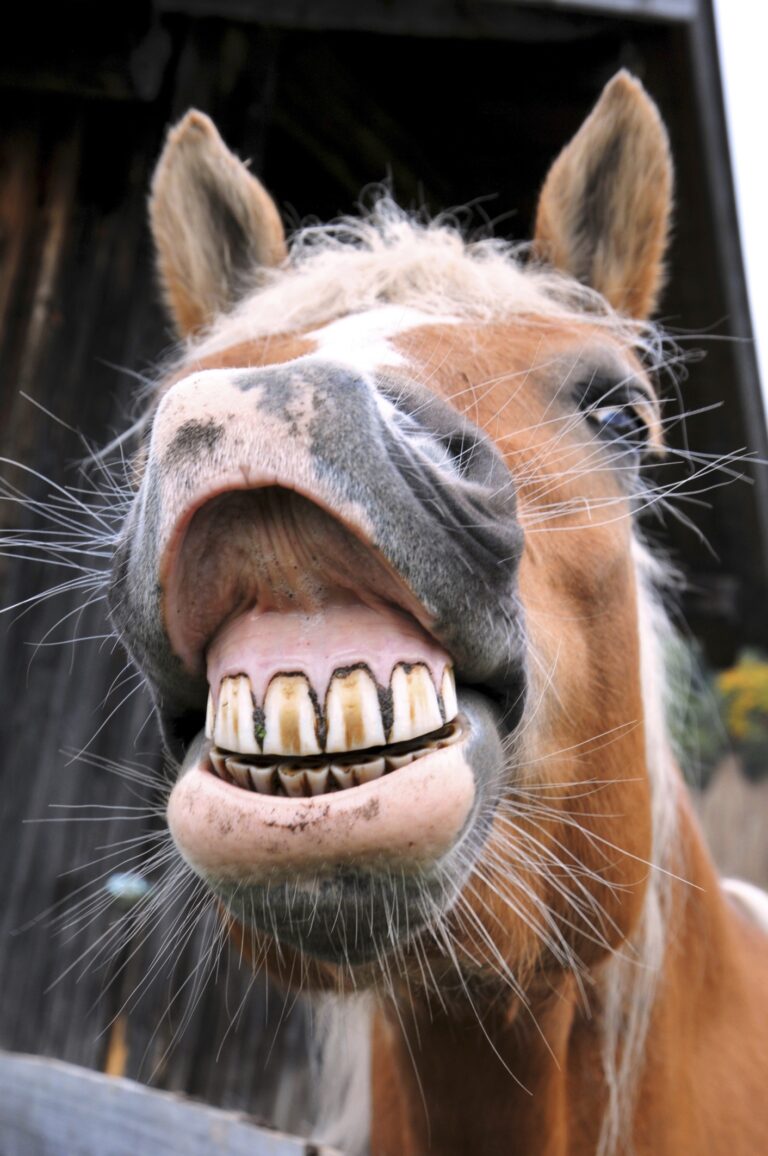
When it comes to feeding the older horse, one of the most important things to think about is dentition.
“When a horse takes a bite of hay or haylage, the only thing that shortens those fiber particles as they pass through the body is the teeth,” explains Nicola Jarvis, BVetMed, Cert AVP (EM), Cert AVP (ESST), MRCVS, head of veterinary care at Redwings Horse Sanctuary, in Norfolk, U.K. “The fiber particles have to be broken down so the enzymes and then the bacteria in the gut can release the most nutrients from them. So you’ve got to have good teeth, and as teeth start to fail, you need to adapt the feeding to mirror that.”
Signs of Failing Dentition
Sign of failing dentition that owners can look for include quidding (dropping partially chewed clumps of forage), increased mouthing as the horse eats, food packing in the cheeks, and a foul odor. With advanced dental disease, you might even see nasal discharge.
Jarvis advised owners to look at the horse’s droppings. “If you’ve got long fiber particles in your horse’s droppings, that shows there’s a problem at the front end,” she said.
Horses with failing teeth might also pass normal droppings followed by a liquid, evidenced by staining along their bottom cheeks or the tops of their hocks. If you notice any of these signs in your older horse, have your veterinarians out to check their teeth.
Feeding Adjustments
Once you’ve got a full assessment of how much dentition the horse has and how effective it is, you can then make feeding decisions accordingly. If your horse is losing weight despite having access to plenty of quality forage, consider gradually adding a fiber replacer into his or her diet.
“You might only need to add in one or two small feedings a day of your forage replacer, and you can continue to use your hay or haylage as well,” said Jarvis. “But over the course of time, as the teeth deteriorate, more and more reliance will have to be on these high-fiber products.”
She urged owners to mimic trickle feeding: “The more you swap over to these fiber replacers, if you can divide the feeds up and feed them at multiple times during the day, it’s a real plus for the horse.”
Related Content
- Feeding Horses That Can’t Eat Long Fiber
- My Senior Horse Podcast: Forage Substitutes
- Dental Problems in the Older Horse
Sign up for My Senior Horse’s FREE newsletter to get the latest information about equids 15 years and older delivered straight to your inbox!