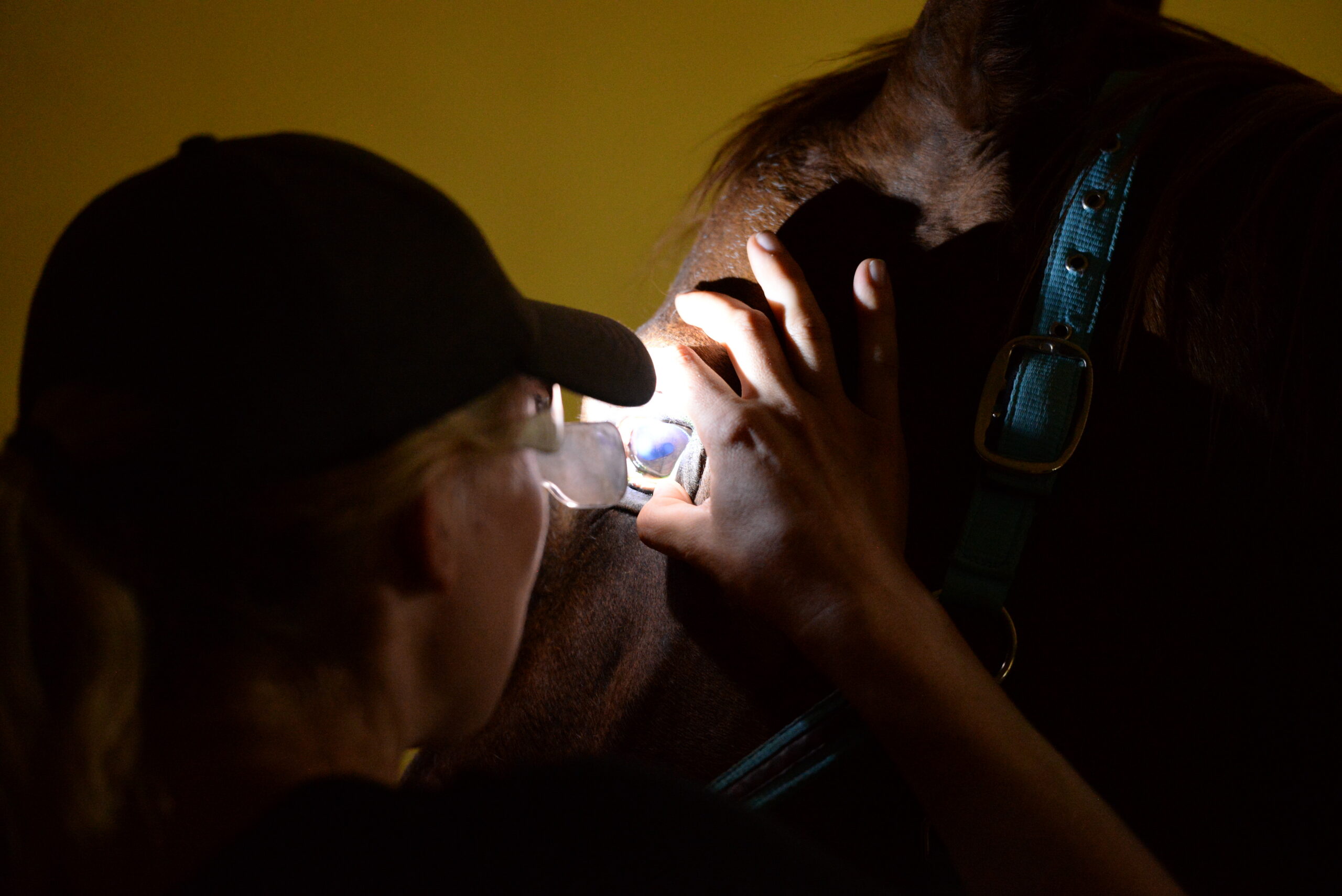
Corneal abrasions occur with relatively high frequency in horses undergoing general anesthesia. As such, Nicole M. Scherrer, DVM, DACVO, associate professor of ophthalmology at the University of Pennsylvania’s New Bolton Center, strongly recommends closely monitoring horses for 48 hours post-anesthesia, particularly older horses or those undergoing longer procedures.
Because horses’ blink reflex is absent during general anesthesia, tear film evaporates faster and tear production can be reduced, putting them at risk of corneal injury. Further, their laterally positioned eyes increase the risk of trauma during recovery.
Study: Ocular Trauma Incidence Following General Anesthesia
To determine the incidence of ocular trauma following general anesthesia, Scherrer and colleague Klaus Hopster, DVM, PhD, DACVAA, also from the New Bolton Center, examined horses presenting to the hospital for general anesthesia between April 2021 and December 2023. The study included 550 horses that had ophthalmic examinations performed by a board-certified ophthalmologist within 24 hours prior to and following anesthesia.
Pre-surgically, the incidence of corneal abrasions was 4.9%, which jumped to 7.6% post-surgically. This difference, however, was not statistically significant. Eyelid lacerations were also identified following anesthesia in 0.7% of the horses.
“Of the horses with corneal abrasions postoperatively, no signs of ocular pain were appreciated,” said Scherrer. “This means if we hadn’t been performing complete exams, we wouldn’t have noticed them and they would have gone untreated.”
All abrasions healed within 24 hours without treatment, as determined on follow-up examination prior to hospital discharge.
“The risk of corneal abrasion significantly increased with longer anesthesia times,” noted Scherrer. “For an additional 30 minutes of anesthesia, the odds of having an abrasion increased by 20%.”
Further, corneal abrasions occurred significantly more often in older horses. Specifically, each year of age increased the odds of having a corneal abrasion by 6%.
“Older horses likely have a higher incidence of corneal abrasion because of their overall corneal health,” Scherrer theorized. “The cornea in an older horse is a little more fragile and the tear production may change also. In addition, if a horse has pituitary pars intermedia dysfunction (PPID), they may be at an even higher risk of corneal abrasions.”
To decrease the risk of corneal abrasions, Scherrer recommended veterinarians apply ocular lubricants liberally.
Final Thoughts
To conclude, Scherrer stated that corneal abrasions are very common in horses, but all resolved without intervention. Longer anesthesia times and older horses were at increased risk.
“Horses with corneal abrasions are at risk of ulceration and infection,” she added, advising owners to monitor their horses’ corneal comfort closely at home. “If the horse begins to show squinting and tearing, call the veterinarian immediately.”
Related Reading
- What Happens When a Horse Undergoes General Anesthesia?
- Equine Guelph Senior Horse Eye Education
- How to Medicate a Horse’s Eye Video
Sign up for My Senior Horse’s FREE newsletter to get the latest information about equids 15 years and older delivered straight to your inbox!
-
View all posts
Stacey Oke, DVM, MSc, is a practicing veterinarian and freelance medical writer and editor. She is interested in both large and small animals, as well as complementary and alternative medicine. Since 2005, she’s worked as a research consultant for nutritional supplement companies, assisted physicians and veterinarians in publishing research articles and textbooks, and written for a number of educational magazines and websites.