Mosquitos can transmit West Nile virus (WNV) within their populations, according to research. Virus transmission occurs within mosquito populations through their excreta (waste from the body, such as feces). Researchers from France and Thailand published their study results in late 2024.
This means it is critical for horse owners to keep mosquito breeding areas under control to help prevent the spread of the virus.
Transmission Research
Researchers said that understanding the transmission routes of arboviruses such as West Nile virus is key to determining their epidemiology. They investigated if mosquito excreta can transmit arboviruses like West Nile virus.
They began by observing high concentrations of infectious units per excreta. They noted that the viruses were short-lived.
“Second, we showed that virion excretion starts early after oral infection and remains constant for a long period, regardless of mosquito infection level,” noted the researchers.
They said that shows the infectiousness of excreta from infected mosquitoes.
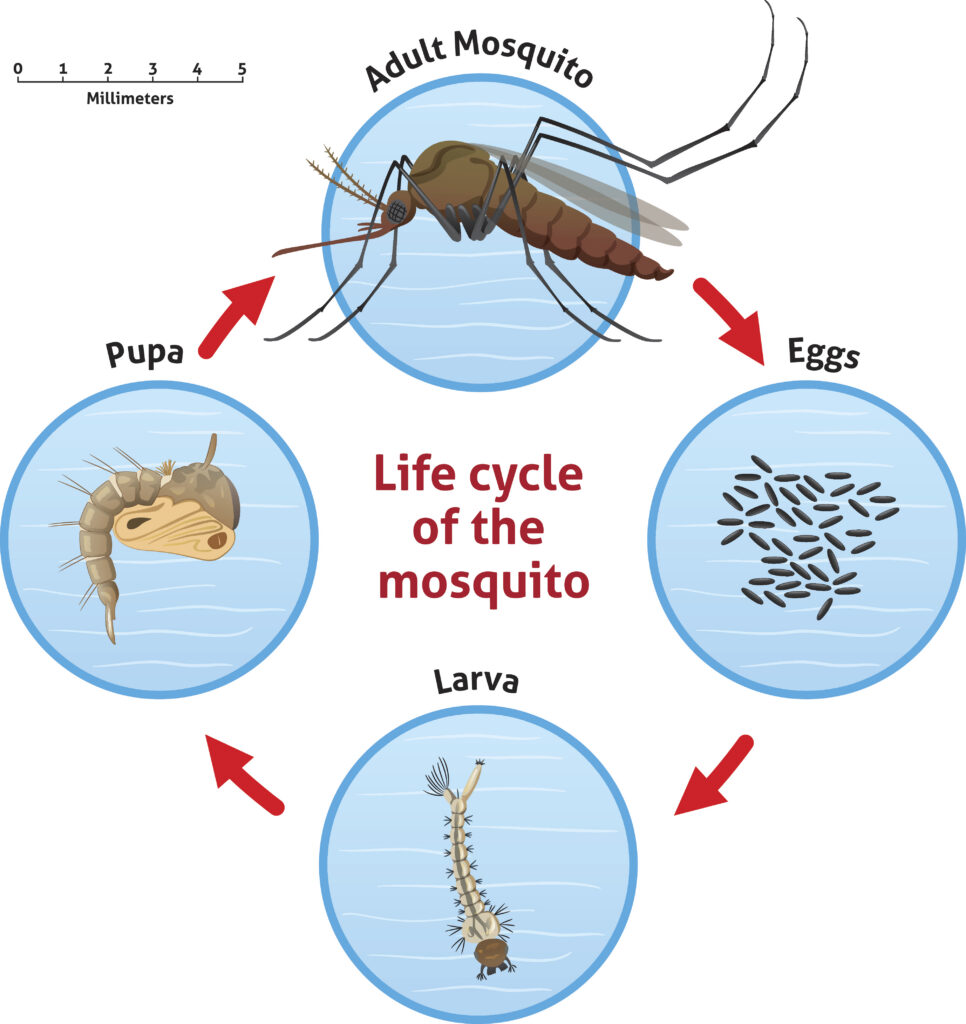
“Third, we found that both larvae and pupae were susceptible to infection,” said the researchers.
“Finally, by mathematically modeling excreta-mediated transmission in the field, we demonstrated that West Nile virus can be transmitted within mosquito populations.”
Conclusion
This study uncovered a route of transmission for mosquito-borne arboviruses such as West Nile virus and unveiled the mechanisms of how viruses can be maintained in mosquito populations.
Reference
Hamel, Rodolphe; Quentin, Narpon; Idalba, Serrato-Pomar, et al. “West Nile Virus Can Be Transmitted within Mosquito Populations through Infectious Mosquito Excreta.” iScience 27, no. 11 (2024). https://doi.org/10.1016/j.isci.2024.111099.
Related Content
- Arbovirus Season Alert from EDCC. MySeniorHorse.com
- To learn more about equine encephalitis go to: https://www.equinediseasecc.org/eastern-equine-encephalitis.
- To learn more about West Nile virus visit https://equinediseasecc.org/west-nile-virus.
- Biosecurity for Your Home Horse Facilities. Dr. Nancy Loving. MySeniorHorse.com
- Equine Biosecurity While Traveling. MySeniorHorse.com
- Senior Horse Vaccination Protocols. MySeniorHore.com
- Potential Side Effects of Owner Vaccination of Horses. Dr. Nancy Loving. MySeniorHorse.com
- Insect Management on a Horse Property. Dr. Nancy Loving. MySeniorHorse.com
- The California Biosecurity Toolkit for Equine Events is an excellent resource for veterinarians, event managers, and horse owners.
- AAEP’s General Biosecurity Guidelines is a summary of biosecurity information.
- The Equine Disease Communication Center offers how-to biosecurity videos in conjunction with USEF
Sign up for My Senior Horse’s FREE newsletter to get the latest information about equids 15 years and older delivered straight to your inbox!