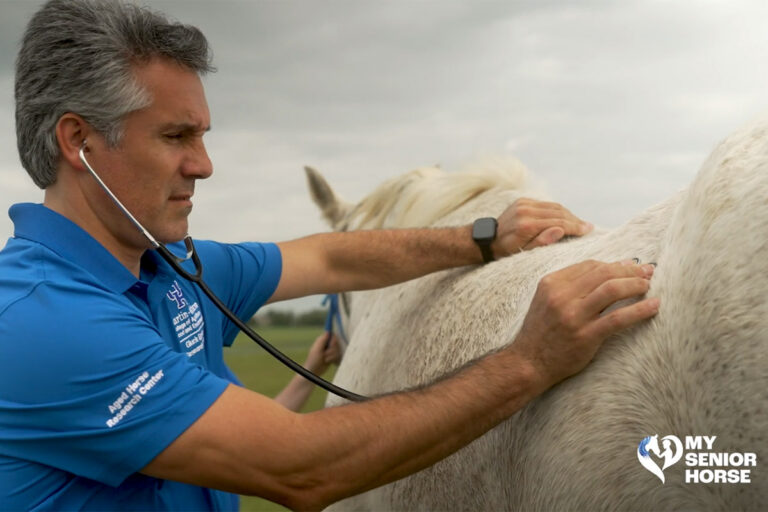

In this video, Dr. Martin Nielsen shares tips on using and interpreting equine parasite fecal egg counts. Nielsen started as a Professor at Denmark’s Aarhus University, Department of Animal and Veterinary Sciences, in December 2024. Previously, he worked at the University of Kentucky’s Gluck Equine Research Center from 2011 and was a full Professor at the end of his time there. Nielsen is a veterinarian with a PhD in veterinary parasitology.
(Editor’s note: The content of this video is the expert’s approach to the topic. Please consult with your practitioner if you have questions.)
What Is a Fecal Egg Count?
Nielsen said there are a number of different egg count methods, but they all “pretty much do the same thing.”
The fecal egg count examines a fecal sample from a single horse and “counts” the number of parasite eggs present. It also identifies the types of parasites based on the eggs. “We can tell ascarid eggs from strongyle eggs. We can recognize tapeworm eggs,” Nielsen said.
This examination gives an estimate of the number of eggs being excreted from the particular horse.
“The most important use of the fecal egg count today is to do another fecal egg count,” said Nielsen. “It is the fecal egg count reduction test. You do two tests: one at the time of deworming and another two weeks after. Then you look at the percent reduction (in number of parasite eggs).”
Nielsen said, “This is so important today because of all of the drug resistance that we have out there to all of the drug classes we mentioned before (Equine Parasite Resistance Video).
“If you don’t test the efficacy of the dewormings that you are administering to your horse, you don’t know if they are working,” he stressed.
Final Words
Nielsen said it is fundamental in your deworming program to do the reduction test as a routine measure in your parasite control program.
Further Content
- Deworming Senior Horses Video. Dr. Martin Nielsen. MySeniorHorse.com
- Equine Tapeworm Q&A with Dr. Martin Nielsen. Kimberly S. Brown. MySeniorHorse.com
- My Senior Horse Podcast: Equine Parasites. Dr. Martin Nielsen. MySeniorHorse.com
- New AAEP Parasite Control Guidelines. Kimberly S. Brown. MySeniorHorse.com
- Equine Parasite Resistance Video. Dr. Martin Nielsen. MySeniorHorse.com
- Australian Equine Internal Parasite Guidelines Released. Kimberly S. Brown. MySeniorHorse.com
Sign up for My Senior Horse’s FREE newsletter to get the latest information about equids 15 years and older delivered straight to your inbox!