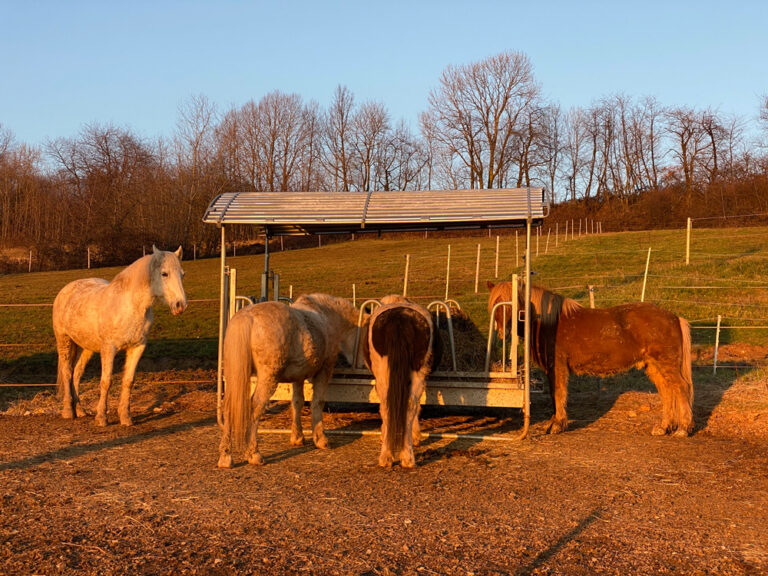
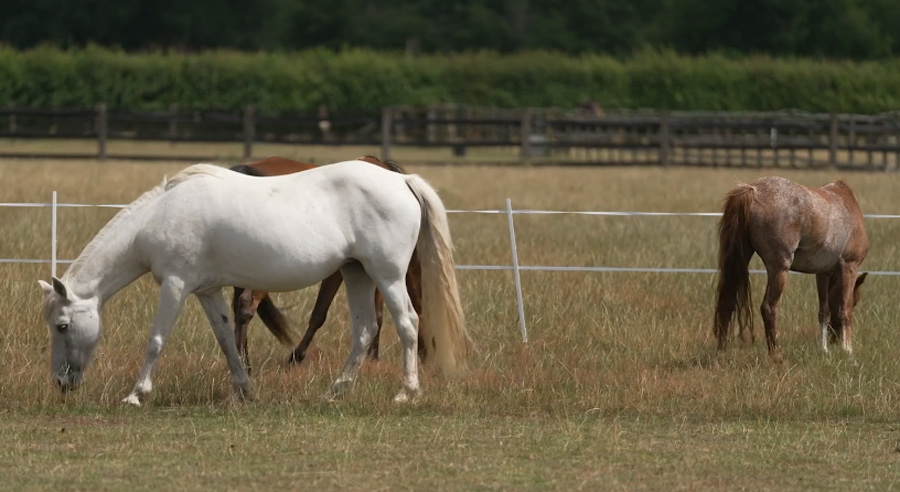
In this second part of our discussion about senior horse herds, we talk about nutritional management of these aging equines. Our guests for this three-part series are Drs. Pat Harris and Nicky Jarvis, both equine veterinarians. You can read more about them in their ‘About’ sections below.
Body Condition
Senior horses with good body condition scores that are fit and have good dentition (teeth) can be fed similarly to a younger adult horse, said Jarvis. But, she added, it is very important to realize when changes start to occur as horses age.
Harris mentioned that many older horses become less insulin sensitive as they age. Therefore, you may have to restrict the amount of starch and sugar you feed them.
“Age on its own doesn’t mean you are making a lot of feeding changes,” Jarvis noted. She said it is critical to observe your senior horse in the herd setting and keep track of its body condition score. (Click here for information on body condition scoring and check out A Guide to Equine Body Condition Scoring.)
It is equally important to notice horses that are overweight as well as underweight. “Your older horse being overweight is also not good, particularly if they’ve got osteoarthritis or conditions like insulin dysregulation,” stated Jarvis. “There are all sorts of conditions where ideal body weight is paramount.”
Harris added that some older animals can have subtle weight and body changes, while in others the change can be quite rapid.
She advised using the same body condition scoring method consistently, since there is more than one scale to use.
“I also would add a plea to everybody that they monitor their older horses, and they take rugs off and they feel,” said Haris.
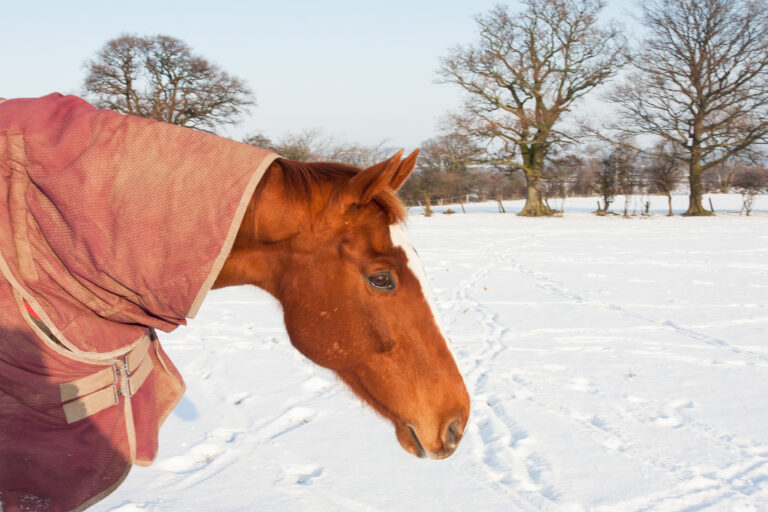
She said the trouble in winter is that horses have long hair coats—especially those with PPID. So, those horses might look okay, but you need take their blankets off and feel all around and especially over their ribs. She said they can lose muscle or put fat on fairly quickly without you knowing if you never remove blankets.
Poop Patrol
Jarvis said it is also important to observe your senior horse’s manure.
“The the teeth are the only thing that shorten that fibre particle length (in the hay/haylage) from the minute it enters their lips to the minute it comes out their blunt end,” said Jarvis
“If you notice your horse passes normal firm droppings followed by liquid and/or you find longer pieces of forage in their droppings compared to normal, this may imply your horse has a dental issue or dental pain,” Jarvis stated.
Dental Health Is Critical
Horses of any age can suffer from poor dentition or painful mouths which can lead to weight loss and other signs. You should observe your senior while it is grazing or eating hay. Notice if the horse is dropping balls of unchewed or partially chewed forage. This is called ‘quidding.’
Jarvis said you have to observe horses in real time while they are eating in a herd setting. “If you’re on a field with youngsters and your old horse is quidding, trust me, the youngsters are going to take advantage,” she said. “They’ll be like, ‘Oh, ready-made dinner. Don’t mind if I do.’
“So that’s why observation is key with those areas,” Jarvis said. “Make sure all of your horses have regular dental work.”
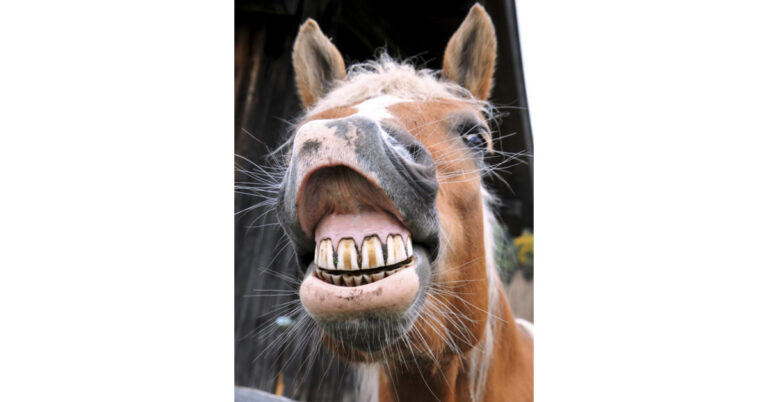
She also said your vet or equine dentist can tell you if your senior horse is becoming smooth-mouthed (less able to chew hay effectively) or has diastema (gaps between the teeth where food can become lodged, which may lead to dental disease).
Managing dental issues in older equids is critical to keep them eating and healthy. Jarvis recommended getting a senior horse’s mouth checked before changing feed, because dental work could fix the nutrition problem.
Forage Replacers
As horses lose teeth or have dental issues, they might not be able to chew long-stem forage effectively. This could result in choke or impaction colic. (Check out the article Tips on Feeding Older Horses With Dental Issues.)
Jarvis discussed the variety of forage replacers that are on the market globally. They come in forms such as pellets, cubes, or mashes.
“Some of them have very short soaking times, which can be very convenient for our busy lives,” said Jarvis. “And there are other pelleted ones that you can actually feed dry. The horse still has to chew and work a little bit, which some horses actually quite enjoy because it makes their feed last longer and is quite a healthy thing to do encourage saliva production.”
Jarvis and Harris warned against high sugar or starch feeds in older horses, because older horses may be more at risk of developing laminitis.
Essential Nutrients
Harris noted that older horses might do better if provided a higher protein diet, especially if it’s quality. That type of diet can help provide sufficient amino acids to the older equid. (Read the article Horse Feed Ingredients—Quality Not Just Quantity.)
She recommends going up one level of protein and essential amino acids for an older horse. For example, if the older horse is in no work, she might recommend feeding it the same protein level of a younger horse in light work.
Harris recommends the same thing with vitamins and minerals. Go up one level of work. “That’s an easy way to think about it,” she said.
Medications
Harris also reminded horse owners that many seniors have medications added to their feeds. This can put horses off eating normally.
“Palatability is such an important point to keep an eye on,” she said about senior feeding. “You might want to think about simple things an individual horse likes. Some would like more of a sweet flavour. Others actually like a curry flavor.”
Harris noted that if you have to soak feeds for senior horses with dental issues, make sure the feeds are handled correctly. Don’t let them get too hot or freeze.
She said to observe horses after you feed them. She recalled one of her horses that usually was a good eater was not eating. The vet found that the horse had a small piece of apple stuck in her throat.
“These older horses sometimes don’t show the very classic signs of choke, so watch them,” she advised.” And if they do anything unusual in their way they approach their feed or the way they eat their feed—or what they leave in their feed—don’t ignore it. That’s why with my older horses I like to feed them slightly separate, because you can see if they’re changing their eating.”
Editor’s note: Make sure to listen to all three podcasts in this series for a more complete picture of caring for senior horses in a herd setting. See below for links.
About Dr. Pat Harris
Dr. Pat Harris is a past president of the British Equine Veterinary Association and is a European specialist in veterinary and comparative nutrition. She is the Equine Nutrition and Science advisor to Mars Horsecare & WALTHAM TM Equine Studies Group, Waltham Petcare Science Institute. Harris has spent much of the last 30 years working to help improve the care and nutrition of older horses. She also is passionate about seniors because of her dedication to her own older horses. Harris has advised on the care of many senior equids and has authored numerous articles on their care. Her involvement in several global senior research teams gives her special insight into some of these studies. Harris is also on the Executive Advisory Council for My Senior Horse.
About Dr. Nicky Jarvis
Dr. Nicky Jarvis is head of Veterinary and Care at Redwings Horse Sanctuary in Norfolk, England. She qualified from the Royal Veterinary College, London, in 1990 and worked in mixed practice for two years before moving to Newmarket, where she completed a two-year internship at Rossdales Equine Hospital. Dr. Jarvis then joined Redwings Horse Sanctuary in Norfolk in 1996. She is now head of Veterinary and Care, working with what she calls an “incredible” team of veterinary surgeons and nurses to care for more than 1,200 resident horses, ponies, donkeys, and mules. Dr. Jarvis attained her RCVS Certificate of Advanced Veterinary Practice in Equine Medicine in 2012 and her CertAVP in Equine Surgery Soft Tissue in 2013. She has a keen interest in equine nutrition, geriatric medicine, internal medicine, and colic.
Further Content
- All the My Senior Horse podcasts can be found listed here.
- Learn more about routine care of senior equids in these articles.
- See articles about senior horse dental care here.
- What You Should Know About Equine Osteoarthritis. MySeniorHorse.com
- My Senior Horse Podcast: Horses and the Science of Harmony. Dr. Sue Dyson. MySeniorHorse.com
Sign up for My Senior Horse’s FREE newsletter to get the latest information about equids 15 years and older delivered straight to your inbox!