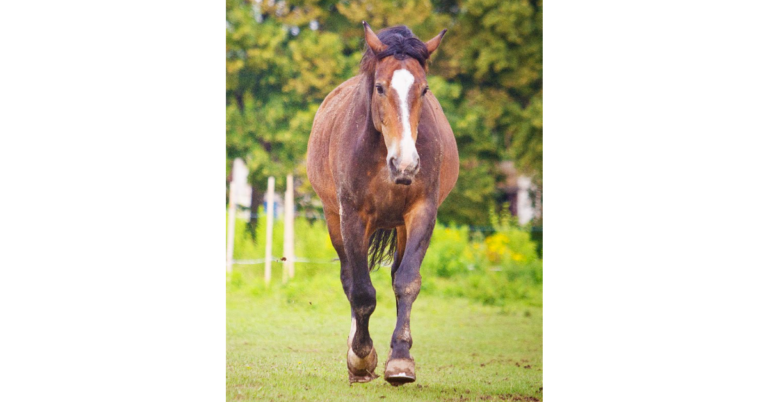

Many senior horses could be missing out on timely pain relief and individualized management, simply because people dismiss signs of discomfort as part of getting old, results from a new study suggest.
While owners often seek veterinary help for managing signs like poor performance, personality changes, and mobility issues, they don’t always frame the problem as “pain.” As a result, veterinary work-ups tend to focus on soundness exams—or even reassurance—rather than discussions about discomfort, says Becky Smith, BVM&S(Hons), PGCertVAA, PhD, AFHEA, MRCVS, a lecturer in veterinary professional skills at the University of Liverpool’s School of Veterinary Science, in the U.K.
“It was common for people to attribute traits in horses associated with the human life course,” she says. “In older animals in particular, peoples’ expectations of old age—such as stiffness or personality changes like being ‘grumpy’—impacted the meaning they assigned to their horse’s behavior, and in some instances could be a barrier to pain management.”
Prompt Care Is Important
As equine researchers, Smith and her colleagues already knew senior horses need prompt, individualized attention to the pain they might experience, whether it’s age-related or not. Rapid care not only relieves discomfort, thereby improving welfare, but also improves long-term management.
But they wondered if that same urgency was reflected in the field. To find out, they spent weeks observing everyday veterinary visits and talking with horse owners and caregivers at four equine veterinary practices in the U.K.
Their investigation revealed that while pain was often part of owners’ underlying concern, it was rarely the explicit reason horses were presented to veterinarians. Instead, discussions about discomfort were frequently folded into broader conversations about behavior, movement, or performance, especially in older horses with long-standing or slowly progressing issues.
Pain Recognition Depends on Communication
For Smith, one of the key lessons is that pain recognition depends as much on communication as observation—particularly whether owners feel able to share their day-to-day knowledge of their horse and whether that knowledge is explored during veterinary consultations.
“It’s important that, as a community, we embrace the multitude of contexts, values, and concerns that stem from differing horse-human relationships,” Smith says. “As such, we need to allow for different understandings or explanations related to the animal’s well-being to be communicated and, where relevant, explored in consultations.”
Final Thoughts
Taken together, the findings suggest that improving pain management for senior horses isn’t just about better diagnostics or clearer warning signs, but also rethinking what gets labeled as “normal” aging and making space for conversations about comfort earlier, and more explicitly, in a horse’s life.
“It seems there’s still work to be done in terms of encouraging reflection at an individual, societal, and professional level about what ‘normal’ behavior or ‘acceptable’ treatment is—for horses across age groups—to ensure that individualized care is best realized,” she says.
Related Reading
- Managing Chronic Pain in Senior Horses
- Understanding Aging Equines
- How to Recognize Early Signs of Joint Issues in Horses
Sign up for My Senior Horse’s FREE newsletter to get the latest information about equids 15 years and older delivered straight to your inbox!
-
View all posts
Christa Lesté-Lasserre is a science journalist specialising in animal health and behaviour, life sciences, and evolutionary processes. Her articles and stories have appeared in major science magazines and literary reviews in multiple languages across the globe. Based in France's greater Paris area, Christa holds an MA from the University of Mississippi and a BA from Baylor University in Texas, complemented by postgraduate work in life sciences at the University of Paris René Descartes.
A Pulitzer Center grantee for her coverage of the COVID-19 pandemic for Science magazine and recipient of American Horse Publications awards for her articles on equine behaviour, Christa focuses on shaping scientific studies into the stories they tell.