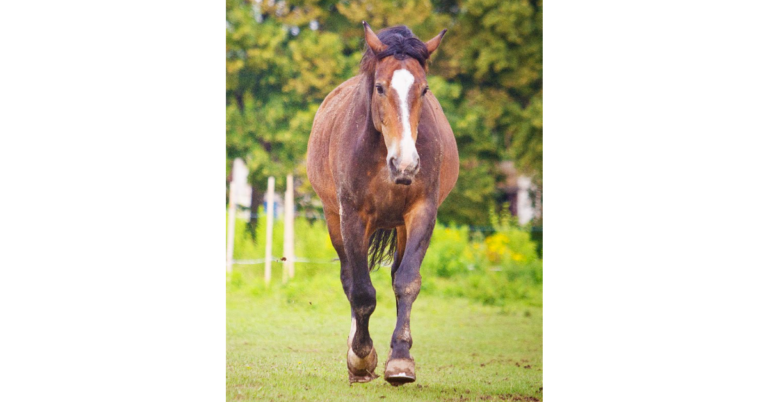
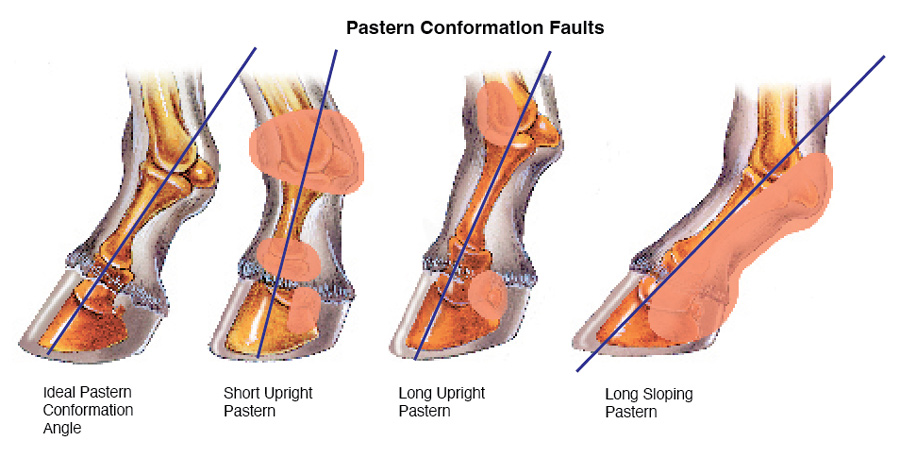
Conformation faults of the equine pastern fall into three categories. These are the short upright pastern, the long upright pastern, the long sloping pastern.
Ideally, the angle and length of the pastern should prevent the ankle from touching the ground. At the same time, the pastern length and angle will provide leverage to act as a shock absorber to the ankle joint, the knee, and the rest of the horse’s body.
(Editor’s note: This information can help you review your equid’s conformation and determine if you should discuss possible injuries or life-long repetitive concussion with your veterinarian.)
Long Sloping Pastern
A long sloping anatomy does not prohibit the ankle from hitting the ground. The long length also predisposes the horse to strain within the flexor tendons and the suspensory ligament. The sesamoid bones will readily become inflamed and will be more prone to fractures.
Short Upright Pastern
The short upright anatomy prevents injury caused by the ankle striking the ground, but it does little to act as a shock absorber. The hoof hitting the ground causes concussion up the leg. These forces affect several anatomical parts, including the fetlock joint, the proximal interphalangeal joint, and the navicular bone. The concussion predisposes the horse to lameness problems. Arthritis within these joints, navicular syndrome, and osselets can be caused by repetitive concussion. Animals with short upright pasterns usually have accompanying straight shoulders.
Long Upright Pastern
The long upright pastern is merely a longer version of the short upright pastern. It prevents the ankle from striking the ground, but it lacks the natural shock absorbing capability of the norm. There is a lesser trauma to the pastern joint, but other concussive force type injures, osselets, and navicular syndrome can occur with this fault.
This information and these illustrations were used from the Atlas of Clinical Anatomy with permission from copyright holder Equine Network. You may not use these illustrations without express written permission.
Related Content
- My Senior Horse Anatomy and Physiology Diagrams
- Managing Chronic Pain in Senior Horses. Carly Sisson. MySeniorHorse.com
- What You Should Know About Equine Osteoarthritis. MySeniorHorse.com
- What Is Osteoarthritis in Horses? MySeniorHorse.com
Sign up for My Senior Horse’s FREE newsletter to get the latest information about equids 15 years and older delivered straight to your inbox!