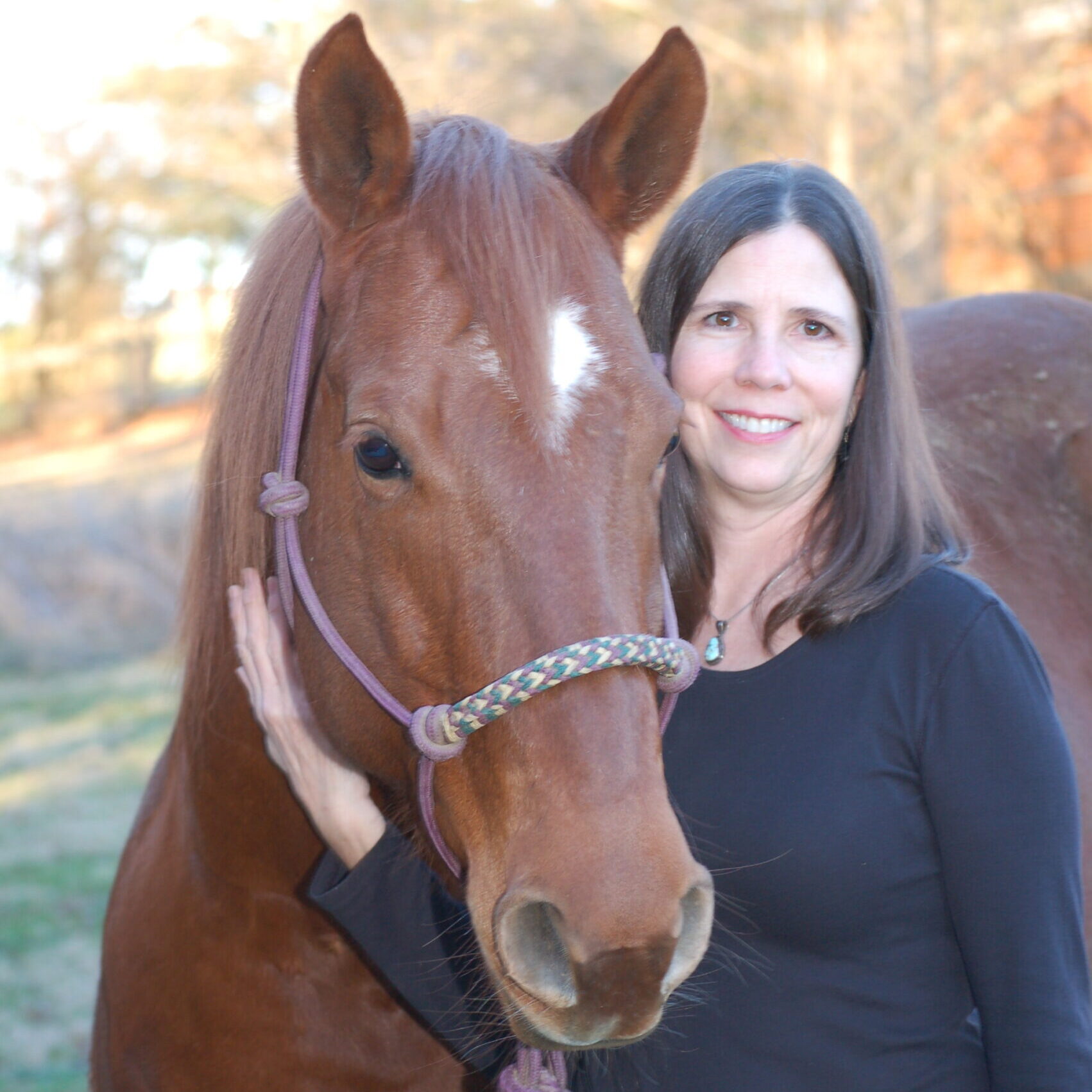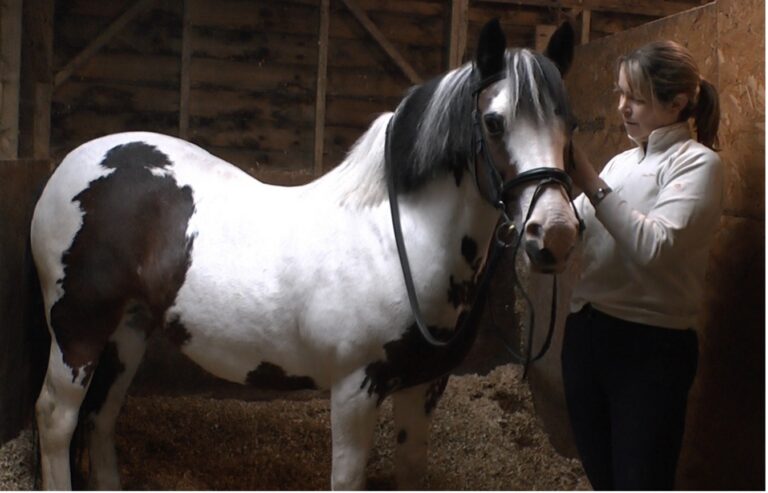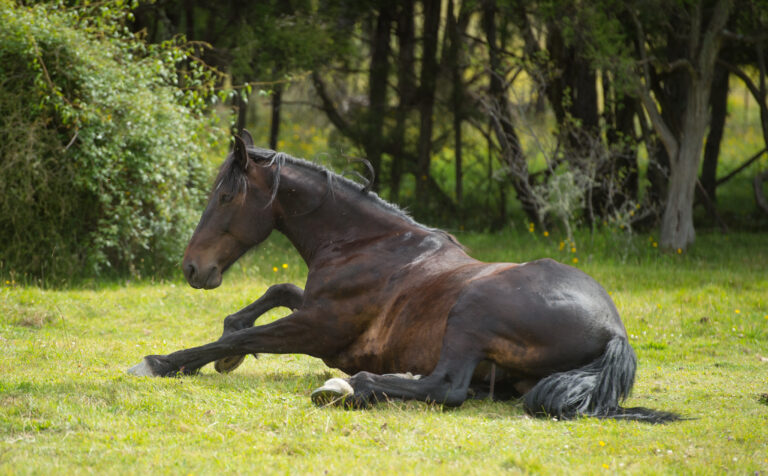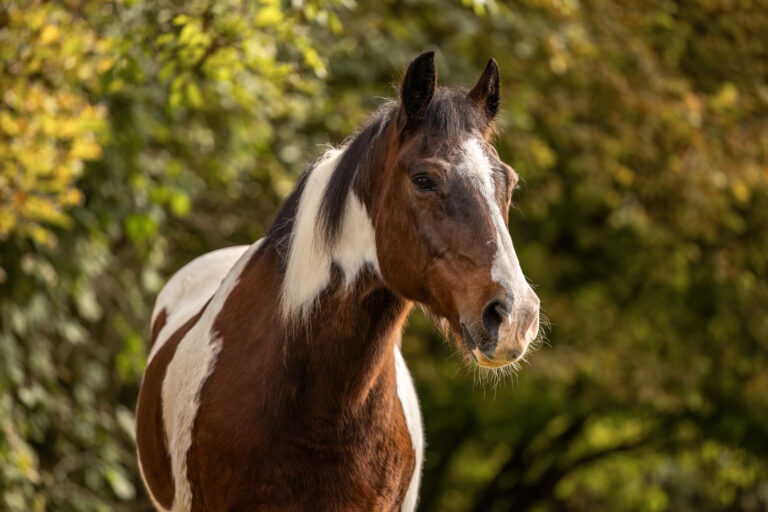
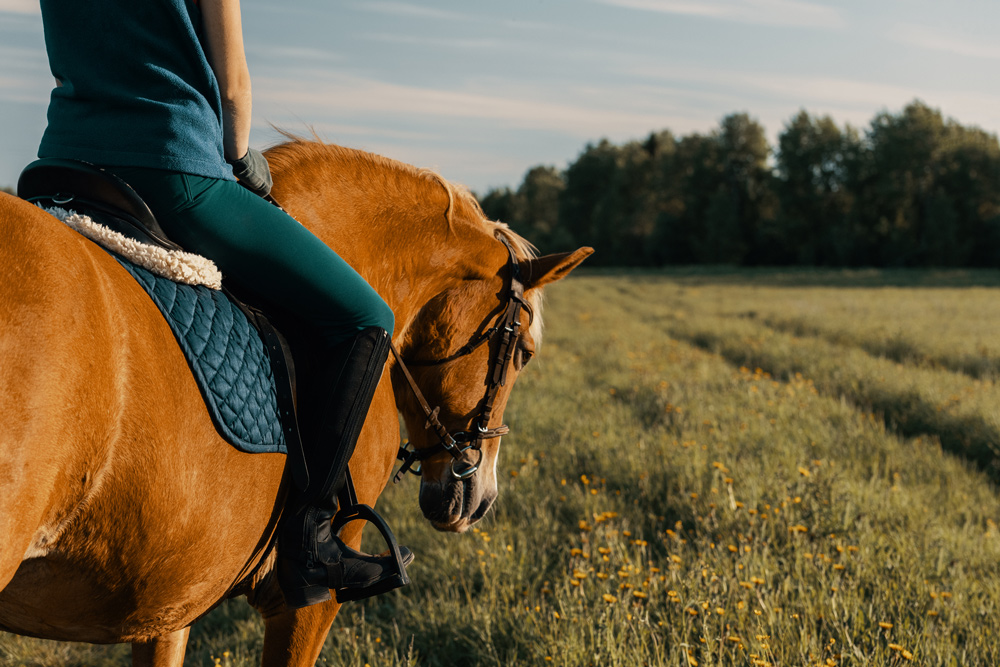
Is my senior horse getting enough exercise? Too much exercise? The right kind of exercise? In this podcast and article, we learn more about senior horse exercise from Sue Dyson, DVM, PhD.
Dyson is a specialist in equine orthopedics. She has researched many aspects of horse lameness and equine pain expression. Since 2019, she has worked as an independent consultant, combining her horsemanship skills with her veterinary experience to maximize horses’ performance potential. Dyson provides not only clinical services, but also works to bring clinically relevant research and education to the industry. We are thrilled that Dyson is a member of the My Senior Horse Editorial Advisory Group.
(Editor’s note: The content of this podcast is the expert’s approach to the topic. Please consult with your practitioner if you have questions.)
Exercise Is Based on the Individual
There are senior horses that compete in Olympic-level events. Others are pasture pets that cannot physically tolerate forced exercise.
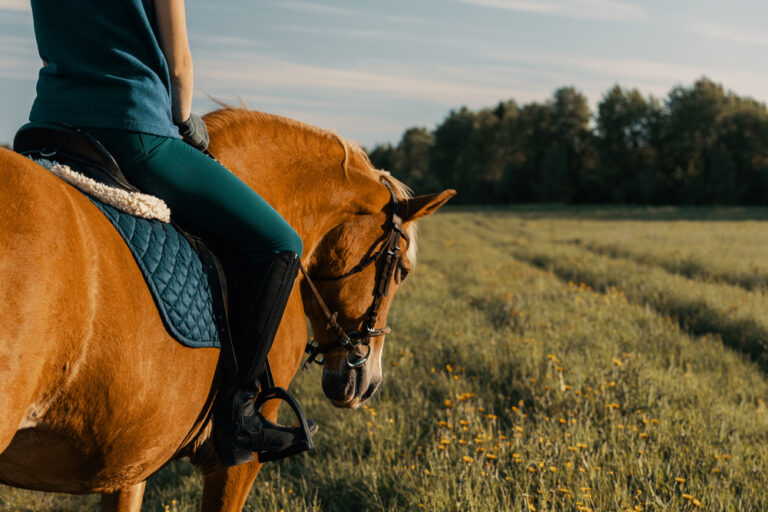
Dyson reminded listeners that friends, forage, and freedom are the three Fs of equine welfare. “There are going to be many older horses who are quite capable of being physically exercised, doing both groundwork and interacting with humans to their mutual benefit,” said Dyson. “I’m a great believer that if the horse is capable of being ridden and is willing to be ridden and goes forward freely, then there’s no reason why it shouldn’t be ridden and it needs to be exercising regularly.”
She said that little and often is the best exercise schedule for most senior horses.
“Hacking around the countryside and perhaps even doing some little jumps, I think there’s nothing wrong with that as long as the horse is capable of doing it,” said Dyson. “And if it’s not willing or it starts to show behaviors that express discomfort, we need to be thinking what we’re doing with the horse.”
She said signs of discomfort could include the horse putting its ears back, swishing its tail, opening its mouth, being unwilling to go forward, or spooking repeatedly. “Those are all potential signs that it’s feeling uncomfortable,” she said.
“But even that horse may—if we maybe reduce the amount of work and we just focus on groundwork—be very content doing that and benefit from those mobilization exercises and the interaction with human beings.
Because I do think that horses benefit from not just having interactions with their conspecifics—with their fellow horses—but also with us as well.
“And, I always think we need to be thinking not only about their physical well-being, but also their mental well-being.
“All of this goes along with being turned out,” she noted. “The more they’re out and moving, the more they’ve got their heads down to graze—that’s all hugely beneficial for the horse. And obviously we’re going to pay attention to the basics of trimming and shoeing and correct saddle fit.”
Pain and Exercise
Dyson said some older horse have chronic pain. “We have to think about [the horse’s] comfort,” she said. “There are some senior horses who are on the stiff side, and they may benefit from the appropriate, judicious use of pain relieving medication. I don’t think medication is contraindicated if it makes them more comfortable.”
She said giving medication to horses with slight chronic pain will make it easier for them. Dyson added that the horses are “going to enjoy it more and they’re going to be more comfortable for the rider as well. So it’s a win-win situation as far as I’m concerned.”
However, Dyson said if the senior horse had a soft tissue injury, then it wouldn’t be appropriate to be using pain-relieving to enable them to be exercised.
“But, if they’ve got a chronic, low-grade stiffness, there’s absolutely no reason why they should not be receiving pain relief in appropriate amounts,” she stated.
She also said riders need to think about the terrain and footing on which these horses are going to work. “I do think that continual work in circles on an arena is far from ideal because that is biomechanically quite stressful,” added Dyson.
Warmup to Exercise
Dyson suggested that because senior horses often are stiff, warmup is extremely important.
She recommended walking for the first 10 to 15 minutes, “then perhaps cantering in a light position—in a two-point position—before coming back to the trot. Often after canter, a stiff horse moves more freely. And I find that works very well with some of the older horses.”
Keep an Exercise Diary
Dyson said many upper level riders keep a diary of exercise and activity with their horses. “I see no reason why we shouldn’t be doing it with the older horses,” she said. “It engages the rider as well. It makes them think more and makes them potentially more observant. And I think that’s always important.”
She said if you are keeping a diary on a regular basis, “you will notice trends. And if you start to see the horse showing more abnormal behaviors or if he comes out stiffer, then maybe you need to ask for professional advice and certainly back off until you’ve had that professional advice.
“Keeping a diary enables you more objectively to be monitoring the horse,” she said.
Dyson said since horses are “inherently very compliant animals—and they probably are too compliant for their own good at times—we have to pay attention to little signals that may indicate to us that the horse is less comfortable.
“So, if the horse was previously standing absolutely still whilst it’s being tacked up, then it becomes more fidgety and perhaps turns its head towards the girth when you are tightening it, those little signs are indicative that something’s not right,” stated Dyson. “This horse is anticipating discomfort to come, and we need to pay attention to that.”
(Editor’s note: In the podcast, Dyson further discusses demeanor and what to look for that could indicate the horse has a physical issue.)
Groundwork Options
Not all senior horses need to be ridden to receive exercise. Dyson said there are many types of groundwork patterns that you can do with horses.
“You can just get them walking over poles,” she said as an example. “They don’t have to be arranged in any special fashion. They can just be in a ‘higgledy piggledy’ layout that the horse has to pick its way over. And that is good for the horse physically because it’s having to use its proprioceptive senses (know where to place its feet). It’s good for them physically because the horse is using its body in a slightly different way than just ambling around the field. And it’s engaging them mentally as well.
“I think there are all sorts of benefits of doing exercises from the ground,” she continued. “You can be inventive. And if you go online, you can find other things to do as well. The sky is a limit in many respects. It’s your inventiveness and your imagination in terms of what we we can potentially do.”
She also talked about taking a senior horse out on a lead rope while you are riding another horse.
“To an extent, the experience of ‘ride and lead’ is a bit of a lost art,” said Dyson. “In my younger days, it was very commonplace, and I think that it is something that tends to get overlooked.”
Too Much Senior Exercise
Dyson discussed things owners can watch for to ensure a senior horse isn’t over-exercised. She mentioned high respiratory rates and delayed recovery times after exercise as good indicators.
She also talked about the horse’s posture and behavior as signs that something is not right.
“You’ve ridden. You may still be sitting on the horse. Does the horse stand still, or does it fidget?” she asked. “Or does it try to stand with its front limbs extended forward and its back limbs behind it camped out?
That’s reflecting the fact that the horse is not very comfortable, or it may adopt that position when you’ve dismounted from the horse, and that is an indication that the horse was uncomfortable. We’ve probably done too much. We’ve aggravated something.
“When we untack the horse we need to watch its behavior again and to check that the saddle is fitting appropriately,” she advised. “I think it’s always worth looking underneath the saddle once you’ve removed it to make sure there is not a big dry area under the front of the saddle, which may indicate that the tree points are too tight. And look for any swellings close to the top of the midline, which may indicate that the saddle has been moving a bit and creating pressure. These are soft tissue swellings. So keep checking the tack as well as the horse.”
She said if you end up having a really long ride on your senior horse, you might need to give it more recovery time.
“When you are older, you don’t recover from injury as quickly as you do when you’re younger,” Dyson reminded the audience. “So, if the horse had a long ride, then maybe we need several easy days. Perhaps more easy days than we would have done had that horse been younger because it just needs more recovery time to enable repair of any micro damage.”
Final Words
Dyson advised that you “listen to your horse. You you probably know your horse better than anybody, and therefore you must use your observational powers to notice change. And don’t just bury your head in the sand and ignore that change. Pay attention to it. But, at the same time, don’t get over anxious. Some people get over anxious, and they get really disturbed by that slight swelling in the fetlock region, which goes down with exercise. That probably doesn’t matter, but if you’ve got your diary, you can write it down so you know that if it’s getting progressively worse, then perhaps you do need to seek advice.
“So I think this diary keeping and training yourself to observe are very important,” Dyson concluded.
Further Content
- Horse Behavior During Tacking and Mounting. Dr. Sue Dyson. MySeniorHorse.com
- Horses and the Science of Contentment. Dr. Sue Dyson. MySeniorHorse.com
- My Senior Horse Podcast: Horses and the Science of Harmony. Dr. Sue Dyson. MySeniorHorse.com
- My Senior Horse Podcast: Equine Behavior. Dr. Kris Hiney. MySeniorHorse.com
- The 24 Behaviors of the Ridden Horse in Pain: Shifting the Paradigm of How We See Lameness. Dr. Sue Dyson with Padma Video.
- Ridden Horse Performance Checklist: Behaviors in Ridden Horses that Might Signify Discomfort. Dr. Sue Dyson. MySeniorHorse.com
- How An Uncomfortable Horse Might Feel to a Rider. Dr. Sue Dyson. MySeniorHorse.com
Sign up for My Senior Horse’s FREE newsletter to get the latest information about equids 15 years and older delivered straight to your inbox!