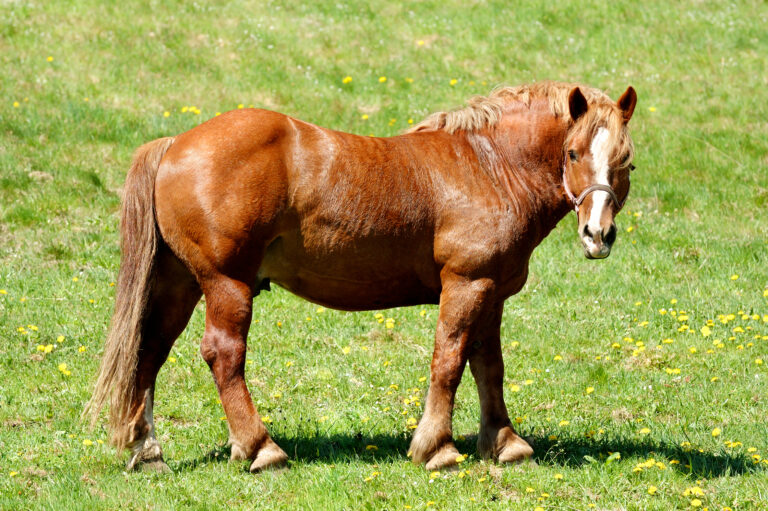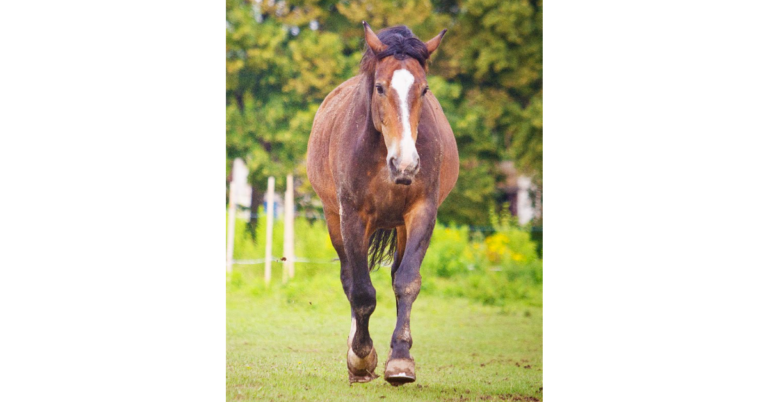

Something about horses with visibly dipped backs just dips into our own hearts and spines. Those poor old horses—who rode them so hard in their youth to put them in such a sad state now?
We horse-loving humans are great at empathy, and we’re eager to crack down on poor welfare. But when it comes to lordosis—the technical term for being swayback—often the condition is not as bad as it looks. In fact, the welfare aspects might even surprise you.
In this article, Sue Dyson, MA, Vet MB, PhD, DEO, an independent consultant and former head of Clinical Orthopaedics at the Animal Health Trust Centre for Equine Studies, in Newmarket, U.K., helps untangle common misconceptions about older horses with lordosis.
1. Swayback horses were ridden too heavy and too hard.
Whoa, partner. Of course it’s never good to ride horses—especially seniors—too hard. But while inappropriate riding can lead to multiple kinds of back pain, lameness, and welfare issues in horses, it’s actually not a cause of swayback, says Dyson.
The reasons for swayback are pretty straightforward: old age or developmental abnormalities of vertebrae that are present from birth (congenital).
In the congenital form, horses start developing dipped backs as foals and might get progressively worse over time.
But if a horse only starts developing a sway back as a senior, he’s the victim of lost muscle tone and ligament strength, including in the spine. In this “acquired lordosis,” abdominal weight and the pull of gravity draw the spine downward.
“The back becomes progressively more extended, more dipped,” Dyson says. “It’s not from riding. It’s because of changes that occur as a horse ages.”
2. Swayback horses are in pain.
Horses with acquired lordosis experience very little pain despite their unusual appearance, Dyson says. “They have a good demeanor, move willingly, don’t experience problems getting up and down, have comfortable facial expressions, and interact normally with other horses,” which she says are all signs they’re quite comfortable.
“It looks unsightly to us,” she says. “But I don’t think they’re experiencing—by and large—discomfort as a result of it.”
Obviously, that comes with a couple of caveats. Severely dipped spines can pull spinous processes together, which could rub and cause discomfort.
Load also matters. Strapping horses with the weight of a rider or a pack puts pressure on their curved spines. “If the back is not being loaded, that doesn’t really have any influence on the horse,” Dyson adds.
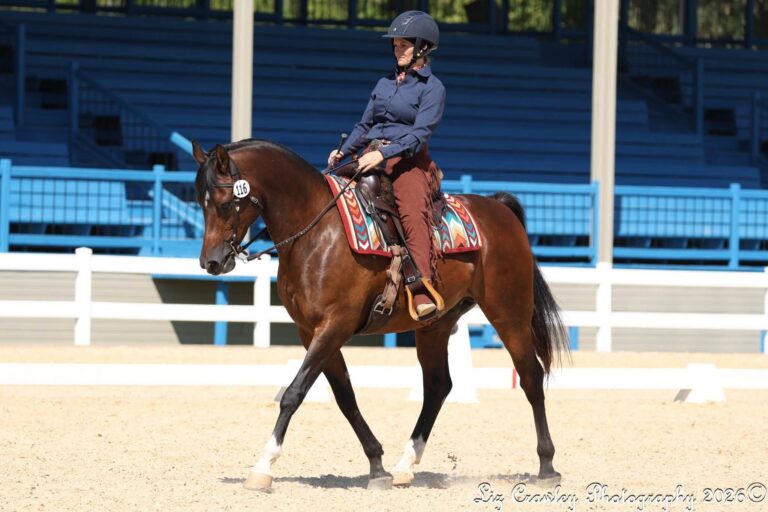
3. You can’t ride swayback horses.
While loading can certainly cause pain in horses with lordosis, that doesn’t mean it’s always painful, Dyson says.
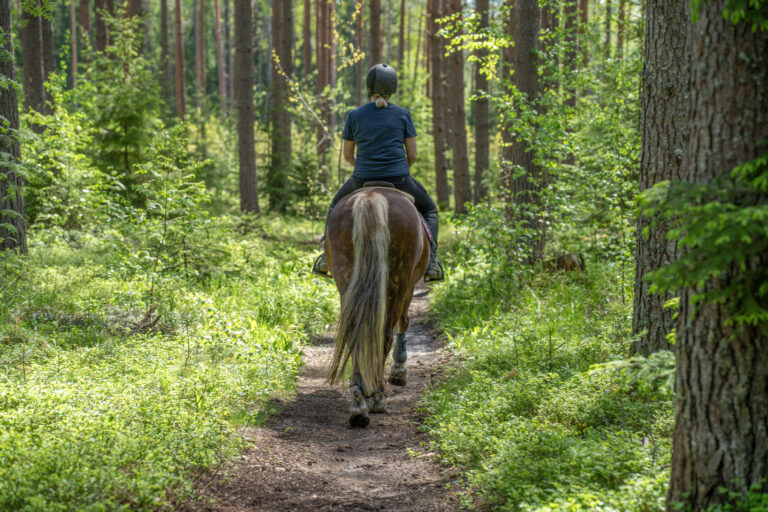
Importantly, riding a swayback horse requires careful management and collaboration with professionals, including veterinarians, farriers, chiropractors, and saddle fitters.
“It would be more difficult to fit a saddle appropriately to an extremely swaybacked horse,” she says.
4. There’s nothing you can do about a swayed back.
It’s true: You can’t reverse lordosis. Once the back starts to sway, it will remain that shape, Dyson says.
But you can help slow this slowly progressive condition and even reduce the risks of it occurring, she adds. Mainly, that means working senior horses, at least minimally. Regular, well-designed light work can improve muscle tone and stave off obesity, countering the spine’s gravitational pull toward the ground, says Dyson.
“Obesity is bad for lots of things, including this,” she says. “If you did lots of groundwork exercises to maintain the tone of the abdominal muscles and maintain the topline musculature, then you could probably stop the progression or stop it from happening altogether. Senior horses are better off kept moderately worked than just being pasture animals.”
Bottom Line
Swayback in seniors might look dramatic, but in many cases it reflects age-related changes in muscle tone rather than mistreatment or neglect, Dyson says. Sensible weight management, thoughtful exercise, and realistic expectations can help prolong their riding life and appearance.
Related Reading
- Senior Equine Hind Limb Lameness and Longevity
- Senior Horse Fitness: A Balancing Act
- Managing Chronic Pain in Senior Horses
Sign up for My Senior Horse’s FREE newsletter to get the latest information about equids 15 years and older delivered straight to your inbox!
-
View all posts
Christa Lesté-Lasserre is a science journalist specialising in animal health and behaviour, life sciences, and evolutionary processes. Her articles and stories have appeared in major science magazines and literary reviews in multiple languages across the globe. Based in France's greater Paris area, Christa holds an MA from the University of Mississippi and a BA from Baylor University in Texas, complemented by postgraduate work in life sciences at the University of Paris René Descartes.
A Pulitzer Center grantee for her coverage of the COVID-19 pandemic for Science magazine and recipient of American Horse Publications awards for her articles on equine behaviour, Christa focuses on shaping scientific studies into the stories they tell.