
For many horse owners and their animals, this winter has already been long and challenging. And seniors of any species might need some special care when cold weather hits.
In this podcast, we talk to Bryan Cassill, MS, MBA, about winter care for senior horses. He offers us tips on helping our senior equids fare better in winter weather. Cassill is the Commercial and Formulations Manager for Mars Horsecare and BUCKEYETM Nutrition.
(Editor’s note: The content of this podcast is the expert’s approach to the topic. Please consult with your practitioner if you have questions.)
Winter Prep
“I think the the most important part is to get prepared,” Cassill said at the start of the podcast.
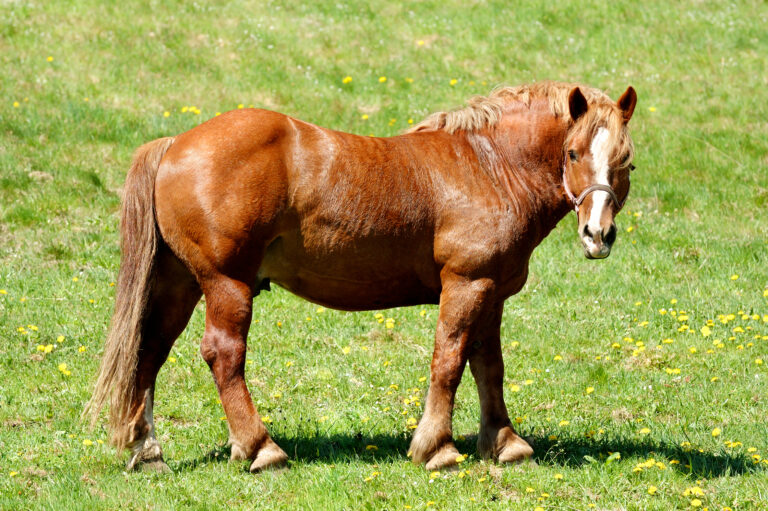
For senior horses coming into winter with a marginal body condition score—four or five out of 10—”you’d really want to try to get them up into that six range and have some fat covering coming into winter,” he recommended.
We were in a winter storm at the time Cassill was discussing this topic, and another storm came through shortly thereafter.
He said when cold temperatures arrive, it can be difficult to “catch up” with helping horses gain weight.
“Try to stay ahead of body condition when you know there are going to be high demands on those horses and they’re going to mobilize a lot of energy to try to stay ahead of that calorie requirement,” he said.
Group by Feed Needs
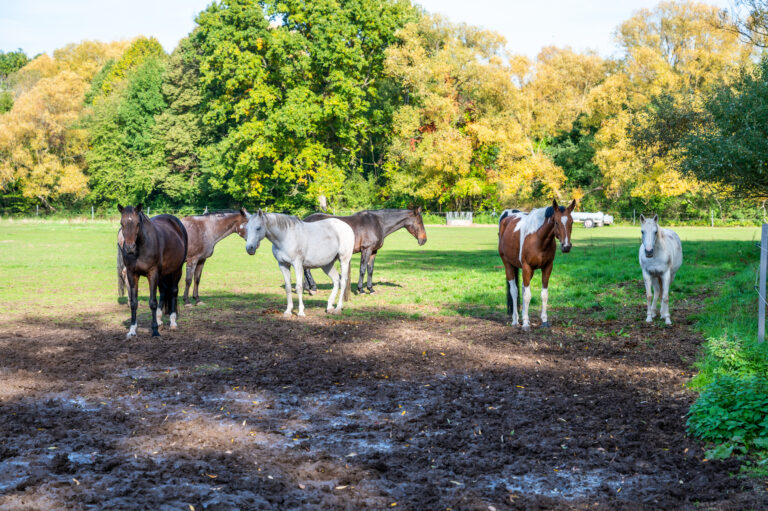
Cassill said grouping horses by caloric needs in winter is a good idea. “We only have so much time,” he acknowledged. This allows horses with similar caloric needs to be fed appropriately without worrying that horses that don’t need extra calories will be over-supplied with feed.
Knowing your senior horse’s body condition score is a big help in determining if its feed needs are changing. (Editor’s note: See Related Content below for more on body condition scoring.)
He said it is important to use your hands and eyes when evaluating your senior equids in winter. “Feel across the rib cage. Feel behind their shoulder and on the tail head. Feel that fat covering and see where it’s at and then monitor that as your winner goes,” said Cassill. “Then you’ll feel that fat going away if they start
dropping condition.”
Handy Weight Tape
Cassill added that another easy way to monitor your horse’s body condition is by using a weight tape.
“Everybody always complains that a weight tape’s never accurate,” said Cassill. “It is 100% not accurate. That’s okay, because what you want to know is change. The weight tape will tell you change. It’ll tell you if your horse is increasing or decreasing weight. And that’s the big thing that you want to know. Am I feeding enough calories to maintain body condition on this horse? That weight tape’s going to tell you that.
“So, it’s a nice objective way to monitor weight change,” he said.
Body condition scoring has an outline to follow, but people can still put their own “vision” of what they are seeing.
“If you use a weight tape in a consistent manner across the same place on the withers, it’ll tell you change,” said Cassill. “And that’s what you’re monitoring during the winter.
“Not all of us have an access to a scale, but a good, cheap little weight tape will tell you a lot,” he said.
Forage First
The author lives in Wyoming, where there are numerous growers of high-quality alfalfa. Cassill said, “You’re fortunate to live there, right where you have really high-quality alfalfa. You can take some pressure off your concentrate that way by providing enough protein, enough energy, through your forage source. That’s your foundation.”
He said horse owners should start with a high-quality forage, whether that be a good alfalfa or a good mix, then adjust the concentrate accordingly.
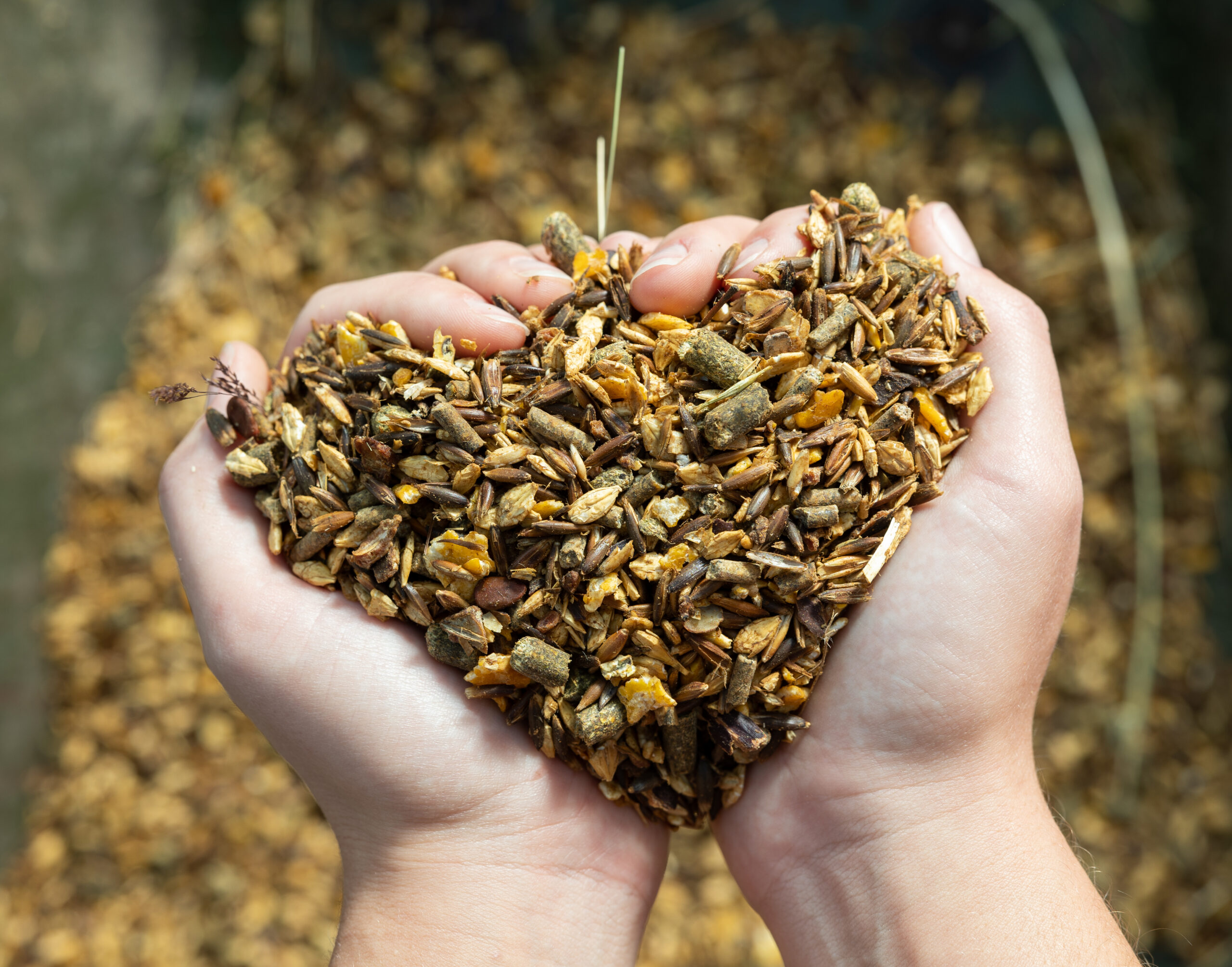
“The higher the quality of the forage, the less pressure you’re putting in your concentrate,” said Cassill. “You can go down to where you’re feeding less of your concentrate than you normally do or feed a ration balancer. That’s a really safe way to feed. That’s a whole lot less risk than feeding a poor-quality hay and feeding a concentrate at 8 to 10 pounds per day.”
What’s a Ration Balancer?
Cassill explained that a ration balancer is for horses that don’t need extra calories. That would be a horse with a good body condition score or one not performing at a high level where it requires a lot of calories.
“It will provide appropriate amounts of proteins, vitamins, and minerals to balance out the rest of their diet without providing a great deal of calories into their diet,” explained Cassill. “And it’s also really good for those horses that are on a good forage. Whether that be a nice alfalfa mix or even a good grass hay. And there are a lot of good grass hays out there.”
In the podcast he also talks about using ration balancers to avoid the sugar and starch found in some feeds.
Changes in Weather and Feed
A reduction in quality or quantity of pasture grass usually occurs when fall turns to winter. But sometimes, weather comes in quickly and you have to supplement more forage.
“We dropped more than 30 degrees in a few hours,” Cassill noted. “We went from 45 to 12ºF. So, the first thing I want to try to do is maximize that forage intake.”
He said they were feeding one senior in their herd 15-18 pounds of hay per day. “The first thing I did [when the weather was predicted to turn bad] was try to max it out and see if I could get 20-24 pounds to him per day. He’s going to tell me when he’s full when he starts leaving hay behind.
“I know it’s frustrating for horse owners to see hay on the ground, but a lot of times it tells you that you’re doing the right thing.” said Cassill. “So, I’ll see if I can maximize that first, then I’ll look at my concentrate and slowly move that up. And I’d like to have enough time to maybe move that up over seven to 10 days. I’m not just throwing an extra two pounds of feed at him a day.”
Why Forage Is Important
Cassill said that stabilizing the hind gut is critical to a horse’s health. He said that every year there is more research that unveils the importance of the microbiome in the horse’s GI tract. Consistent, quality forage is a foundation of keeping the microbiome happy.
He said forage is also critical to a horse’s hydration status. “They’re going to eat all that forage. They’re going to drink a lot of water. They’re going to stay hydrated and keep that gut happy and healthy,” he said.
He also said keeping water unfrozen is critical to equine health in winter weather. The risk of colic is higher when horses don’t have access to a consistent water source, especially in winter.
Cassill also recommended feeding forage before concentrate feeds.
Related Content
- Body Condition Scoring: Body Condition Index and Other Techniques. Sarah Nelson. MySeniorHorse.com
- Understanding Ration Balancers for Senior Horses. Alexandria Beckstett. MySeniorHorse.com
- 10 Tips for Feeding Forage to Horses. Dr. Pat Harris. MySeniorHorse.com
Sign up for My Senior Horse’s FREE newsletter to get the latest information about equids 15 years and older delivered straight to your inbox!