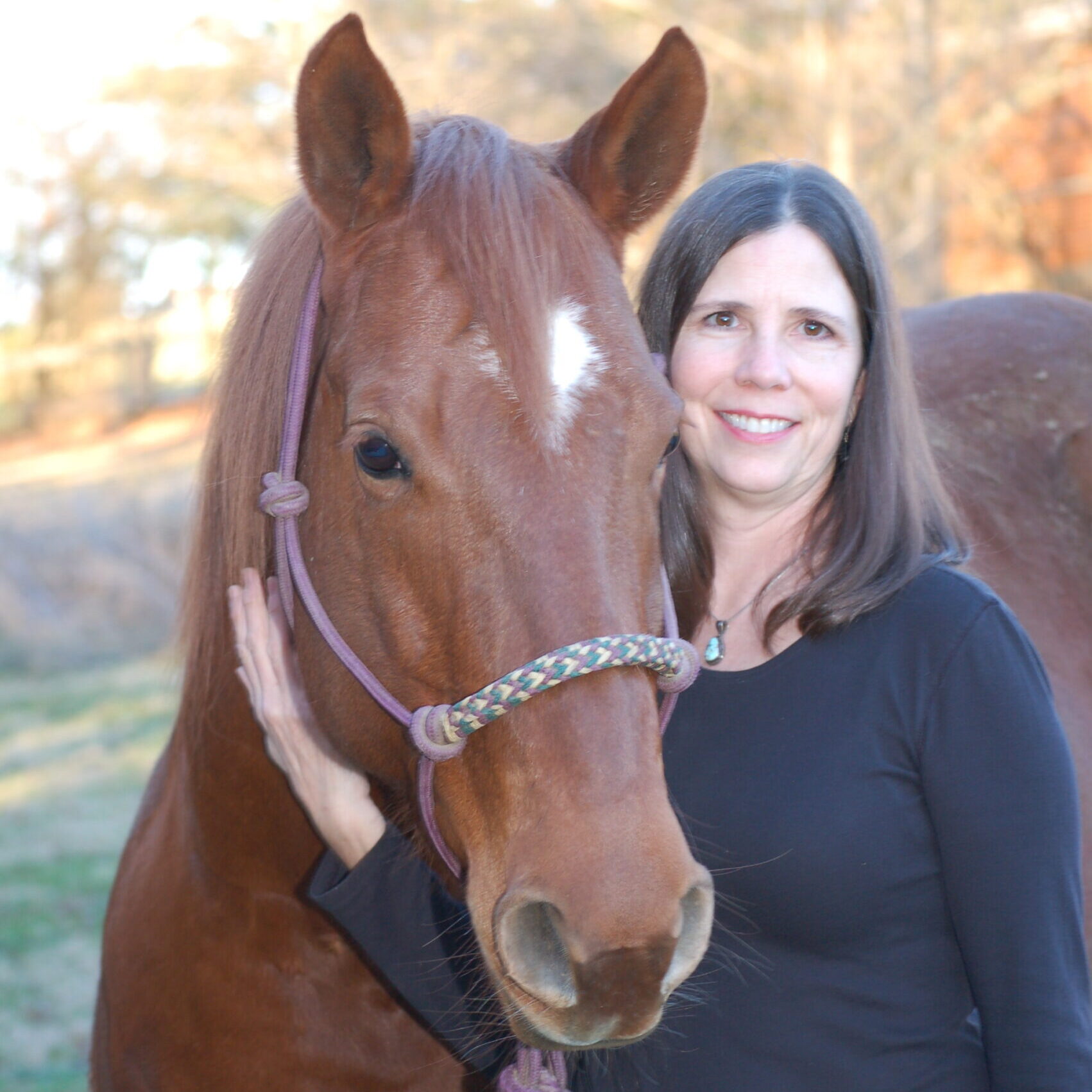
We asked Heather Lewis, AIA, NCARB, AAA, a principal of Animal Arts architecture firm, about managing snow and ice on a horse property. These tips cover human areas as well as your equine facilities.
What Do You Recommend for Deicing?
Lewis said she recommends avoiding rock salt and any other salt-based deicing agents for a couple of reasons. Salt degrades surfaces, especially metals and concrete. Salt also is not good for pets or vegetation.
She suggests using sand for adding traction to sidewalks and horse paths rather than deicer. If you still have a really icy spot, Lewis said to consider using a pet-safe deicer such as Safe Paw. This deicer is safe for paws and the environment. It also has a history of use around horses.
Keep all deicers—even pet-safe ones—out of paddocks. “We don’t really know what would happen if horses ingested these products,” Lewis said.
Avoiding the Ice
If you are designing a new barn, strive to orient driveways, unloading areas, and primary doors toward the south or east to take advantage of sun, particularly early in the day.
Beyond building orientation, there are some basic maintenance and management fixes that can help you avoid icy spots on your property.
The first Lewis mentioned is deflecting building downspouts away from sidewalks or walkways to prevent ice buildup. Also strive to create good drainage by shaping the soil so that it slopes away from the building at a rate of at least ¼-inch drop per foot of distance.
Gates
Areas around gates can get very slick. Locate gates where they get direct sunlight. Be diligent about snow removal. That prevents snow from being trampled and becoming slick. Use ¾-inch crushed rock around the gates to provide more texture under foot.
Run-in Sheds
Orient run-in sheds with their open sides facing south. This is the best direction for preventing ice buildup.
Barn Doors
Barn doors might need more diligence to prevent becoming icy spots. Larger gravel (3/4 inch, the same as at the gates) can help to provide more texture. It also might be necessary to provide a large rubber stall mat at the exterior sides of barn entrances. If you have concrete at the exterior sides of doors, it should be textured. We recommend a heavy broom finish texture or exposed aggregate on concrete to provide better traction in all weather.
Horse Paths
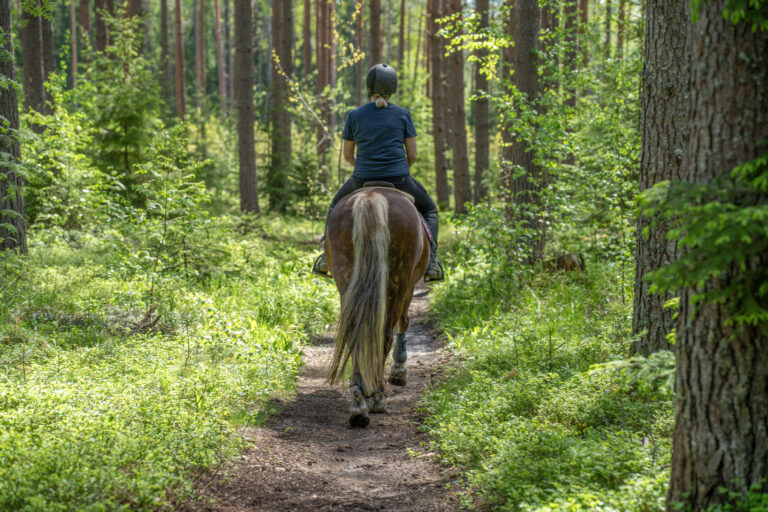
Horse paths should be designed for use by snow removal equipment. When removing snow from paths, remove the top layers of snow without digging up the surface of the path. Ensure there are areas to push snow off paths. Path surfaces should drain well. Build paths using multiple layers of aggregate, from large stones at the bottom to fine layers at the top. A 7-inch depth of aggregate is typically required to achieve good drainage. Locate the paths in the sun when possible.
Ice Storms
During ice storms, when everything is icy, it might not be safe for people or horses to be moving on paths. In these rare cases, limit activities to the base requirements and use sand and rubber mats to create more traction.
Snow Drifts
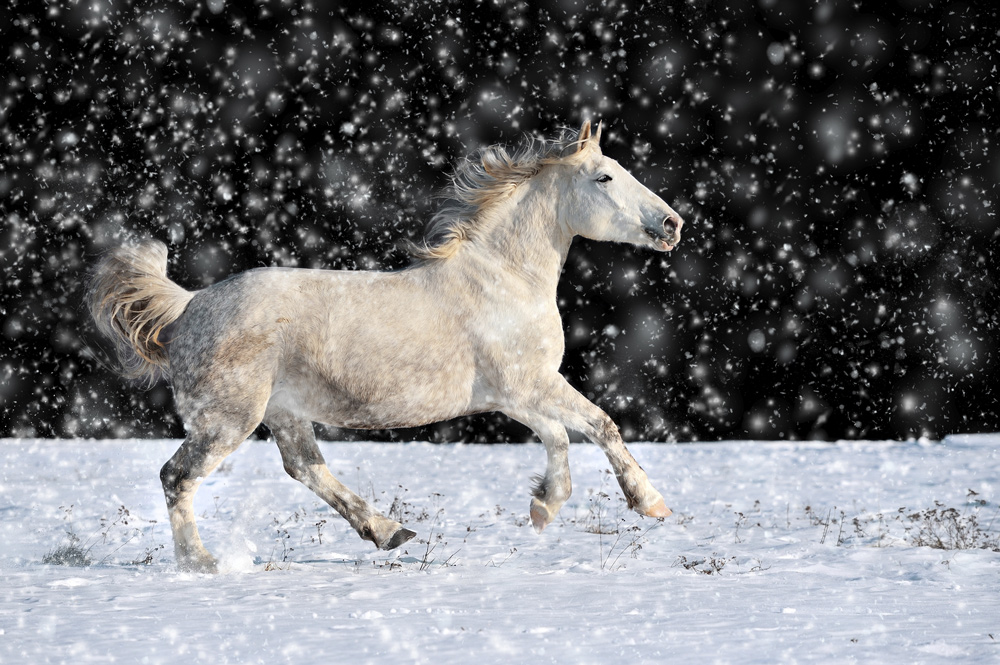
Wind can drift snow. In cold climates and particularly in windy ones, fences and vegetative barriers can be created to keep snow from drifting across drives or up against barns or outdoor pens.
If you have a small budget for a permanent snow fence, it is possible to build a temporary one each winter from posts in the ground and plastic mesh. This can be rolled up and stored in the spring for use in following season.
Final Words
For more information on horse farm architecture and maintenance visit https://www.animalarts.com and contact them via email.
Further Reading
- Horse Stall Design Basics. Heather Lewis. MySeniorHorse.com
- 5 Tips for Designing Comfortable Spaces Based on Equine Vision. Heather Lewis, AIA, NCARB, AAA. MySeniorHorse.com
- My Senior Horse Podcast: Housing Seniors. Heather Lewis, MySeniorHorse.com
- Horse Hearing and Environmental Noise. Heather Lewis. MySenior Horse.com
- 5 Tips for Designing Comfortable Spaces Based on Equine Vision. Heather Lewis. MySeniorHorse.com
Sign up for My Senior Horse’s FREE newsletter to get the latest information about equids 15 years and older delivered straight to your inbox!