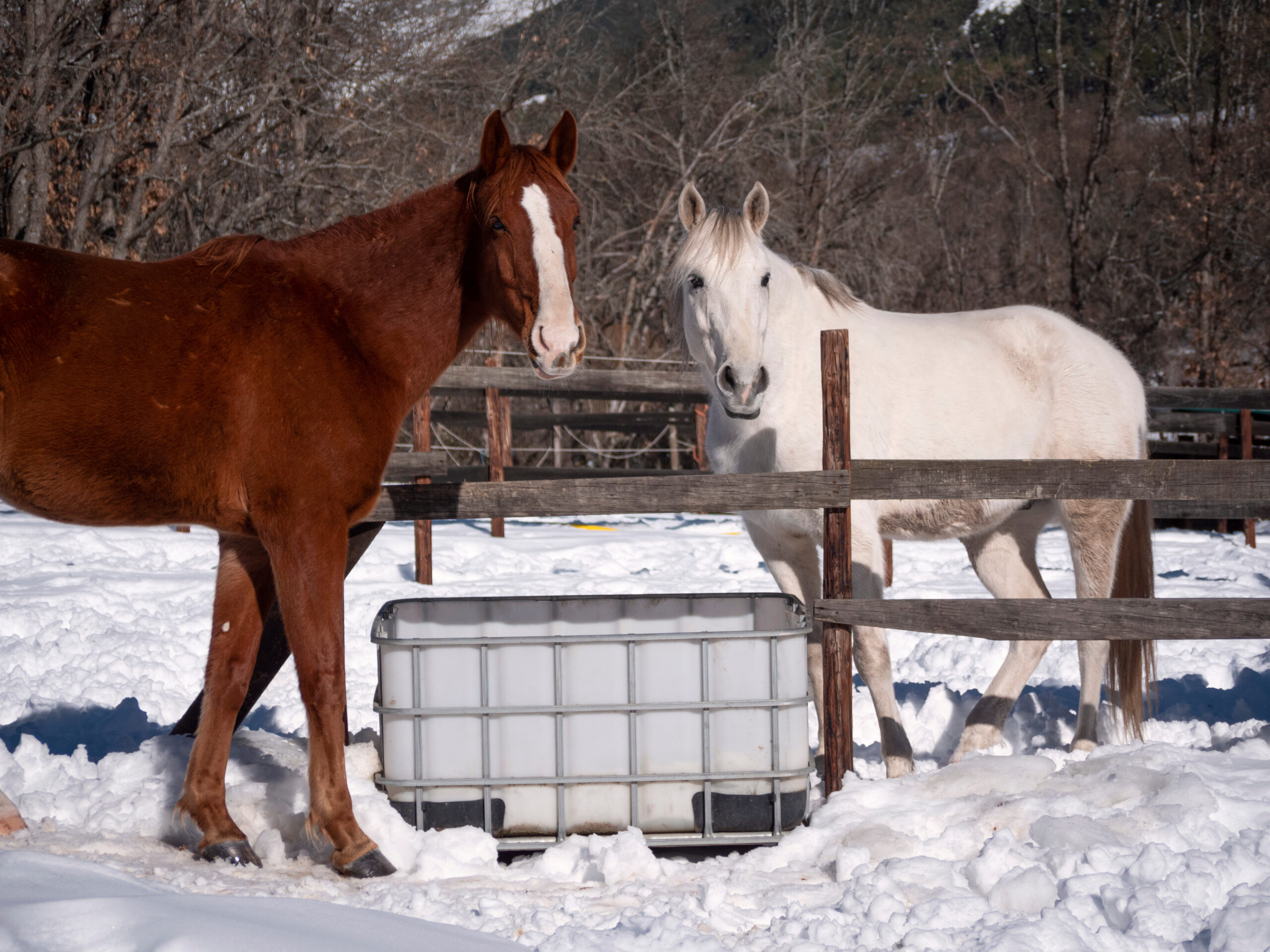
Water tank heaters prevent horses from drinking freezing water, and there are many options to choose from. These devices are especially relevant in parts of the world where horse owners face cold winter temperatures that turn water into ice.
Maintaining wet water in the face of frigid temperatures is important for horses’ health, especially to prevent impaction colic. Without a heater, owners must manually break ice on their stock tanks several times a day to ensure their horses can drink.
Important Features for Horse Water Tank Heaters
There are important features to consider when setting up a heater in your stock tank.
- Sheath electrical cords in plastic PVC or metal pipe. This prevents a horse from chewing on the cord or stepping on it, especially with horseshoes. Putting it out of reach might require elevating the cord, running it underground, and/or sheathing it in conduit.
- Make sure the extension cord is of a heavy enough gauge to run the necessary current.
- Shield electrical outlets used for heater plugs from curious horse mouths and teeth.
- Use a ground fault interrupter (GFI) for your plug-in.
- The tank heater should be well-grounded to prevent electrical shock that might discourage a horse from drinking.
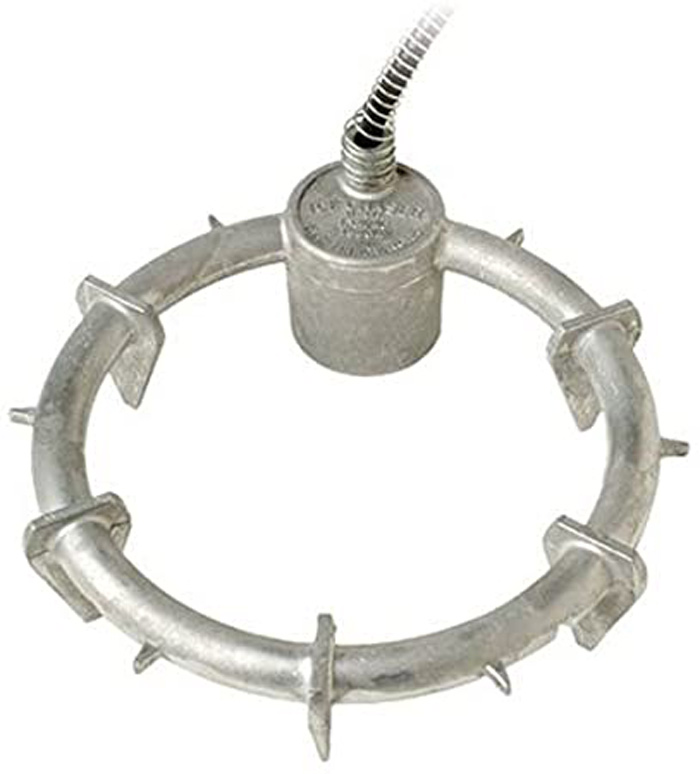
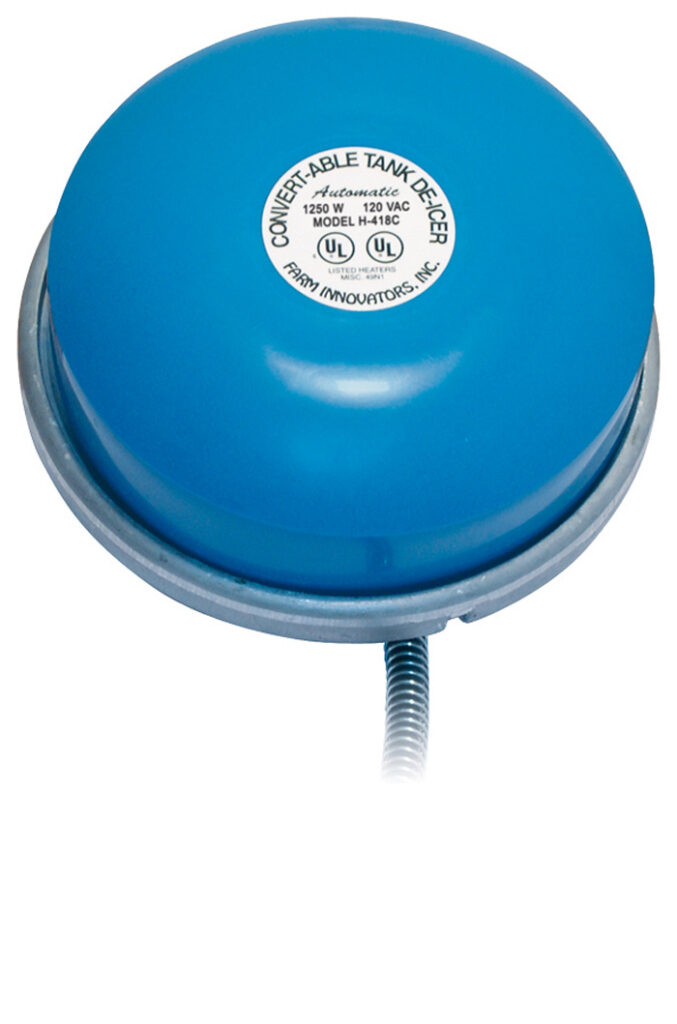
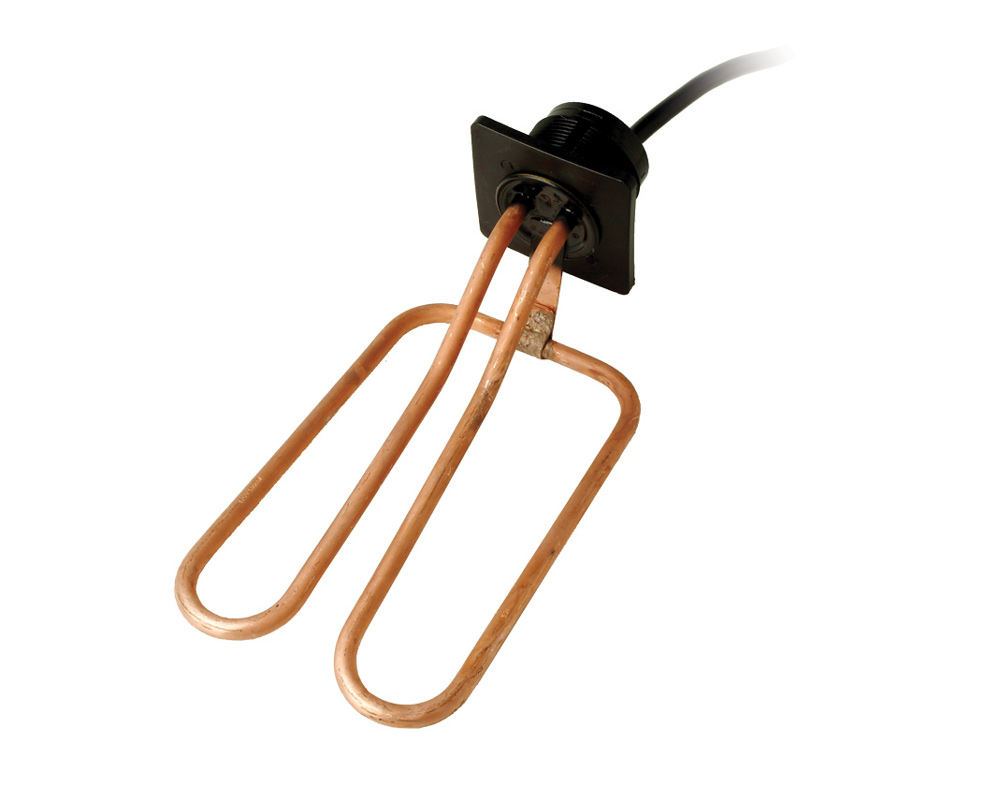
- There are several types of tank heaters. Those that immerse the heating element to the bottom of the tank are considered safer. Horses are less likely to bother immersed heaters that are clamped to the side of the tank. Even a floating heater within a cage poses a temptation to curious and playful horses. Make sure to observe your animals’ interactions with the heaters.
You can see images of various types of horse water tank heaters below. Always look for the UL symbol.
Cost Savings
You can purchase a heater that has a thermostatically controlled shutoff that only heats water when it dips below a certain temperature. This can save money by not consuming unnecessary electricity.
An insulated water tank also helps cut down on expenses. At the very least, it helps if you partially cover the top of the tank so the heat doesn’t radiate away into the air.
Some people think metal tanks are safer to use than plastic since some plastic tanks have been known to catch on fire or melt if a heater malfunctions due to poor installation or horse-caused issues. Others worry about the metal tanks conducting stray electricity.
Solar on Board
Solar heaters are another option that eliminates the need for electrical outlets and cords. Before you go this route, consider how much sun will shine on it during the winter, taking into account your geographic location and property orientation.
Stray Current
Keep in mind that some horses are more sensitive to “stray” current than others. If you have a horse that is reluctant to drink from a heated tank, check the water with a volt meter. If that shows anything, you might either have to unplug the tank for a few hours each day, ground the water tank (ask your electrician about the best way to do this), water that horse separately, or replace your tank heater.
Standing water or ice around water tanks has been known to increase a horse’s sensitivity to stray electrical current in the water from an electric heater, especially if horses are wearing shoes.
Also, if a horse is not drinking from a stock tank, don’t just stick your hand in the water to see if you feel the charge. Remember, you are probably wearing boots (perhaps even rubber boots) that don’t conduct electricity as well as a horse standing on damp, wet, or frozen ground in shoes or barefoot. Therefore, you are probably less sensitive to stray current than your horses are.
(Editor’s Note: Some horses are more sensitive to stray current. One Arabian mare we owned was extremely sensitive, and that encouraged us to ground the tank more thoroughly even though all the other animals drank from the heated water tank without issue. Also note you should look for the UL letters on the product. The UL symbol is a safety certification mark used on products that have been tested and certified by UL Solutions, a global leader in product safety.)

Further Reading
- Frost-Free Hydrants for Horse Facilities
- 4 Tips to Prepare Your Senior Horse for Winter
- Winter Care for Senior Horses
Sign up for My Senior Horse’s FREE newsletter to get the latest information about equids 15 years and older delivered straight to your inbox!