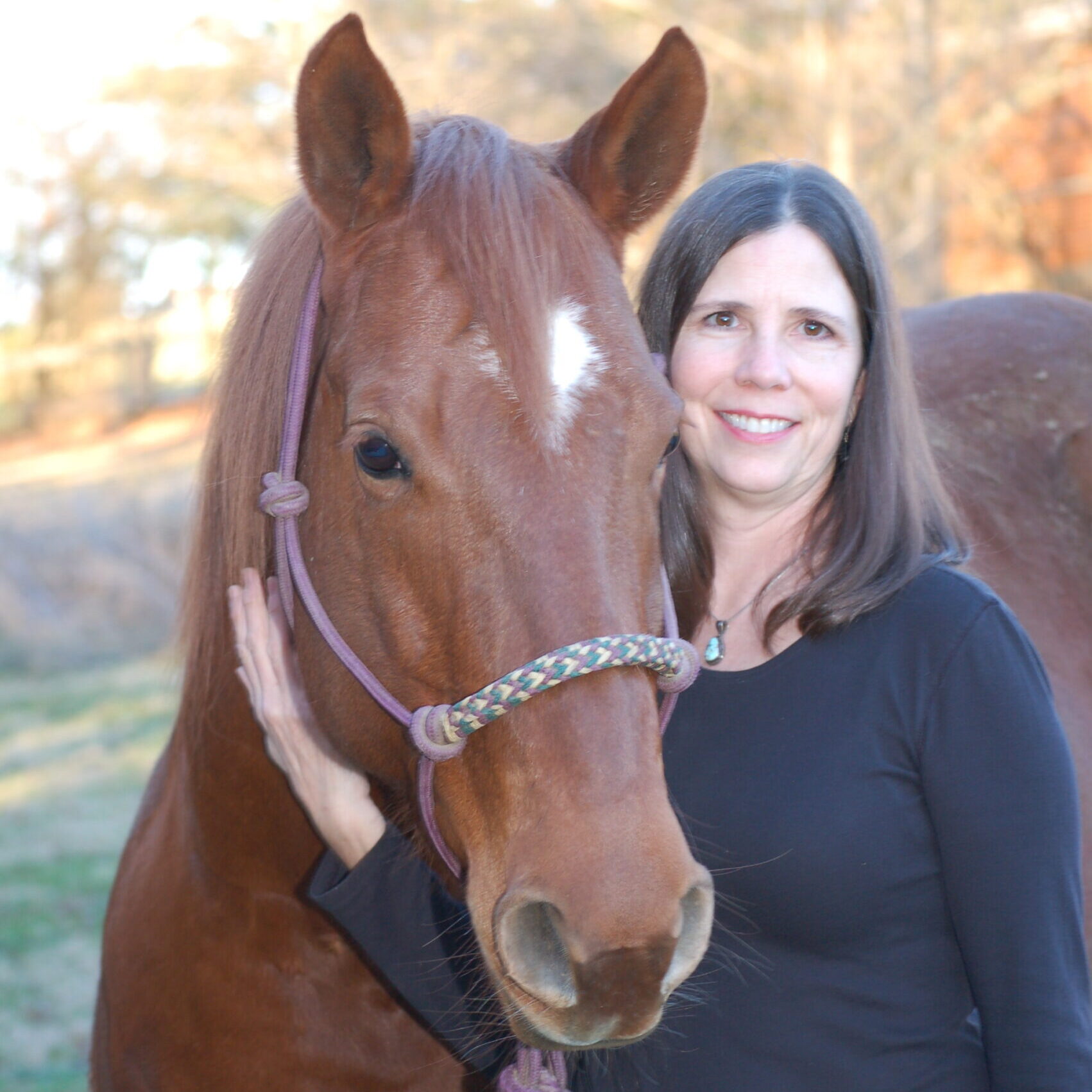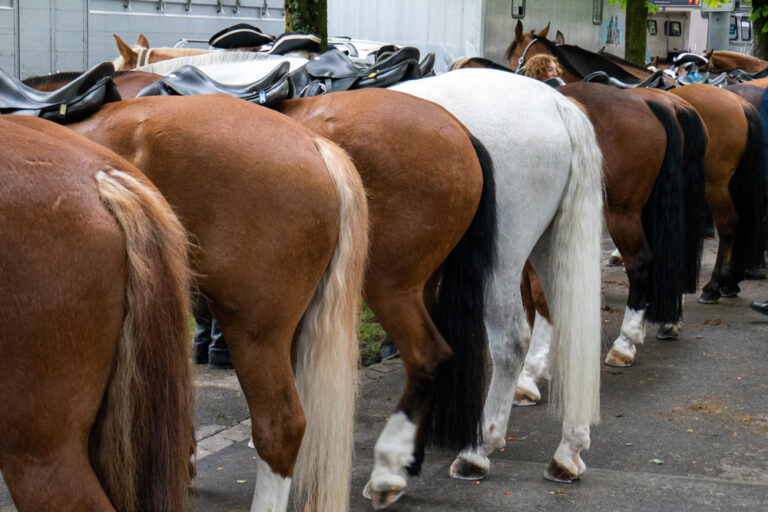
Managing senior horses in a herd situation requires thought and planning, and sometimes a little creativity. In this three-part podcast on managing senior horses in herds, we talk to Drs. Pat Harris and Nicky Jarvis, both equine veterinarians. You can read more about them in their ‘About’ sections below.
Introducing Seniors to a Mixed Herd
Because Jarvis works with a large welfare charity, integrating younger and older horses is something she has to consider.
What happens when you have a new horse? “It could be a new horse to a rescue charity or a new horse to your premises,” noted Jarvis. “I think that happens quite a lot in people’s lives.” She said the individual’s temperament is more important than the age of the horse when it comes to integration.
“I think a lot of the older horses, because they have seen it all and done it all, they can be quite confident in a group,” said Jarvis. “But I think maybe that starts to change when they feel less physically well. Perhaps they might have chronic pain—for example, osteoarthritis that people don’t even know that they have.
“When once a horse starts to feel physically vulnerable or unwell, then you probably will see changes in the pecking order,” Jarvis continued. “And of course we’ve got to account for the group you’re hoping to blend them into. It might be there are some really dominant characters in that group. The older horse that is normally quite a confident horse does struggle when integrated with a long-established herd. And it does immediately find itself going down the pecking order.
“So consider the individual you’ve got in front of you and the group you’re going to go into,” she advised.
Behavior Integration Tips
Jarvis asked for some top tips from the behavioral team at Redwings Horse Sanctuary for integrating a new horse into a herd. “The Redwigs teams do integrations particularly well,” said Jarvis. “And when I’m talking about integrations, actually, I’d like to extend that to a horse that’s come away from a group for vet care, and that vet care has been very prolonged.”
She said you can’t assume that when take a horse away from its herd for three weeks to treat an injury that you can just ‘pop it back out’ into the herd. “Even that often needs to be done gently,” Jarvis advised.
It doesn’t matter what age that horse is if it has been kept away from a herd. Jarvis reminded us that some rescue horses might have been kept in isolation most of their lives. So, they might not have the greatest social skills, which can complicate integration.
“It might not be able to read other horses very well,” noted Jarvis. “That can make it prone to injury.”
Separate but Close
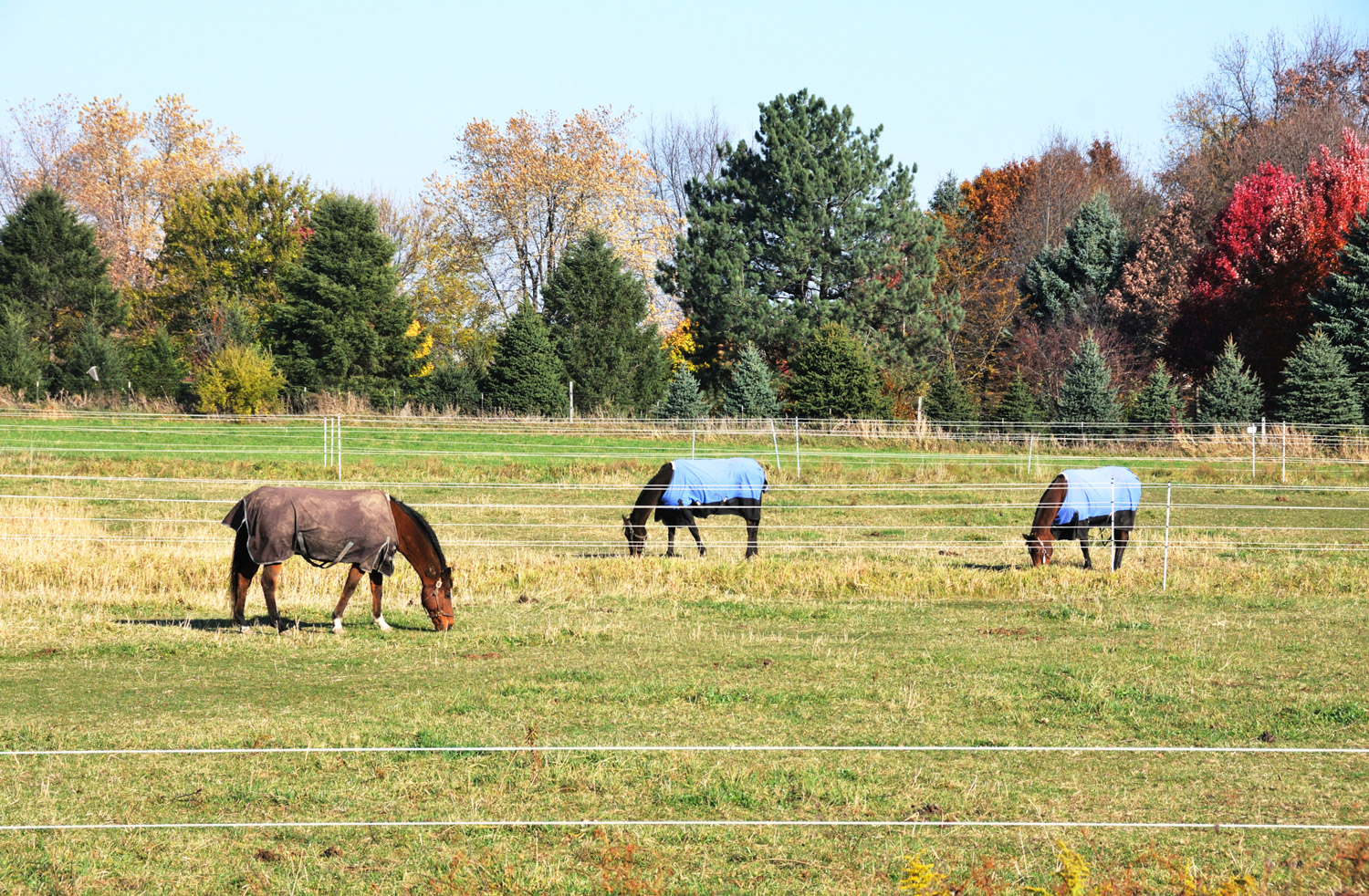
The Redwings teams tend to use electric fencing tape at pasture to separate a newcomer from the herd they hope to integrate the horse with. They can see each other over the fenceline and choose to interact (or not) while keeping all horses safe.
Jarvis said the farm teams will watch the facial expressions to look for subtle signs of bonding or interest between the herd and the newcomer. Once the team feels there has been positive signs of integration, they will bring one or two of the herd over to the newcomer’s side of the fence to allow them to bond as a smaller group. In some cases this process might take weeks, and that’s absolutely fine.
The small group—including the newcomer—then will be integrated into the larger herd. Jarvis said it helps that you’re not putting one horse into a group of strangers.
“That that that really does seem to help,” said Jarvis.
“But sometimes, they have tried an integration where they’ve only got as far as having the horses on opposite sides of the tape, and they’ve just not been happy with the facial expressions or with the interactions over the fence. In those cases, they will come back to the rest of the team and say no, I think we’re going to have to think of a new group.”
Jarvis said with the number of animals they have, they can usually find a different group if the first one doesn’t work out. She recognizes that private owners won’t have that luxury, so they’re going to need to take things even slower and keep watching for body language.
Integrating an Older Horse
Harris said, “I would like to emphasise that sometimes it isn’t the right thing to integrate an older horse into the group if that horse has particular issues.”
She also reminded owners that the lay of the land might not be suitable for older horses. This is especially true if the newcomer has physical difficulties such as arthritis. “There are some individuals where, either for health reasons or for the land reasons, you might be better off thinking of another way of managing them. Or is there another group or another part of the area that you can use? And I think we sometimes forget that sometimes we have to say it won’t work with this horse.”
That might be because the senior newcomer is put down in the pecking order, noted Harris. That might mean it is being prevented from getting access to feed or water. “Don’t forget you need to monitor over time” even after the horse has been introduced to the herd.
Jarvis and Harris discuss some of the body language and facial expressions they watch for in the podcast.
Resources
Jarvis feels that one of the highest risk groups to try to integrate a horse into is a group of horses that you’ve got on a diet.
“They already feel they would like more resources (forage/grass),” she said. “So, trying to blend a horse into that group when they’re completely unfamiliar with that horse, can be very difficult. The new horse might be seen as competition for valuable resources.”
She said if they needed to do such an integration at Redwings, after following the protocol mentioned above, they would move the electric fence tape to increase the area of grass available or add additional forage ahead of the integration of the small group into the larger herd. This would help reduce the need for competition and distract the horses.
Editor’s note: Make sure to listen to all three parts of this podcast series to learn more about managing senior horses in herds.
About Dr. Pat Harris
Dr. Pat Harris is a past president of the British Equine Veterinary Association and is a European specialist in veterinary and comparative nutrition. She is the Equine Nutrition and Science advisor to Mars Horsecare & WALTHAM TM Equine Studies Group, Waltham Petcare Science Institute. Harris has spent much of the last 30 years working to help improve the care and nutrition of older horses. She also is passionate about seniors because of her dedication to her own older horses. Harris has advised on the care of many senior equids and has authored numerous articles on their care. Her involvement in several global senior research teams gives her special insight into some of these studies. Harris is also on the Executive Advisory Council for My Senior Horse.
About Dr. Nicky Jarvis
Dr. Nicky Jarvis is head of Veterinary and Care at Redwings Horse Sanctuary in Norfolk, England. She qualified from the Royal Veterinary College, London, in 1990 and worked in mixed practice for two years before moving to Newmarket, where she completed a two-year internship at Rossdales Equine Hospital. Dr. Jarvis then joined Redwings Horse Sanctuary in Norfolk in 1996. She is now head of Veterinary and Care, working with what she calls an “incredible” team of veterinary surgeons and nurses to care for more than 1,200 resident horses, ponies, donkeys, and mules. Dr. Jarvis attained her RCVS Certificate of Advanced Veterinary Practice in Equine Medicine in 2012 and her CertAVP in Equine Surgery Soft Tissue in 2013. She has a keen interest in equine nutrition, geriatric medicine, internal medicine, and colic.
Further Content
- My Senior Horse Podcast: Managing Senior Herds Part 2. Kimberly S. Brown. MySeniorHorse.com
- My Senior Horse Podcast: Managing Senior Herds Part 3. Kimberly S. Brown. MySeniorHorse.com
- All the My Senior Horse podcasts can be found listed here.
- Learn more about routine care of senior equids in these articles.
- My Senior Horse Podcast: Equine Behavior. Kris Hiney, PhD. MySeniorHorse.com
- My Senior Horse Podcast: Positive Reinforcement. Dr. Eleanor Girgis. MySeniorHorse.com
- Study Suggests Horses Smarter than Previously Thought. MySeniorHorse.com
- What You Should Know About Equine Osteoarthritis. MySeniorHorse.com
- My Senior Horse Podcast: Horses and the Science of Harmony. Dr. Sue Dyson. MySeniorHorse.com
Sign up for My Senior Horse’s FREE newsletter to get the latest information about equids 15 years and older delivered straight to your inbox!