Most horse owners know the most obvious clinical signs of pituitary pars intermedia dysfunction (PPID, also known as equine Cushing’s disease). Those signs include a long hair coat that doesn’t shed (hypertrichosis), as well as excessive drinking and urinating.
For this article, we consulted Edd Knowles, MA, PhD, VetMB, MVetMed, Dipl. ECEIM, MRCVS, director of science and nutrition for Mars Horsecare. He explained some of the common and less-common clinical signs you should watch for in horses with PPID.
(Look for links to associated articles, videos, and podcasts within the text of this article and at the end under Related Content.)
Issues Discussed
- Long haircoat that doesn’t shed (hypertrichosis)
- Drinking and urinating more than normal
- Lethargy or a change in character
- Immune system issues (a lower ability to fight off infection)
- Parasite burdens
- Dental issues
- Skin issues (including sweating problems)
- Laminitis
- Insulin dysregulation
- Loss of muscle mass
- Tendon, ligament, and bone issues
- Eye issues
- Other Issues
- Inappropriate lactation/fertility problems
- Enlarged pituitary gland
- Behavioral changes
- BEVA PPID Primary Care Guidelines
Different Signs in Different Horses
“PPID is quite a variable condition,” Knowles said. “We see a lot of differences in the severity of the condition. Also, the collection of signs or symptoms that different horses have because the condition can affect a number of different tissues.”
The condition is also progressive, so it usually gets worse with time. “The speed of deterioration can also vary a lot between horses,” Knowles explained. “But, the same horse can be stable for some time, then deteriorate.”
Long Haircoat
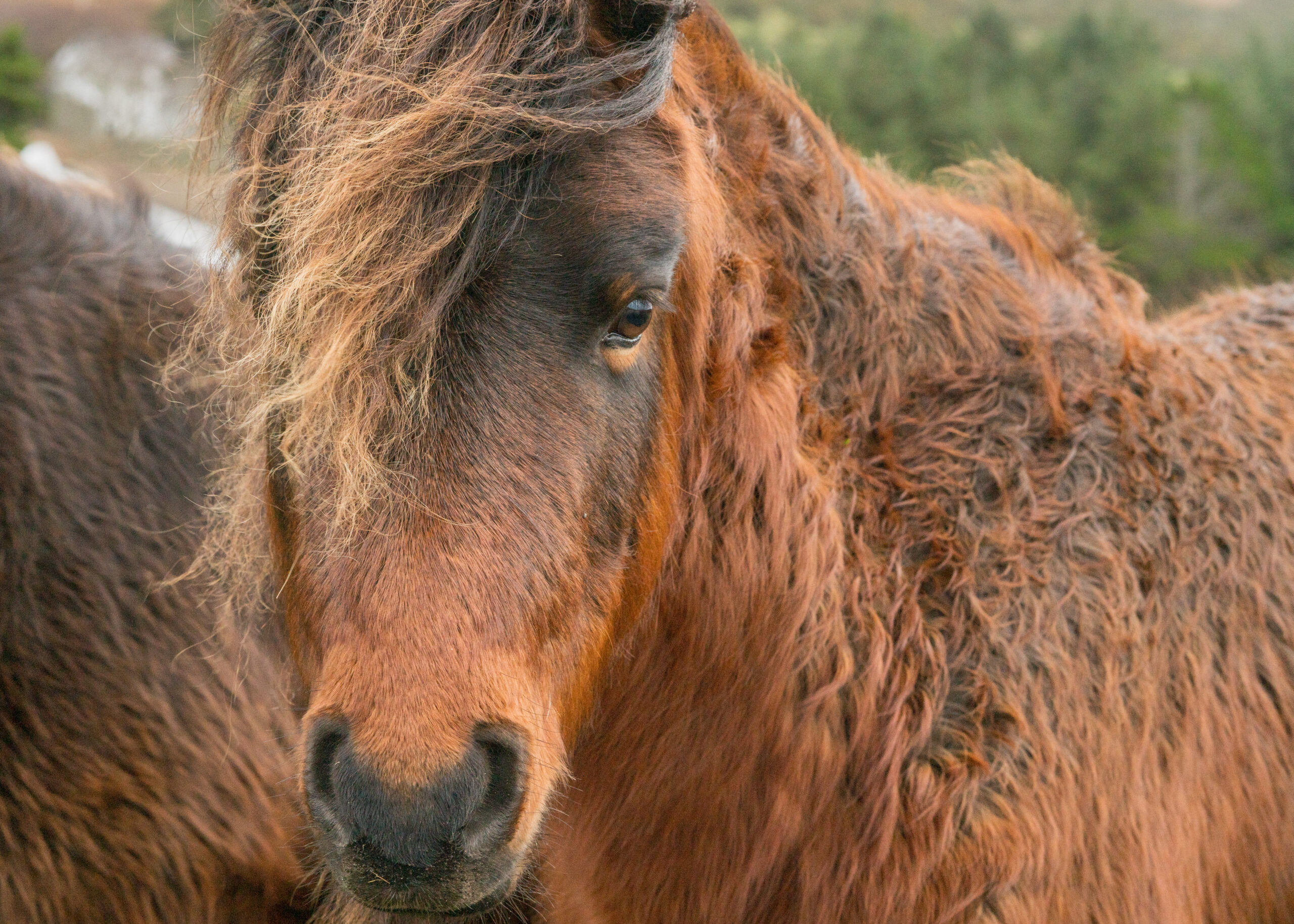
One of the most common and easily recognized signs of PPID in horses is a long hair coat that doesn’t shed normally. This is called hypertrichosis.
“If you see a case of hypertrichosis, I think you can be 99.9% sure it’s PPID,” said Knowles. “It’s very unusual for true hypertrichosis in horses to be caused by something else.”
Horses don’t get a long, curly hair coat overnight, explained Knowles. First, horses start to hang on to their coats for a little bit longer in the spring, often in patches rather than the whole coat. At that stage, Knowles said the signs can be confused with slightly delayed shedding.
“What usually happens is over a period of years that will get more and more pronounced to the point where you get true hypertrichosis where we have long and often curly coats all year round,” said Knowles.
He said when you see that long, curly hair, you can be pretty sure the horse has PPID.
“Once they reach that stage, you probably don’t really need to run your blood test, because you know it’s PPID. The point of our testing is to try and pick it up in the earlier stages,” he noted.
Drinking and Urinating More Than Normal
Polyuria refers to the production of an excessive amount of urine. Polydipsia is the medical term for excessive thirst and drinking. Both of these are common clinical signs of PPID.
“Sometimes, it takes owners a little while to notice this, particularly if the horses are pasture kept,” said Knowles.
If a horse is kept in a stall, owners tend to notice the excessive moisture when they are mucking out, he said. They also notice because they are filling up water buckets more frequently.
There are other causes of excessive drinking and urinating in horses. Knowles recommended checking with your veterinarian if you see these issues.
Lethargy and Changes in Character
Horses with PPID often appear lethargic or less engaged than usual. Knowles noted that ”owners and carers tend to spend a lot more time with their horses than vets do and have often known their horses for a long time. So, they often pick up on changes in character much more commonly than vets do.”
He added that “lethargy can be a difficult symptom to characterize and can have many causes, but it’s certainly a common finding in PPID.”
Immune System Issues
“This is quite a hard one to pin down because I think older people and older horses are often a bit more vulnerable generally,” observed Knowles. “But, I think we do see in some PPID cases a definite pattern of recurring infections.”
Skin infections and delayed healing are particularly common in horses with PPID. “They’ve had a laceration or something, and it takes longer to heal than expected,” said Knowles.
A slow-healing wound or recurrent skin infections will often trigger an owner and veterinarian to test for PPID, said Knowles.
Senior horses “do, perhaps, seem to be a bit more vulnerable when there’s something going around other horses,” added Knowles. “Say we’ve got a respiratory infection going around a barn. We may find that the PPID horses are more affected by that.”
Parasite Burdens
It is important to keep monitoring parasites in older horses, Knowles said. PPID can affect parasite burden in aging horses, but this—like many signs of PPID—varies between individuals.
“Again, often these horses can be a little bit forgotten if they’re retired and not in work as much,” Knowles said. “So, keep on top of the fecal worm egg counts. It is important.”
Dental Issues
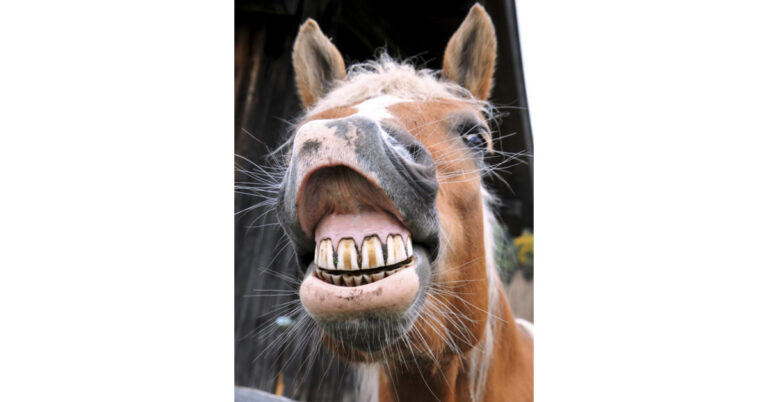
“I think as with lots of aspects of PPID, it can be hard to separate the effect of age from PPID,” said Knowles about tooth problems in older horses. “The horse’s teeth, they do wear as they get older and we have less and less crown. They do eventually expire, and that’s perfectly natural for an older horse to have some expired teeth.
“I think that PPID probably contributes something to an additional level of vulnerability,” he added. “I think there are lots and lots of PPID horses that don’t seem to have dental problems. So, it’s not as though the PPID causes dental disease in all horses.
“But, I think it can certainly contribute to dental conditions or the severity of the dental infections,” he concluded.
Skin Issues
Owners and veterinarians often see changes in sweating patterns associated with PPID, although Knowles said there are plenty of PPID horses that don’t have this clinical sign.
Depending on the climate, some people report anhidrosis (failure to sweat normally). Knowles said that’s not common where he lives in the UK. “But, that has been reported as a consequence of PPID in other parts of the world.
“What we do see a bit more commonly is horses with patchy sweating or excessive sweating,” he continued. “That can contribute to the overall health of the skin. They can get patches of sweating, particularly under a thicker, longer coat, and that can make the skin more irritable and predisposed to infections.”
Laminitis and Insulin Dysregulation
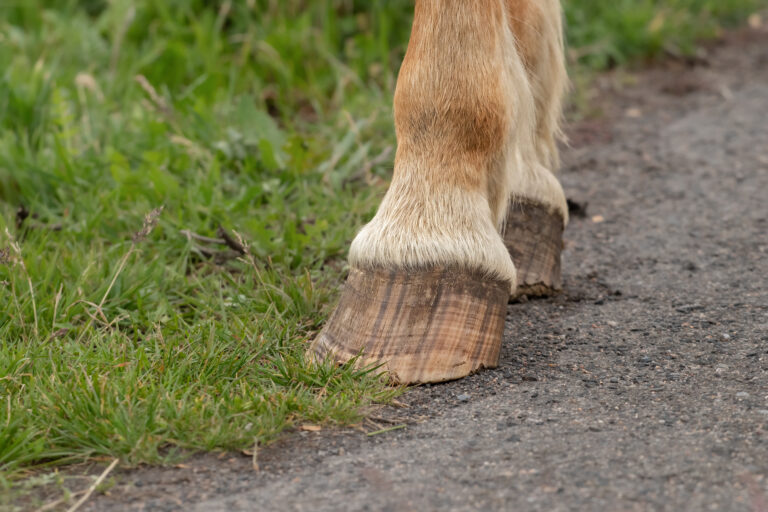
“We do see a higher incidence of laminitis in PPID cases, and it’s often the reason that horses see the vet and are tested,” stated Knowles. “We also see plenty of PPID cases that don’t have laminitis. Statistically, most PPID cases in the general population don’t have laminitis, to the best of our knowledge.
“There are a few caveats,” he continued. “We do know that when you look at those [PPID-positive] horses radiographically, a lot of them have changes on their X-rays that are consistent with laminitis. So, the cases that vets see are probably are the tip of the iceberg, and there’s a whole subclinical burden of disease there that we don’t see.”
The route by which PPID is associated with laminitis is through insulin, Knowles said. “So if you’ve got PPID, but insulin is controlled, those horses don’t appear to be at a higher risk of laminitis. But, if you have PPID and insulin dysregulation, those horses are at high risk of laminitis.”
He questioned the nature of the relationship. Did the horse have pre-existing insulin dysregulation that is exacerbated by PPID, or does PPID cause insulin dysregulation by itself without any pre-existing problems?
Loss of Muscle Mass
Loss of muscle mass a common sign of PPID, explained Knowles. “I think it tends to be noticed most over the back. So, we see a sway-back appearance.
“It can also be manifest in a pot belly because these horses have less muscle holding their belly up,” he explained. “It’s quite interesting because muscle loss is one of the signs of PPID that seems to be a little bit less responsive to therapy. Some signs of PPID seem to respond pretty well to pergolide or other dopamine agonists, whereas muscle loss seems to be a bit less responsive.”
He said as with other signs associated with PPID, muscle loss is a common feature of older age in lots of species. “But, we think there’s something in PPID that seems to almost be accelerating that process or making it more severe.”
Tendon, Ligament, and Bone Issues
There is some research linking PPID with tendon and ligament degeneration.
Knowles said this issue in the PPID horse is most closely associated with degeneration of the suspensory ligament, which causes fetlocks to drop and not be as upright.
“It’s interesting, in terms of tendons as opposed to ligaments, we certainly do see some nasty tendon problems in older horses and in PPID-positive cases,” said Knowles. “The extent to which that could be influenced by PPID I think is a really good question. I’m certainly not convinced it’s a common sign of PPID. I think there are plenty of other reasons for tendon issues. But, PPID is a multi-systemic disease, and tendons could be affected.
“But, I think it’s one issue that we haven’t got a complete explanation for in terms of the pathological mechanisms underlying that,” he concluded.
“Coming on to bones, I think I’ve seen cases of PPID that have had reduced bone density,” Knowles continued. “For example, unexpected post-anesthetic fractures in PPID horses.”
Research on PPID horses has shown that lumbar vertebral bone density is decreased in horses with pituitary pars intermedia dysfunction.
Eye Issues
Knowles said research has shown changes in the eye tear film of PPID horses, specifically the cortisol levels in the tear film. “If they get corneal ulcers—abrasions to the surface of the eye—those tend to heal more slowly in horses with PPID,” he said.
He said PPID horses might be more prone to infection of those corneal lacerations or corneal ulcers.
“I think the eyes are certainly something where we do see the combination of delayed healing and propensity to infections,” Knowles said.
Other Issues
Knowles mentioned several less-common clinical issues seen in horses with PPID. One was inappropriate lactation in mares.
“We occasionally see mares that have never had a foal suddenly start lactating when they get PPID,” said Knowles. “Some people have questioned whether there’s an effect on fertility. There’s conflicting studies on that. But, there are some reasons to believe that some PPID-positive horses may have fertility issues.”
He said in some PPID cases, the pituitary gland gets so big that it starts to cause neurological problems that could include behavioral changes and altered nerve function. “We can see quite unusual effects in a small number of cases,” he added.
He added that there’s some question about whether PPID makes horses more stoic and less likely to show signs of disease or discomfort. “We sometimes see these PPID-positive horses with really nasty lipomas or nasty colic cases. But they don’t show as much pain as you might expect. They do seem to be a little bit more pain tolerant.”
Related Content
- PPID/Cushing’s Category of Content. MySeniorHorse.com
- Diagnosing and Managing PPID in Horses. Kimberly S. Brown. MySeniorHorse.com
- Coat Changes and Immune System Shifts in Senior Horses. Kimberly S. Brown. MySeniorHorse.com
- When Is a Horse Considered ‘Senior’? Clare Barfoot, RNutr. MySeniorHorse.com
- Developing a Feeding Plan for Your PPID Horse or Pony. Dr. Pat Harris. MySeniorHorse.com
- Quality of Life Tool for Monitoring PPID Horses. Alexandra Beckstett. MySeniorHorse.com
- Assessing Your Animal’s Risk of Laminitis. Dr. Edd Knowles. MySeniorHorse.com
- Disease Du Jour podcast: Equine Tendon Healing. EquiManagement.com
- PPID and Bone Mineral Density Loss in Horses. Kimberly S. Brown. MySeniorHorse.com
- Understanding PPID video. Dr. Cosette Fiavre. MySeniorHorse.com
- My Senior Horse Podcast: PPID Part 1. Dr. Hal Schott. MySeniorHorse.com
- My Senior Horse Podcast: PPID Part 2. Dr. Hal Schott. MySeniorHorse.com
- My Senior Horse Podcast: PPID Part 3. Dr. Hal Schott. MySeniorHorse.com
Sign up for My Senior Horse’s FREE newsletter to get the latest information about equids 15 years and older delivered straight to your inbox!