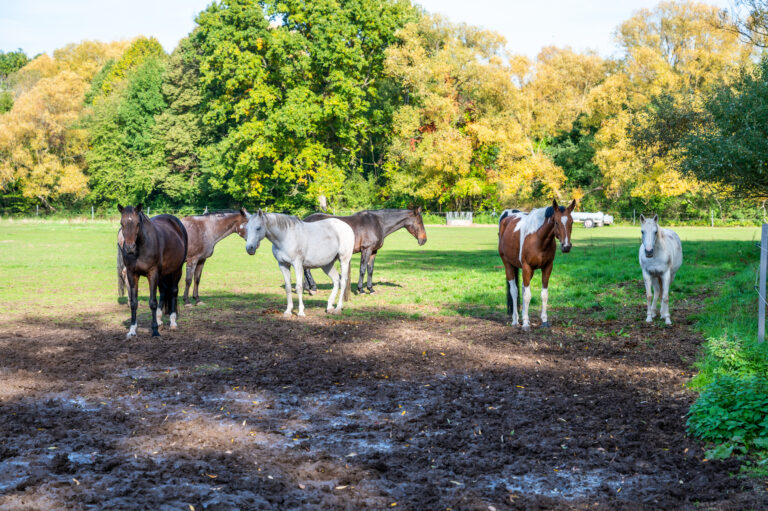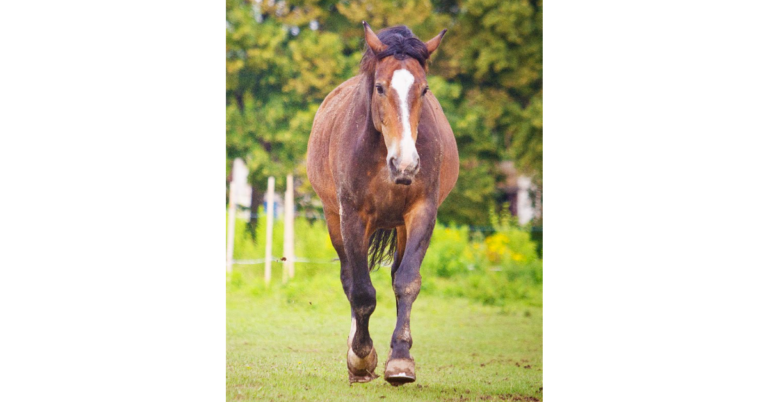
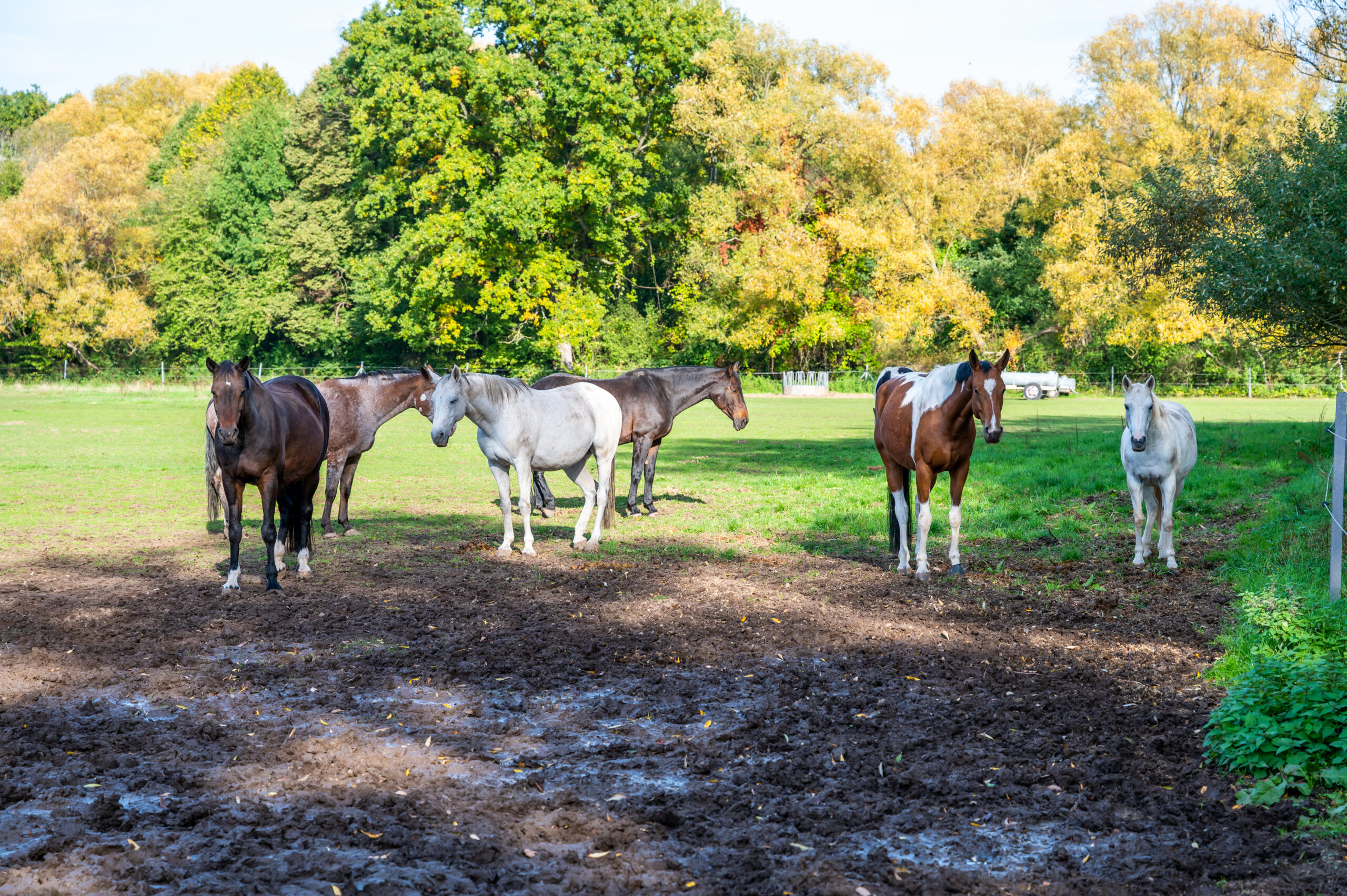
Horses tend to slow down as they age, often becoming less active than in their younger years. This change could reflect the horse’s overall health and wellbeing. In a recent study, researchers in France1 evaluated senior horse movement during paddock turnout.
About the Research
The study included 28 senior Selle Francais horses aged 17-35 years. Researchers monitored the horses for a total of 122 turnout paddock sessions lasting 2 hours each over a period of approximately 2.5 years. They measured total distance traveled and mean speed for each turnout session using a Polar Team Pro wearable sensor. They also took weather into consideration during these sessions.
Among the study horses, older age reduced total distance and mean speed during turnout, the researchers noted.
“We found that older horses generally covered less distance and moved more slowly than younger senior horses (e.g., a horse 5 years older was estimated to cover approximately 27% less total distance during the 2-hour window),” they reported.
Why Is This Important?
As horses age, changes in daily movement might reflect their health and overall well-being, noted the researchers. However, few objective studies have examined how normal aging affects movement in older horses under everyday management conditions.
“Turnout locomotor activity is a potentially informative indicator of health and welfare in older horses,” they wrote.
These findings suggest that monitoring horses with with a wearable tracking device during turnout could help support welfare. However, further research is needed to understand how such tracking devices can be used to monitor individual horses as they age. The researchers noted that more frequent recordings from the same horse would be necessary to monitor an individual, just as many human wearable devices also rely on very regular data to detect individual trends.
Final Words
Many horse owners have observed their older horses slowing down with age, and this research has provided more insight. It showed that in general, older senior horses moved less and more slowly than younger senior horses. Wearable technology is advancing quickly in horses and is likely to become increasingly useful for horse owners and veterinarians.
This knowledge can help owners better understand and manage their senior horses. Remember that physiological age (health) and chronological age (years) differ for individual horses.
The researchers suggested a larger, multi-site study in the future. They recommended standardized clinical phenotyping (measuring physical and behavioral traits) and external welfare/clinical validation of the study horses.
Reference
Age-Associated Differences in Paddock Locomotor Activity Among Senior Horses: A Pilot Observational Study. Luc Poinsard, Claire Anson, and Véronique Billat. Animals. 2026. Open access PDF download available
Related Content
- My Senior Horse Podcast: Managing Senior Ponies. Dr. Shannon Pratt-Phillips with Kimberly S. Brown. MySeniorHorse.com
- How Long Can A Horse, Pony, Donkey, or Mule Live? Kimberly S. Brown. MySeniorHorse.com
- Understanding Equine Aging and Live Expectancy. Dr. Jo Ireland. MySenorHorse.com
- When Is A Horse Considered Senior? Clare Barfoot, RNutr. MySeniorHorse.com
- Caring for a Herd of Aged Research Horses. Alexandra Beckstett. MySeniorHorse.com
- How to Perform Daily Health Checks of Senior Horses. Alexandra Beckstett. MySeniorHorse.com
Sign up for My Senior Horse’s FREE newsletter to get the latest information about equids 15 years and older delivered straight to your inbox!