As a senior horse owner, do you know what to expect during your horse’s annual wellness exam with your veterinarian? In this podcast episode, Dr. Toby Pinn-Woodcock gives tips on how horse owners can help their veterinarians take the best care of their senior equids.
Do All Senior Horses Need an Annual Vet Exam?
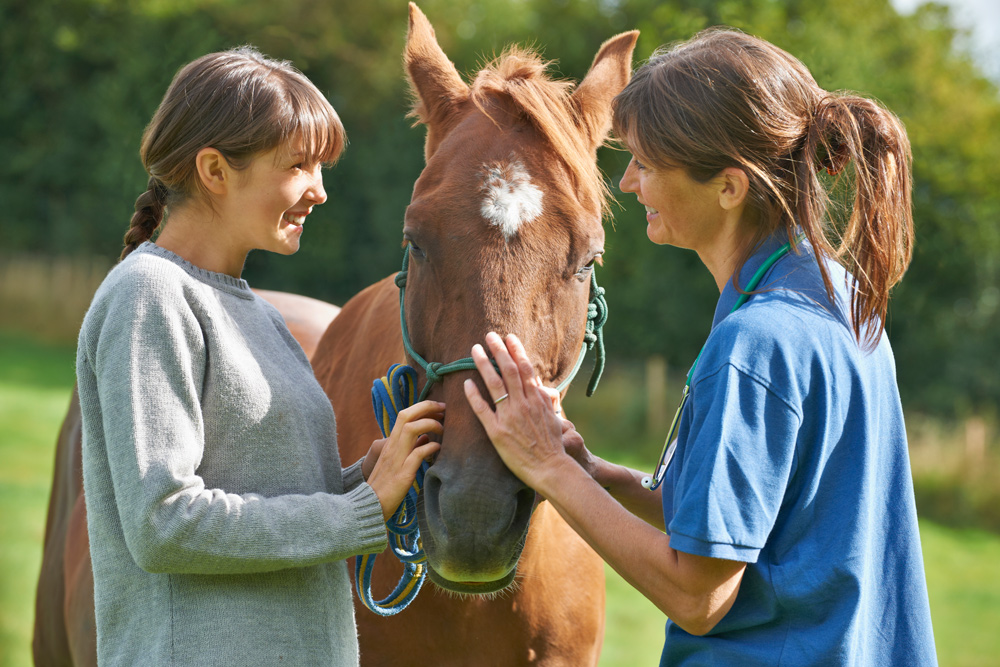
Pinn-Woodcock said in general, all horses, ponies, donkeys, and mules should have an annual exam by a veterinarian no matter their age.
“But seniors do tend to accumulate some additional problems as they get older,” she noted. “And it’s always a good idea to have your veterinarian stay right on top of that. We like to practice preventative medicine rather than have to react to an emergency, so whatever we can do to stay on top of their health needs is for the best.”
What Happens at This Exam?
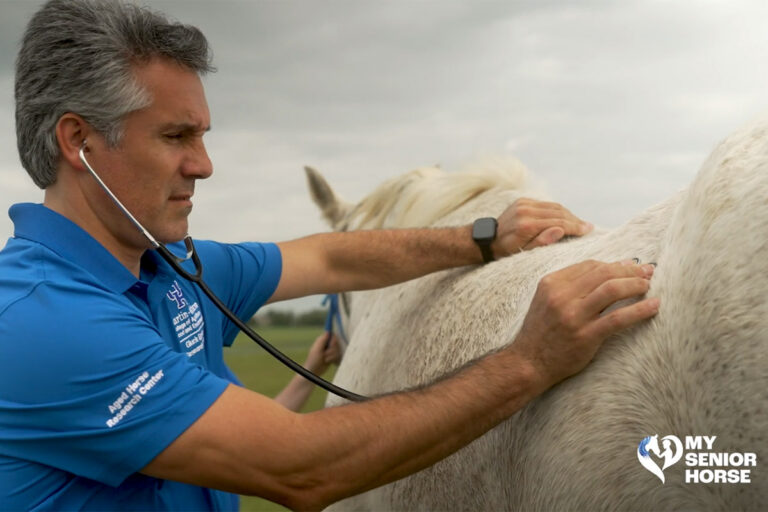
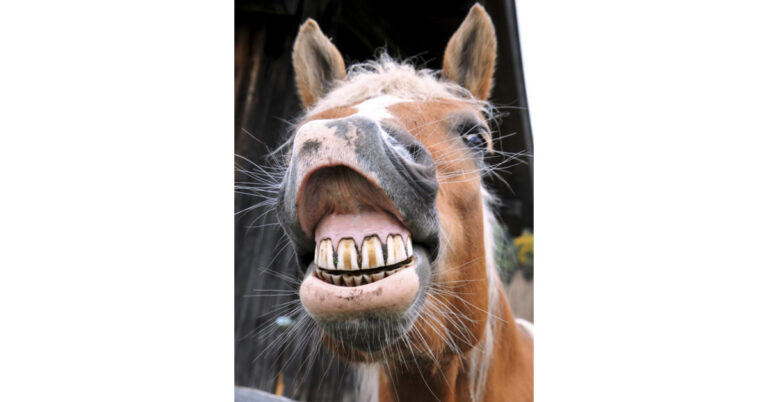
It is important for the veterinarian to perform a physical exam of all the major body systems. The vet will listen to the horse’s heart and lungs, look at their body condition and skin, and talk to the owner about how the horse is eating and behaving. An oral exam might be performed to determine if there are any dental issues that should be addressed. That is usually followed by vaccinations as recommended by the veterinarian.
“Senior horses can get a condition called Cushing’s disease, or pituitary pars intermedia dysfunction, which vets will refer to as PPID,” noted Pinn-Woodcock.
“This condition typically occurs in horses over 15 years of age,” she continued. “If horses have it and it’s uncontrolled, they can become immune compromised. That makes them more susceptible to infectious diseases that we vaccinate against. So, it’s very important that we stay on top of our horse’s vaccines as they get older to maintain good antibody titers to protect them against exposures.”
Pinn-Woodcock said depending on where you live, vaccines could vary. She said that most often they would include the core vaccines as defined by the American Association of Equine Practitioners (AAEP). Other countries and locations will have their own vaccination protocols.
The AAEP defines core vaccines in the U.S. as:
If your annual exam includes a dental float, your horse might be sedated. If you own a gelding, this might be a good time to also perform a sheath cleaning.
Do Senior Horses Need Deworming?
This is a question that many horse owners are confused about. Pinn-Woodcock said that similarly to vaccination, “geriatric senior horses should also be checked for parasite burden and dewormed once a year at least.
“As a result of Cushing’s disease, they can be susceptible to heavier worm burdens than younger horses,” she added. “For that reason, they may require fecal egg counts multiple times a year and appropriate deworming based on the numbers.”
Anything Different for Asses or Ponies?
“I would say they need all of the same basic care as any other geriatric, normal-sized horse,” said Pinn-Woodcock.
“Our donkeys and mules, are also susceptible to Cushing’s disease,” she said. “And because they are such easy keepers, they can become overweight. So, an important part of managing them includes not only evaluating them for Cushing’s, but also making sure that they’re maintaining a healthy weight.”
Blood Work for Senior Horses
Pinn-Woodcock said not every healthy senior horse requires blood work at their annual wellness visit. However, she said it is a good idea when it’s in the budget to do so.
The type of blood work that the veterinarian might offer could include a complete blood count to look at their red blood cell and white blood cell populations. It could also include a chemistry panel that would look at liver and kidney function, among other things like electrolytes and protein levels.
“And it’s nice to assess certain dietary elements such as vitamin E and selenium on an annual basis, just to make sure that they’re getting enough of that in their diet,” said Pinn-Woodcock.
She noted that horses without access to fresh green grass regularly can become deficient in vitamin E. “So, that would need to be supplemented,” recommended Pinn-Woodcock. “And some parts of the country are deficient in selenium. Horses of any age might require supplementation, but for our older horses that tend to lose muscle mass and have more problems with their neurologic function, it’s a nice way to keep them supported.”
Horses over 15 years of age should be screened for Cushing’s disease, noted Pinn-Woodcock. She said this is especially true if they’re developing clinical signs of Cushing’s. This might include not shedding out in the spring, developing regional adiposity, or having bouts of laminitis or founder.
“These are all reasons why we would want to screen our older horses for Cushing’s disease during that annual wellness exam,” said Pinn-Woodcock. She said your vet visit should occur sooner if clinical signs of Cushing’s disease occur.
What Should You Tell Your Vet?
Veterinarians appreciate being given information about each patient at an annual wellness exam.
“I would want an owner to tell me if they felt their horse was losing weight, or if any lameness or stiffness had developed,” said Pinn-Woodcock. “That might suggest the horse was developing arthritis.”
She also said to tell your veterinarian if there had been any attitude change or change in energy level or muscle mass. “That might suggest things like Cushing’s disease with the attitude change and energy level,” she said. “Or maybe we need to do a better job supplementing vitamin E and selenium if they’re losing some muscle mass.”
Pinn-Woodcock said telling these things to your veterinarian can lead them to suggest diagnostic testing or additional aspects of the wellness exam workup to target problems and make sure that the horse is receiving the required treatment.
About Dr. Pinn-Woodcock
Dr. Toby Pinn-Woodcock received her doctorate in veterinary medicine from the University of Wisconsin in 2008, after which she completed a residency in large animal internal medicine at Cornell University. Pinn-Woodcock spent six years in private practice, which included equine, ambulatory, and referral practice. She returned to Cornell in 2018 as an Associate Clinical Professor in the Department of Population Medicine and Diagnostic Sciences. Her areas of interest and research include large animal infectious disease and equine endocrinology.
Further Content
- Inflamm-aging in Senior Horses. Kimberly S. Brown. MySeniorHorse.com
- Understanding the Aging Equine Immune System. Alexandra Beckstett. MySeniorHorse.com
- Owner Understanding of PPID in Horses. Kimberly S. Brown. MySeniorHorse.com
- Diagnosing and Managing PPID in Horses. Kimberly S. Brown. MySeniorHorse.com
- My Senior Horse Podcast: PPID Part 1. Dr. Hal Schott. MySeniorHorse.com
- My Senior Horse Podcast: PPID Part 2. Dr. Hal Schott. MySeniorHorse.com
- My Senior Horse Podcast: PPID Part 3. Dr. Hal Schott. MySeniorHorse.com
Sign up for My Senior Horse’s FREE newsletter to get the latest information about equids 15 years and older delivered straight to your inbox!