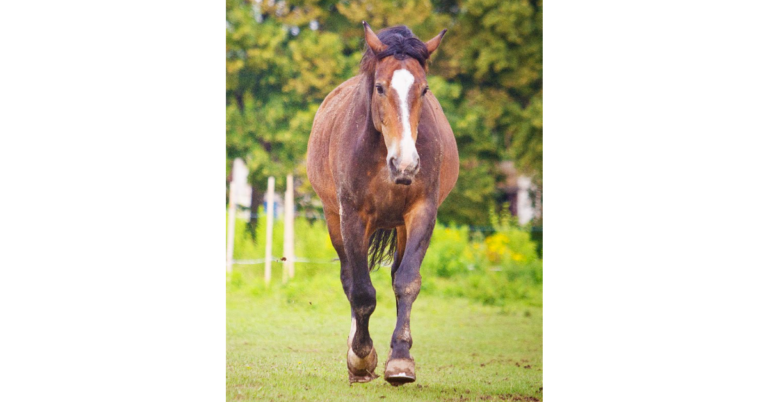

Melanomas are not just found on gray horses, and they need medical attention. In this podcast, we talk to veterinarian David Levine. He is boarded in surgery, sports medicine, and rehabilitation. Levine is an Associate Professor of Clinical Large Animal Surgery at the University of Pennsylvania’s New Bolton Center.
“Melanoma is a type of skin cancer primarily seen in gray horses,” said Levine. “But, it is one of the top three skin cancers we see in all equids.”
About Equine Melanomas
Levine said the good news about melanomas and most skin tumors in horses is that unlike in humans, cats, and dogs, melanomas in horses rarely have distant site metastasis. “And what I mean by that is that it’s kind of a unique feature in horses in general in their biology, where in most situations, tumors don’t go to the brain or lungs like they do in people. They’re just more locally aggressive.”
He said melanomas look like small dark spots on gray horses, usually around the anus in the perineal region. “You could see them sometimes on the lips and muzzle,” he noted. Levine said horses also can get them around their eyes as well as in the throat latch region.
“They say that 80% of gray horses get melanoma, but realistically it’s probably because they just didn’t look hard enough in the other 20%,” he said.
What If You Find a Melanoma?
Levine said veterinarians generally look over gray horses for melanomas during their regular annual physical exams.
“In general, for most of the tumors that we see in horses like sarcoids and squamous cells, I would always recommend biopsying them,” said Levine. “In gray horses, melanomas are so distinct that they don’t usually require a biopsy. They could be almost distinguished just by how they look. So, depending on the age of the horse and what the melanomas are like, you’re a veterinarian and you could talk about different ways that you could think about treating them.”
Gray Horses and Melanomas
Melanomas can be found on any equids. “Gray horses aren’t born gray; they’re born bay or chestnut, then they gray out,” explained Levine. There is a dominant gene that allows the horses to gradually turn gray.
“And that same gene that causes grayness is what causes melanoma in other species,” he explained. “So, what’s interesting about that is that all gray horses have the melanoma gene, but the quicker a horse grays out, or the more thoroughly they gray out, they say it has more ‘deletions’ and therefore usually means the more melanomas they will grow.
“That being said, non-gray horses will grow melanomas as well, although we don’t treat them like we do in gray horses,” Levine explained. “Since non-gray horses aren’t programmed with the gene, they are treated a little more aggressively and more like you would see in other species.
Issues with Melanomas
Melanomas can appear as clusters that start out individually as very small skin issues (melanocytic nevi) that you might not even notice in a younger horse.
“As horses age, they [melanomas] get more aggressive and grow a little faster,” Levine explained. “And that’s where you see like that cluster of grapes around the anus, sometimes near the opening of the sheath, or at the commissure of the lips.”
Not a Sun Issue
Levine said that unlike in people, melanomas in horses are not associated with sun exposure.
“We do see that [associate with sun exposure] with squamous cell carcinoma in horses, especially in their lighter pink spots,” he said. “But the older horses just had time to convert those small melanocytic nevi—which you probably never noticed until they start growing.”
In older horses the big clusters of melanoma skin tumors are called melanomatosis, and they grow rapidly.
Levine said as horse age, there’s a transformation of the tumors, which are small pinpoint lesions in young horses that become clusters and then grow exponentially as the horses age.
“So the senior horses, what you’re usually noticing is that more rapid expansion and growth, and that’s when people tend to notice them,” he said.

Not Just One
If you notice one melanoma on your gray (or other colored) horse, you should look around for more.
“They probably have more, especially in the guttural pouch and throat latch region, which you wouldn’t be able to feel,” said Levine. He said in a younger horse, you can remove them, “but they have more that grow back because they’re genetically programmed to grow those tumors,” he explained.
Levine said it has been a popular myth that if you take off small melanomas that many more grow back. If you take off masses, it can cause irritation and swelling, and melanomas might ‘take advantage’ of that skin irritation to grow more tumors.
“Because they will grow more, the ones that we usually try to remove are the small ones in places where they could cause trouble (such as at the sphincter of the the anus),” he said. That can help the horses avoid the larger masses causing a problem as the horse gets older.
Treatment for Equine Melanomas
“There is no cure for melanomas,” said Levine. “We will treat them in a various ways. What I usually tell people is that when there are a lot of different ways to treat one problem, it means that none of them are great.”
He said one treatment is to surgically remove melanomas as they arise, but that can be very challenging, especially in the rapid growth phase.
Other treatments include cryotherapy with liquid nitrogen to freeze off the small ones or laser therapy for the small ones.
“There is a new vaccine out which is an FDA approved in dogs, not horses,” said Levine. It is a canine vaccine for melanoma called Oncept. “It has been somewhat revolutionary for us [used off-label in horses].”
He said there is research that the vaccine does stop the melanomas from growing in a large percentage of horses. “And while it doesn’t shrink them, if you start early on small melanomas, it will keep them from becoming a problem.
“So, I do recommend vaccinating gray horses as they start to get into that middle age and you start to see the melanomas,” stated Levine. “The only downside of the vaccine is that it’s costly, and it’s not available everywhere.”
Levine said there are several ‘imitation’ vaccines that are also quite expensive, but don’t have the proven effectiveness.
“So, I would stick with Oncept, which is the approved vaccine which has shown to be effective in horses,” said Levine.
Donkeys and Mules
Melanomas are very rare in donkeys and mules, stated Levine. “Even though you think of them as gray, they’re not gray as we think of in horses,” he explained. “They don’t have that gene deletion.
“Donkeys and mules have been reported to get melanomas, but it’s similar to your bay horse getting a melanoma, where we treat it more aggressively,” he said.
“For donkeys, sarcoid is number one [skin tumor],” added Levine. “They love to grow sarcoids.”
First Line of Defense
Levine said owners are the first line of defense against melanomas, especially in gray horses.
He said if you feel something that you didn’t feel before, keep an eye on it and mention it to your vet at the next visit.
“For gray horses, I would be putting my hands all over them at all times, just feeling them and then keeping a diary like, ‘there were five under the tail. They were all small. They’ve been small for the last 10 years they just started growing.’ You might want to talk to your vet about the Oncept vaccine.
“If you have a small one in an area where you think it could become a problem as the horses get older, talk to your vet about having it removed so that it can’t cause a problem,” suggested Levine.
He said the large melanoma tumors are not often the cause of death of a horse. They cause discomfort.
However, he said the large melanomas can cause issues if the horse has trouble defecating or if it’s in the throat latch area and the horse has problems eating and drinking.
“So, start early and prevent them getting to that stage, especially now that we have the the Oncept vaccine,” stated Levine.
Likely Melanoma Areas
Levine said areas owners should check for possible melanoma growth—especially in gray horses—are around the lips and mouth, the throat latch region, the jugular furrow, in neck muscles, around the sheath, and anywhere under the tail.
He noted that bay or dark-colored horses are more likely than gray horses to have melanomas on the legs.
Your veterinarian’s ophthalmologic exam of your horse’s eye also can reveal melanomas of the eye.
More on Vaccination
He said the Oncept vaccine has an initial series of four shots followed by an annual booster.
“People will start to notice them in the 6- to 9-year-old range or in the 10- to 12-year-old range,” Levine said. “In that 14 to 16 years and above is when you’ll get that more rapid growth phase. Oftentimes I start recommending the vaccine as you start to see that growth [of melanomas] in those older horses. If you can keep those melanomas from interfering with normal activities, then usually we could just ignore them in general.”
Further Content
- Coat Changes and Immune System Shifts in Older Horses. Kimberly S. Brown. MySeniorHorse.com
- How Diet Can Help Your Horse’s Coat. Sarah Nelson. MySeniorHorse.com
- Assessing Quality of Life in the Older Horse. Dr. Merry Smith. MySeniorHorse.com
- 6 Senior Horse Myths. Dr. Nettie Liburt. MySeniorHorse.com
- Clinical Challenges for Senior Horses: Perspectives from an Equine Practitioner in Denmark. Dr. Nanna Luthersson. MySeniorHorse.com
- Meet Snow White: A Senior Shetland Pony. Alexandra Beckstett. MySeniorHorse.com
Sign up for My Senior Horse’s FREE newsletter to get the latest information about equids 15 years and older delivered straight to your inbox!