Whether you own one horse or a herd, you know that you will find random lumps and bumps on your animals. But what are they, and should you be concerned?
In this podcast, we chat with Dr. Amy Polkes, who owns an equine internal medicine mobile consulting practice called Equine IMED. She primarily practices in Maryland and Virginia, but she also attends horses in Pennsylvania, New York, and Connecticut. Polkes also works part-time for Antech Diagnostics, a part of Mars Petcare. Polkes joined us previously on this podcast to discuss sleep deprivation in horses.
Is That Lump or Bump Important?
Polkes said when you find a new lump or bump, you should ask yourself:
- Is this something new?
- Is this something that has gotten bigger?
- Is it painful?
- What is the location?
- Is it warm to the touch?
- Can I move it around (is it movable under the skin)?
- If I put my finger in it, does it leave an impression or is it hard?
- Is it growing in size?
- Does it have an opening where something is oozing?
Polkes said be descriptive if you’re going to ask your veterinarian about this lump or bump. “That can be helpful in determining if I need to come see this,” said Polkes.
What Can It Be?
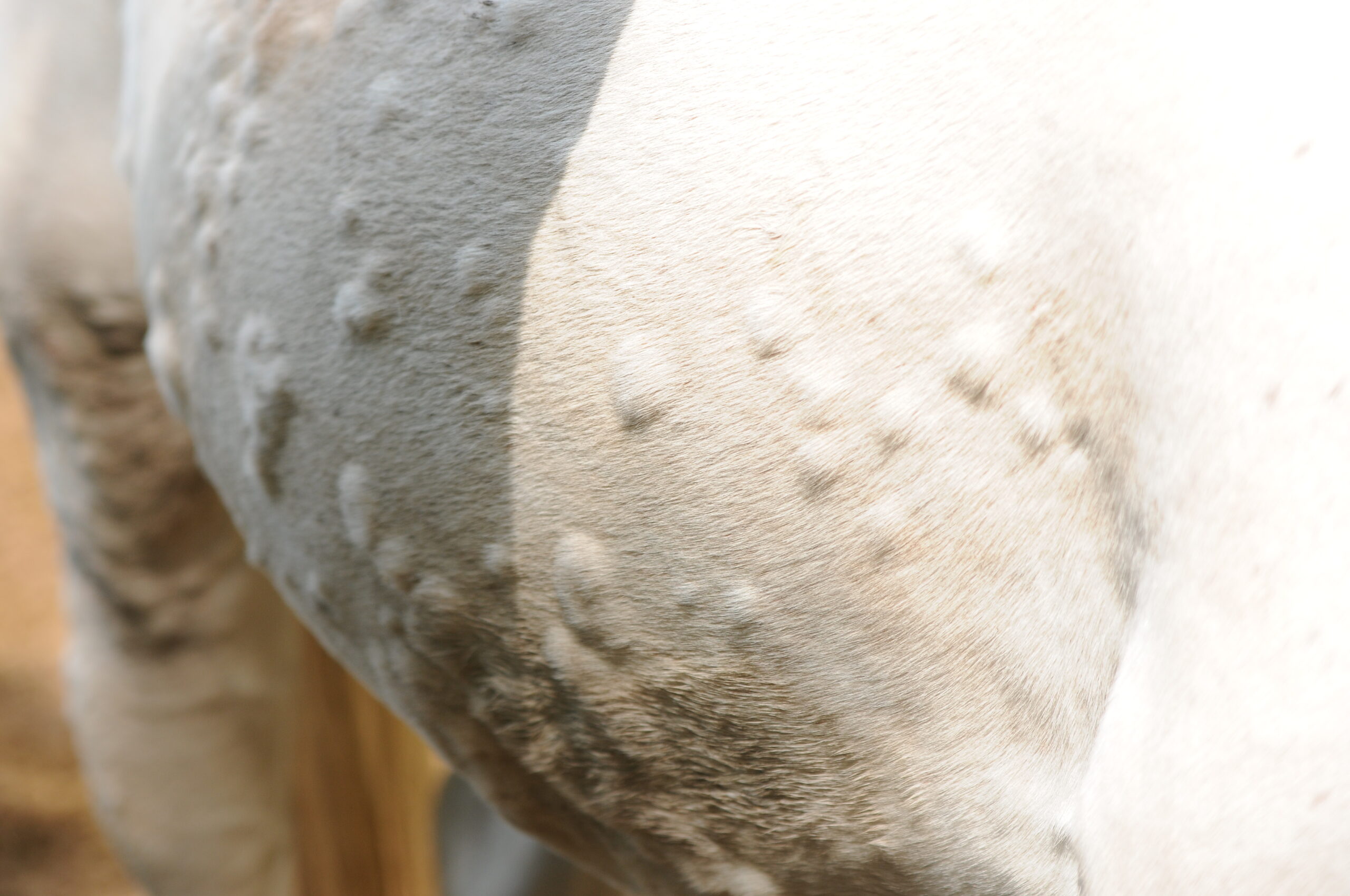
There are many things that can cause lumps and bumps, said Polkes. “It can be something like hives,” she said. “Those can be discrete hives in a small area, or they can be hives over the body.
“You might see bumps along the girth line,” Polkes noted. “That can mean something is irritating the horse. We also can get bug bites that can be eosinophilic granulomas.” (Editor’s note: Eosinophilic granulomas are inflammatory lesions characterized by the accumulation of eosinophils, a type of white blood cell.)
She said these feel like little marbles under the skin, and you can move them around slightly.
Polkes noted that there can be a lot of lumps and bumps reactions to the environment during non-winter months—allergies, hives, bug bites, sweat.
Melanoma
A more serious form of a lump and bump would be cancers, such as melanoma and carcinoma. Polkes said if the animal is a gray horse, then the possibility of a melanoma is increased.
(Editor’s note: Our next podcast will be specifically on melanomas in equids.)
Other Causes
Polkes discusses several other causes of lumps and bumps in this podcast. Those include things from lymph nodes to fat deposits.
She reminded horse owners that there are many areas of lymph nodes in the horse’s body. Those include under the jaw, by the shoulders, and by the stifle.
There also can be physical causes, such as lumps and bumps caused by tack (i.e., girths, blankets, bell boots). Polkes advises owners to be observant and to contact their veterinarians if they have concerns about any lumps and bumps they notice on their animals.
Further Content
- Coat Changes and Immune System Shifts in Senior Horses. Kimberly S. Brown. MySeniorHorse.com
- How Diet Can Help Your Horse’s Coat. Sarah Nelson. MySeniorHorse.com
- 8 Health Issues for Horses in Summer. MySeniorHorse.com
- All About Rainrot in Horses. MySeniorHorse.com
Sign up for My Senior Horse’s FREE newsletter to get the latest information about equids 15 years and older delivered straight to your inbox!