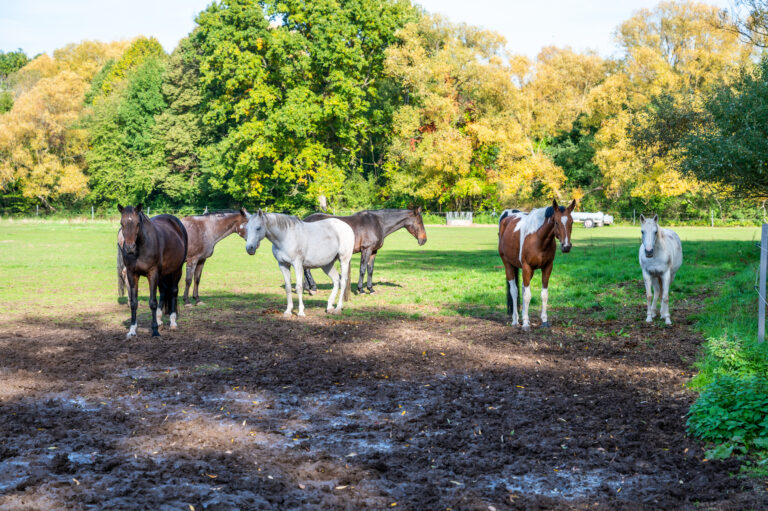

One of Redwings Horse Sanctuary’s unique features is its woodchip paddocks. Here, horses can be housed individually in grass-free areas equipped with good drainage, windbreaks, sunshades, enrichment, and other horses nearby.
Which Horses Benefit From Turnout on Woodchips?
At Redwings, the woodchip paddocks serve many purposes, explained Nicola Jarvis, BVetMed, Cert AVP (EM), Cert AVP (ESST), MRCVS, head of veterinary care at the Norfolk, U.K. facility. Their prime use is for transitioning horses recovering from lameness or laminitis from a hospital setting to full turnout.
“We can see when the horse comes out here from a stable if they are definitely sound, have all the symptoms of their lameness resolved, and it gets the horse used to a bit more exercise,” she explained. “The size is perfect because they can have a little trot about but not get up to excessive speed.”
Horses prone to sand colic might spend one week per month on woodchips to help prevent sand accumulation in the large colon. The paddocks also provide a dry turnout area for horses with pastern dermatitis. And horses with insulin dysregulation spend time in the paddocks during periods of grass growth (e.g., spring, summer) to prevent them from developing laminitis.
“Now, not everyone’s going to have a woodchip area, but any grass-free area can be incredibly useful, whether that’s a sand dry lot or even a concrete yard,” said Jarvis.
Further Reading
- Caring for the Laminitic Horse on Stall Rest
- Caring for Hospitalized Senior Horses
- Meet Snow White: A Senior Shetland Pony
Sign up for My Senior Horse’s FREE newsletter to get the latest information about equids 15 years and older delivered straight to your inbox!
-
View all posts
Alexandra Beckstett is a lifelong horse owner and an award-winning writer and editor. She is the editorial director of EquiManagement and MyNewHorse.com, prior to which she spent 13 years with The Horse/TheHorse.com.