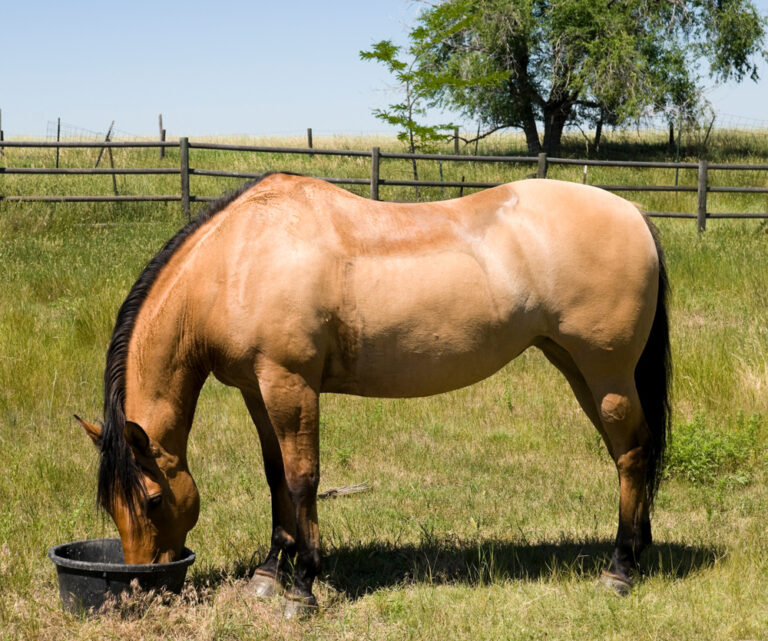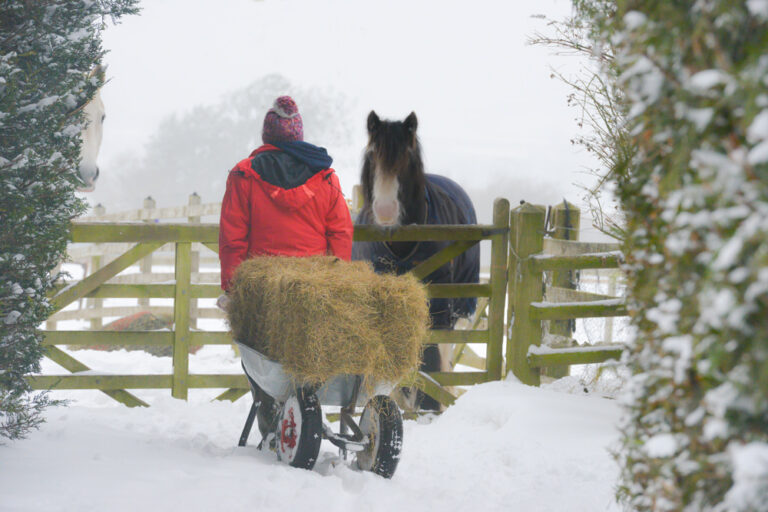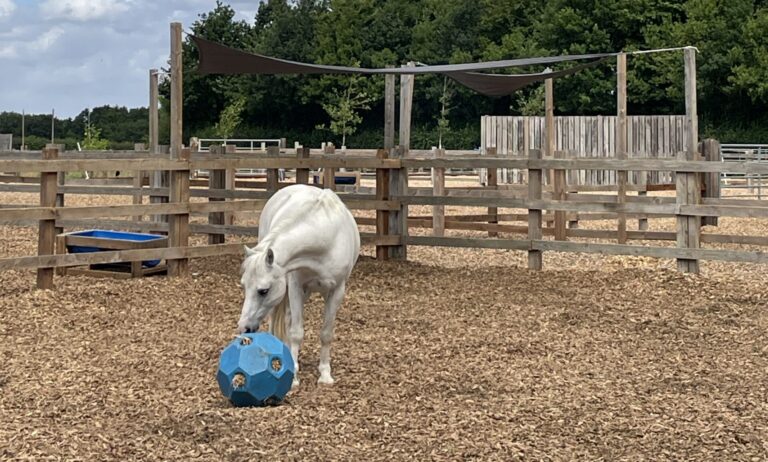
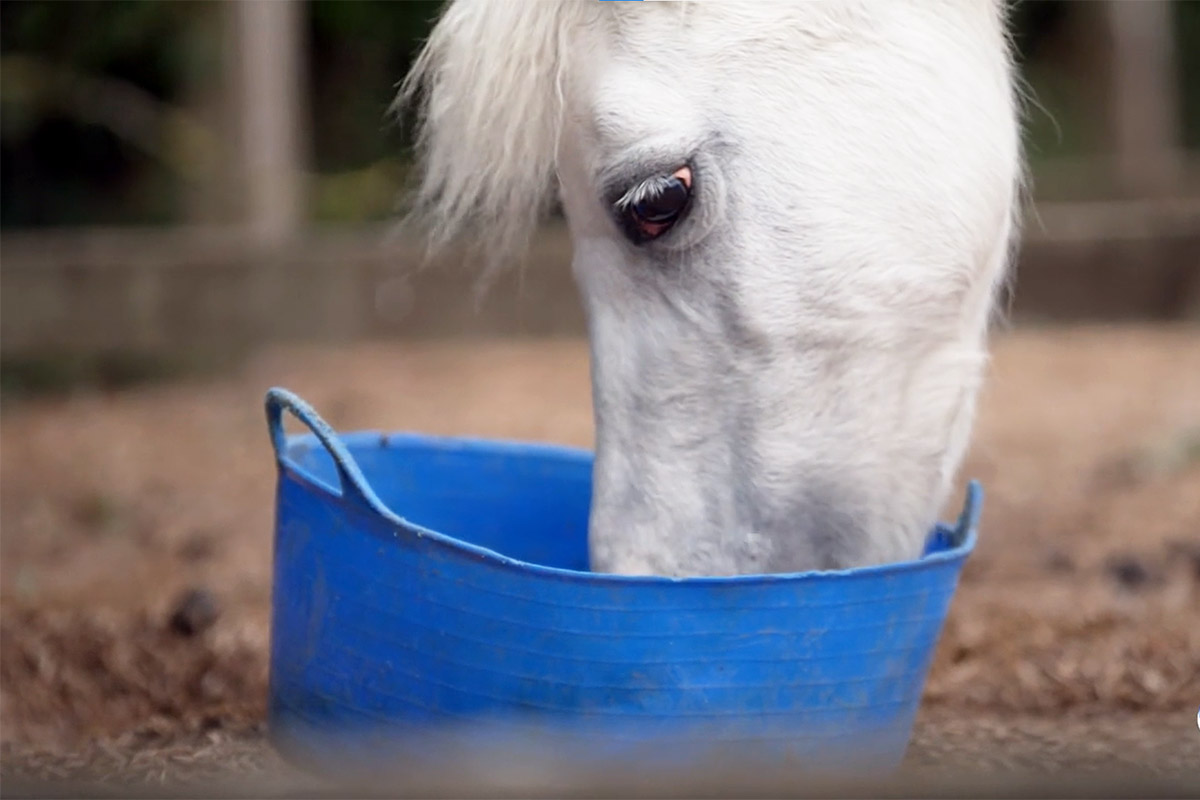
When feeding horses with insulin dysregulation (ID), it’s important to consider not just how much they’re eating but also how it’s spread throughout the day. Edd Knowles, MA, PhD, VetMB, MVetMed, Dipl. ECEIM, MRCVS, director of science and nutrition with Mars Horsecare, recommended feeding these horses small meals frequently for several reasons.
“One is that the horse is naturally a trickle feeder, and we want to recreate that as much as we can,” he said. “Secondly, we know that feeds will cause an increase in insulin. The more we can spread those feeds out, the fewer spikes we’ll get in insulin and the smaller those spikes will be.”
The goal is to keep ID horses’ insulin levels controlled and relatively consistent throughout the day.
“Finally, a lot of these horses will be on restricted diets,” Knowles added. “And if we let them eat their whole daily ration in one go, they’ll get very bored for the rest of the day. So by spreading out the feeds, we can cause less boredom.”
Related Content
- Understanding Ration Balancers for Senior Horses
- Feeding Senior Horses According to Their Dental Health
- Feeding Horses That Can’t Eat Long Fiber
Sign up for My Senior Horse’s FREE newsletter to get the latest information about equids 15 years and older delivered straight to your inbox!
-
View all posts
Alexandra Beckstett is a lifelong horse owner and an award-winning writer and editor. She is the editorial director of EquiManagement and MyNewHorse.com, prior to which she spent 13 years with The Horse/TheHorse.com.