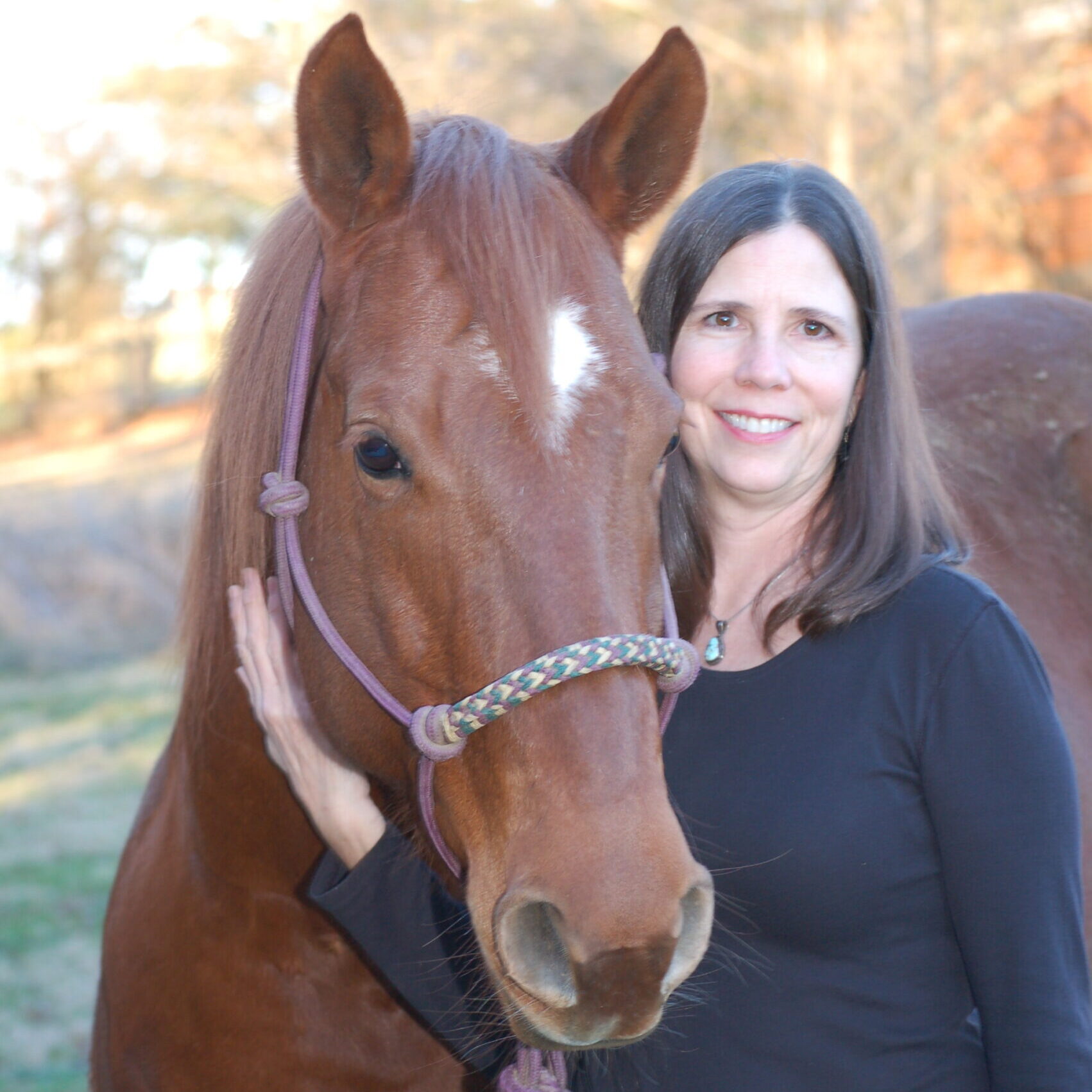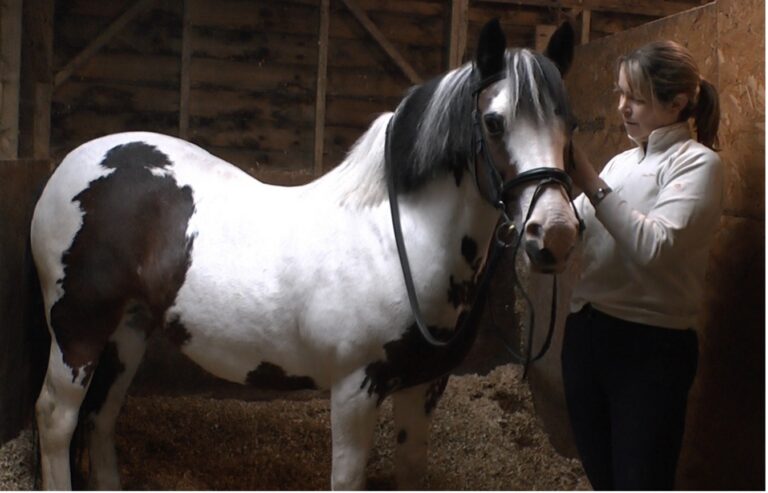
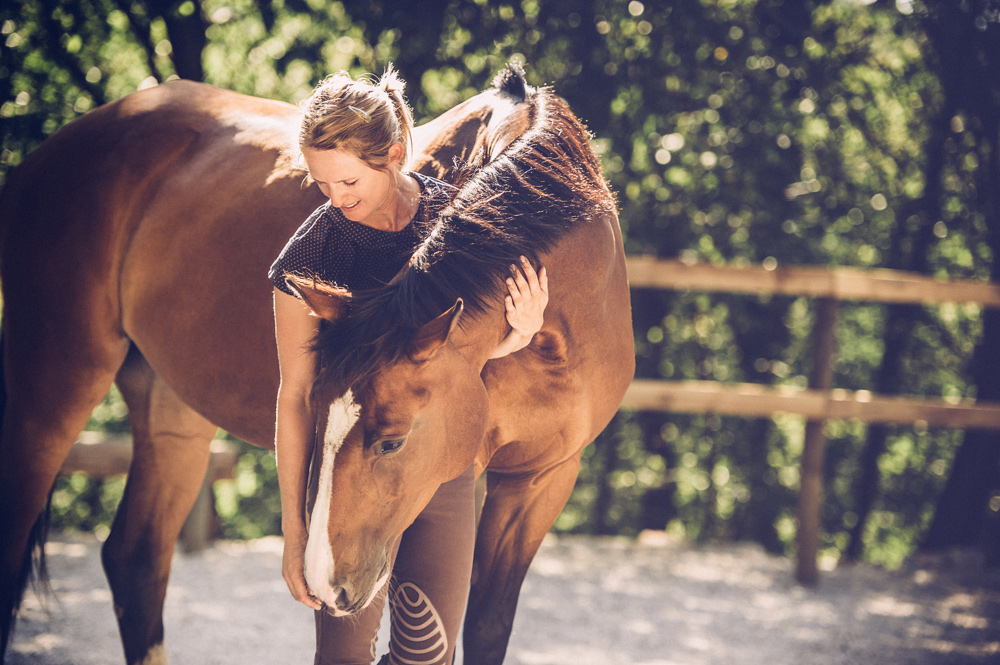
The relationship between humans and horses includes touch in many manners. Recently published research focused on therapy horse welfare related to human-horse touch. Researchers wanted to see how therapy horses responded to various touch types. They studied horse behavior, heart rate (HR), and heart rate variability (HRV) under forced and free-choice touch treatments.
Touch Research
This study assessed the effect of three types of touching—patting, stroking, or scratching—on either the horse’s neck/shoulder, body, or hindquarters. Ten therapy horses took part in the study.
The study included 25 experienced and 24 less experienced people to interact with the horses. Each person interacted individually with four horses in both treatment conditions while the horses were in a familiar round pen.
The horse was tethered for the duration of the forced interaction test (4.5 minutes). Each session had the participant make contact with each body location with each type of touch, switching every 30 seconds.
The horse was loose in the pen. Humans stood in the center of the pen and were instructed to touch the horse only if the horse came within arm’s reach.
Study Results
Oral behaviors, restlessness, and tail swishing were more frequent and head shaking behavior was less frequent during forced versus free-choice interactions. Tail swishing was less frequent when humans interacted with the horse’s hindquarters in comparison to touching the neck/shoulder and body.
Lower head positions were more likely in horses during free-choice touch treatments. Horses were more likely to keep their ears oriented toward the participants during forced touch treatments.
Horse heart rate was higher during free-choice interactions compared to forced touch treatments. Horse heart rate variability was lower during interaction with experienced than with less experienced participants.
“The results demonstrated that forced touch treatments were not perceived positively by therapy horses, highlighting the importance of providing choice and agency for therapy horses during equine-assisted services,” noted the researchers. “The findings could be reflected in the guidelines of therapy horse organizations to minimize human risk of injury and ensure a good life for horses.”
Highlights
- Therapy horses showed more frequent stress-related behaviors during forced touch treatments.
- Therapy horses remained mostly out of human reach when given the option to avoid interactions voluntarily.
- Choice and agency are important factors in improving therapy horses’ welfare during human-horse interactions.
The research was titled “The Effect of Choice on Horse Behaviour, Heart Rate and Heart Rate Variability During Human-Horse Touch Interactions.” It was published in Applied Animal Behavior Science in September 2025. The research was authored by Amir Sarrafchi and Katrina Merkies (Department of Animal Biosciences, University of Guelph, and Campbell Centre for the Study of Animal Welfare in Canada), and Elodie Lassallettev (Agrosup Dijon, Dijon, France).
Further Content
- My Senior Horse Podcast: Equine Behavior. Dr. Kris Hiney. MySeniorHorse.com
- Horse Behavior During Tacking and Mounting. Dr. Sue Dyson. MySeniorHorse.com
- My Senior Horse Podcast: Positive Reinforcement. Dr. Eleanor Girgis. MySeniorHorse.com
- Horses and the Science of Contentment. Dr. Sue Dyson. MySeniorHorse.com
- Ridden Horse Performance Checklist: Behaviors in Ridden Horses that Might Signify Discomfort. Dr. Sue Dyson. MySeniorHorse.com
- How An Uncomfortable Horse Might Feel to a Rider. Dr. Sue Dyson. MySeniorHorse.com
Sign up for My Senior Horse’s FREE newsletter to get the latest information about equids 15 years and older delivered straight to your inbox!