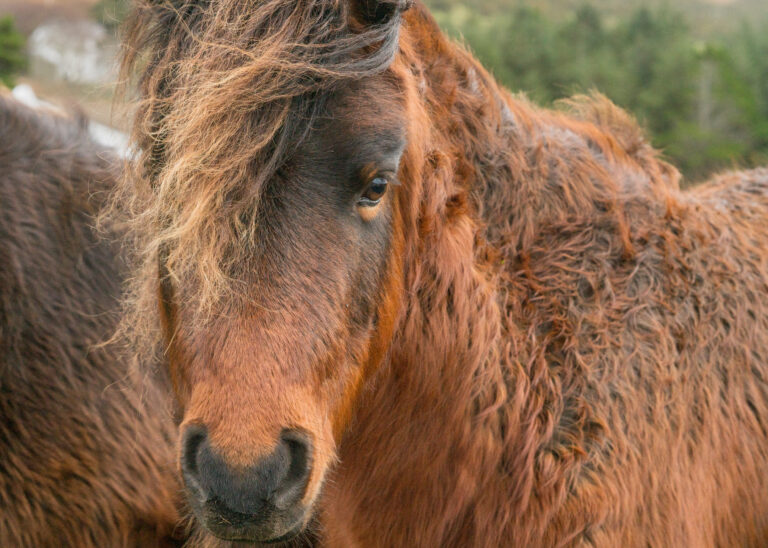
Senior horses often have joint issues. Owners and veterinarians must address arthritis and other sources of joint pain in order for the senior horse to have a better quality of life.
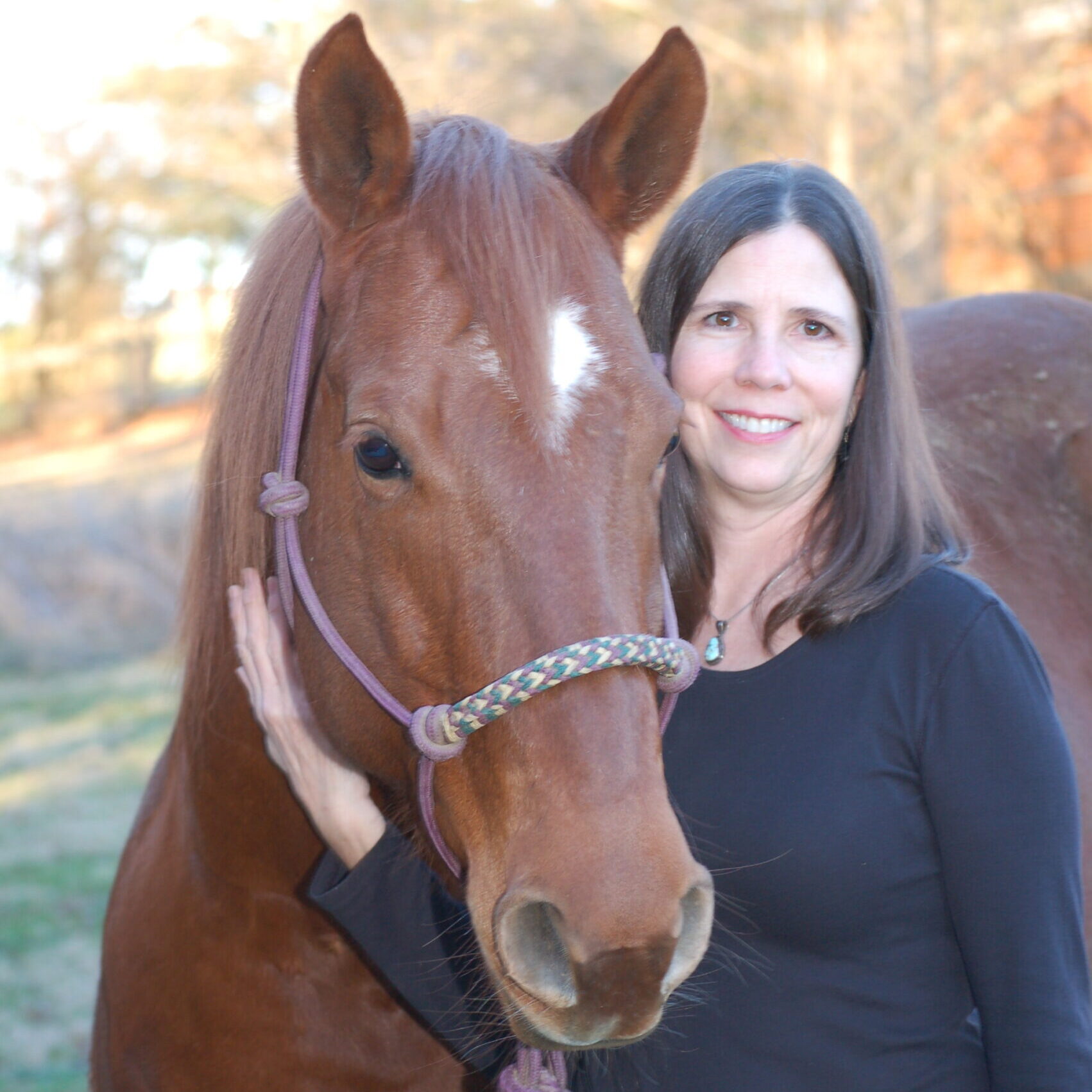
In this podcast and article, we talk to Dr. Kyla Ortved, an associate professor of large animal surgery at the University of Pennsylvania’s New Bolton Center. She was named the Jacques Jenny Endowed Chair of Orthopedic Surgery in 2019. Her research program focuses on understanding the pathophysiology of equine osteoarthritis and developing gene and cell-based therapies to improve cartilage repair and prevent osteoarthritis. (See more about Ortved in the About section below.)
(Editor’s note: The content of this podcast is the expert’s approach to the topic. Please consult with your practitioner if you have questions.)
Aging Horse Joints
“I often like to think about horses in a similar fashion to thinking about ourselves,” said Ortved. “We know as we age, things can get a little bit more achy, a little bit more painful. It’s very similar in the horse, especially horses that have been athletic their entire lives. Their joints have taken a lot of wear and tear. With that, we can start to get mild to more significant arthritis affecting a single joint or multiple joints.”
She said veterinarians and owners have many ways to manage joint pain and try to limit the progression of arthritis.
Ortved said our management should “keep the joint as healthy as we can for as long as possible, and maintain
the horse’s well-being and quality of life for as long as we can.”
Where Are They Lame?
“I think horses that have joint issues in one leg, that’s fairly easy for us to figure out,” said Ortved. “I think it’s a little bit more challenging when there are multiple legs affected. So, in those horses, I think the things to look for are horses that are a little bit more slow moving. That could be a sudden change. They seem more tender when they’re walking. It takes them longer to get to you.”
Assessing the horse’s overall comfort level also involves asking: How well are they eating? Is there any change in their interest in food? Are they interacting with you differently? Can you notive any change in their face (i.e., grimace scale or pain ethogram)? Have you noticed loss of condition? Does the horse have muscle loss?
She said it can be a little bit trickier to notice subtle signs of pain in the older population, but looking for those subtle clues can be helpful to starting on a diagnosis.
Physical Therapies
Movement for older horses—especially those with arthritis—is important to their overall health. “If a horse truly has arthritis and that is the major cause of lameness, then those horses actually do much better moving around,” explained Ortved.
“I think as horse owners, sometimes we get worried if a horse is lame or sore. And we’re always told to put horses on stall rest when they’re lame,” remarked Ortved. “But, if a horse truly has arthritis and that is the major cause of lameness, then those horses actually do much better moving around.”
She recommended exercise to keep horses strong. Her references included a book called Activate Your Horse’s Core (see Related Content below).
Lame horses should not be pushed into extensive exercise. Ortved recommended allowing senior horses as much turnout as possible. She said light work can help maintain their fitness and strength so they can support their entire body.
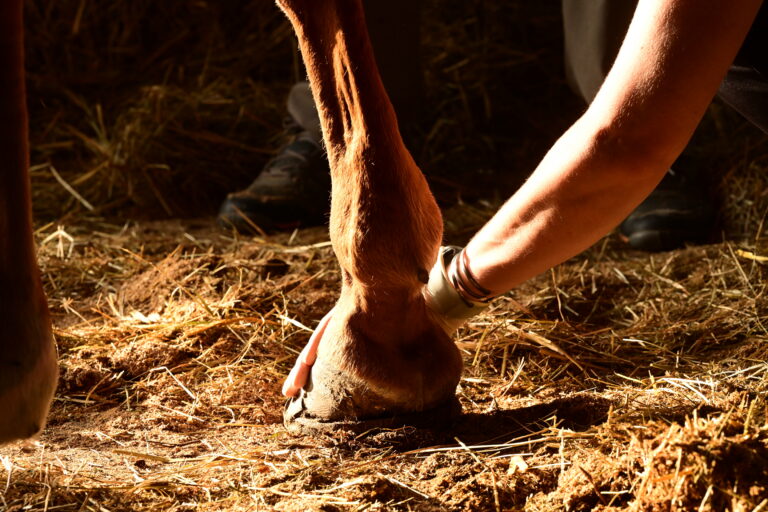
Shoeing and farrier work to keep older horses balanced is also important for their joint health.
Other modalities can help decrease pain and inflammation, Ortved said. “Among those are shockwave therapy, pulsed electromagnetic field therapy, and high-intensity laser therapy.”
NSAIDs
Non-steroidal anti-inflammatory drugs (NSAIDS) are commonly used for lame horses, especially those with arthritis.
“Judicious use of non-steroidal anti-inflammatories is a very effective way of managing pain in the older horse,” said Ortved. “And I say judicious because obviously anti-inflammatories can have side effects. And the most significant side effects are gastric ulceration. They can also cause kidney damage and colon damage.”
She advised working with your veterinarian to find a dose of a non-steroidal that works in your horse’s situation. “Often, the senior horses need long-term administration, so you may use something like firocoxib (Equioxx) to have that horse on long-term medication versus having the horse on phenylbutazone for long periods of time, because it’s a little bit safer on the stomach.”
Joint Injections
Horse owners are lucky to have so many options for joint therapy, said Ortved. These include biologic joint therapies and synthetic joint therapies.
Synthetics that are injected into joints include corticosteroids, hyaluronic acid, and polysulfated glycosaminoglycans (which are meant to lubricate the joint).
Newer to the market are polyacrylamide hydrogels. There are two available, Ortved said. One is 4% polyacrylamide that lubricates the joint. The 2.5% polyacrylamide is changes the synovial membrane elasticity and response to joint inflammation, she explained.
Biologics include cell therapies, such as stem cells, or blood-based therapies, such as platelet-rich plasma (PRP), autologous protein solution (Pro-Stride), and IRAP (interleukin-1 receptor antagonist protein).
Other Injectable Products
Some injectable joint products are designed to be administered in the muscle or vein, she noted. Those include polysulfated glycosaminoglycan (Adequan is one example) and hyaluronic acid (Legend is one example).
Ortved noted that there are other types of injectable drugs that can be useful in the older horse. “I would say those probably have even more efficacy when you start them in the younger horse,” she added.
Oral Supplements
“There are lots of companies that make good oral supplements,” Ortved said. “Talk to your veterinarian and do your due diligence in looking into the company that makes the supplements to make sure they have good-quality products and you aren’t paying for something that has no evidence to work.”
What to Avoid
Horses with joint issues need to be treated as individuals, said Ortved. “One of the biggest considerations in the older horse population is the prevalence of Cushing’s disease (also known as PPID, or pituitary pars intermedia dysfunction), and insulin dysregulation or equine metabolic syndrome,” she added. Using corticosteroids in affected horses can put them at risk of laminitis, she noted.
“In those horses, you lean away from steroids and more toward something like a biologic or synthetic injection,” she advised.
Therefore, knowing the metabolic status of your horse is critical to avoid using joint treatments that could lead to laminitis.
About Dr. Kyla Ortved
Kyla Ortved, DVM, PhD, DACVS, DACVSMR, is an associate professor of large animal surgery at New Bolton Center, University of Pennsylvania, in Kennett Square, Pennsylvania. She received her DVM degree from the University of Guelph in 2006 and completed her large animal surgical residency training at Cornell University in 2010.
Ortved became boarded with the American College of Veterinary Surgeons in 2011. Following her residency, Ortved went on to obtain a PhD in gene therapy for equine cartilage repair at Cornell. In February 2016, Ortved became boarded with the American College of Veterinary Sports Medicine and Rehabilitation. She joined the large animal surgery faculty at New Bolton Center in 2016 as an equine orthopedic surgeon and was named the Jacques Jenny Endowed Chair of Orthopedic Surgery in 2019.
Her research program focuses on understanding the pathophysiology of equine osteoarthritis and developing gene and cell-based therapies to improve cartilage repair and prevent osteoarthritis.
Related Content
- Activate Your Horse’s Core. Narelle Stubbs and Hilary Clayton. Amazon
- Managing Chronic Pain in Senior Horses. Carly Sisson. MySeniorHorse.com
- How to Recognize Early Signs of Joint Issues in Horses. MySeniorHorse.com
- A New Tool for Monitoring Osteoarthritis Pain in Senior Horses. Christa Lesté-Lasserre. MySeniorHorse.com
- Caring for Senior Horses’ Joints in Cold Weather. Dr. Sue Dyson. MySeniorHorse.com
- Equine Arthritis: Exercise and Management Recommendations. MySeniorHorse.com
- What Is a Healthy Equine Joint. MySeniorHorse.com
Sign up for My Senior Horse’s FREE newsletter to get the latest information about equids 15 years and older delivered straight to your inbox!