
Whether you own, manage, or are just breeding to a senior stallion, there are some management details you should consider.
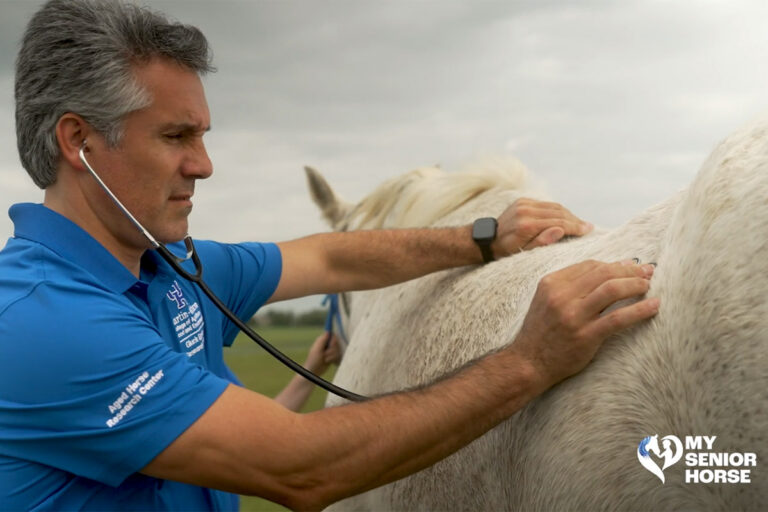
In this video, reproductive specialist Karen Wolfsdorf, DVM, DACT, discusses some of the challenges associated with breeding senior stallions and management strategies for addressing them. Wolfsdorf is a shareholder at Hagyard Equine Medical Institute in Lexington, Kentucky.
(Editor’s note: The content of this video is the expert’s approach to the topic. Please consult with your practitioner if you have questions.)
Senior Semen
Wolfsdorf noted that as stallions age, “the quality, quantity, and progressive motility of the stallion’s spermatozoa is going to change.”
The aging process affects the testicles. “You can start to get testicular degeneration in these older horses,” Wolfsdorf noted. “It’s important to have your stallions evaluated so you know what he produces in an ejaculate (concentration, volume, motility, and morphology). This helps you determine the best management practices for breeding a specific stallion to a specific mare.”
Final Words
It is important to evaluate older stallions at the beginning of the breeding season so you know what he is producing and which management practices will provide the best quality insemination, said Wolfsdorf. This provides you with the knowledge if pregnancy rates change and gives you the best chance of getting a mare pregnant.
About Dr. Wolfsdorf
Dr. Karen Wolfsdorf attended veterinary school at the University of Florida and graduated in 1992. After completing her DVM, she began an equine field service internship at North Carolina State University. In 1995, Dr. Wolfsdorf completed a residency in theriogenology at the University of Florida and became board-certified in theriogenology. Before coming to Hagyard Equine Medical Institute, she spent time working in Australia with Dr. Pascoe at Oakey Veterinary Hospital. In 1996, Dr. Wolfsdorf joined Hagyard as an Associate, and in 2002 she became one of the first two female members of the practice. Dr. Wolfsdorf’s main area of interest is infertility in the mare and problems during pregnancy. She has authored many chapters on equine reproduction as well as lectured worldwide and published research regarding progesterone, retained endometrial cups, and equine twin reduction with cranio-cervical dislocation.
Related Content
- Advice for Breeding Maiden Senior Mares. Dr. Karen Wolfsdorf. MySeniorHorse.com
- Why Proper Body Condition is Essential for Senior Mares and Stallions. Dr. Karen Wolfsdorf. MySeniorHorse.com
- How to Assess the Health of Senior Mares and Stallions video. Dr. Karen Wolfsdorf. MySeniorHorse.com
- Addressing Older Eggs in Senior Mares Video. Dr. Karen Wolfsdorf. MySeniorHorse.com
- Care of the Older Stallion Video. with Dr. Maria Schnobrich. MySeniorHorse.com
- Exercise and General Health of Senior Breeding Equids Video. Dr. Mariah Schnobrich. MySeniorHorse.com
Sign up for My Senior Horse’s FREE newsletter to get the latest information about equids 15 years and older delivered straight to your inbox!