At the South Point Hotel and Casino in Las Vegas on Dec. 13, 2025, the stakes were high and the ambiance electric. In a matter of seconds, both skill and luck would play out in a high-thrills game worth $2.25 million.
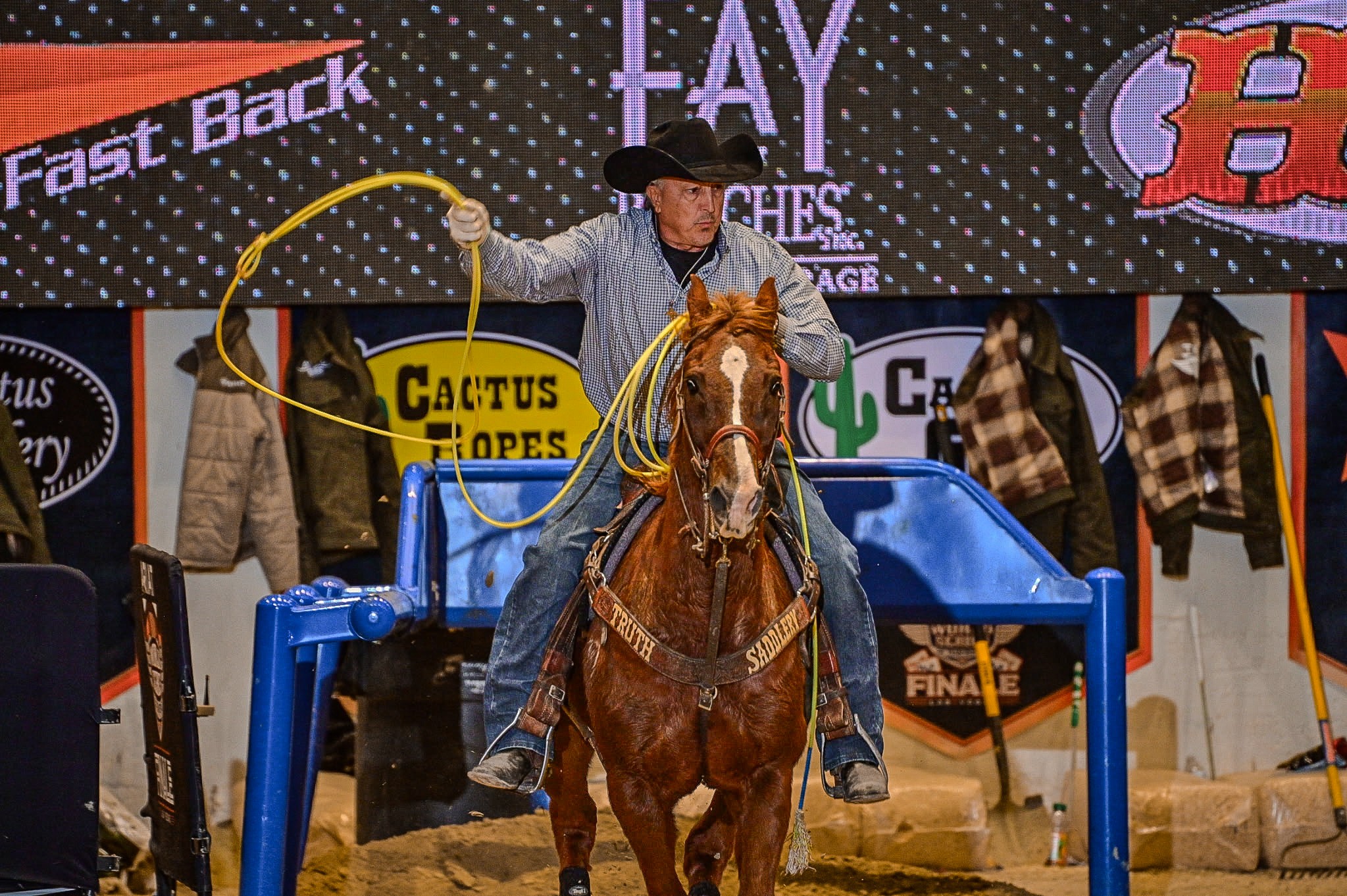
This was no roll of the dice inside a dark and luxurious casino hall. Rather, it was a rumble of 12 hooves—eight equine, four bovine—and an expert slinging of ropes in a brightly lit indoor arena in the back building of the complex. Oscar Jimenez, of Quitman, Texas, was competing in the division 8.5 finals—the highest-paying, largest division in the Ariat World Series of Team Roping. And he was betting on an old horse.
At 25 years old, Leo’s Cajun Moon, aka “Leo,” would soon dazzle the crowd with his impressive 9-second run alongside the heels of a speedy young steer, triggering a hefty cash prize and a laugh from his owner.
“I’m always getting people come to me and say, ‘We love watching that horse just get down on the ground,'” says Jimenez, a former police officer turned full-time horseman. “And then they find out he’s 25, and they’re like, ‘Oh my god, he acts like he’s a 5-year-old!'”
Success Into His Senior Years
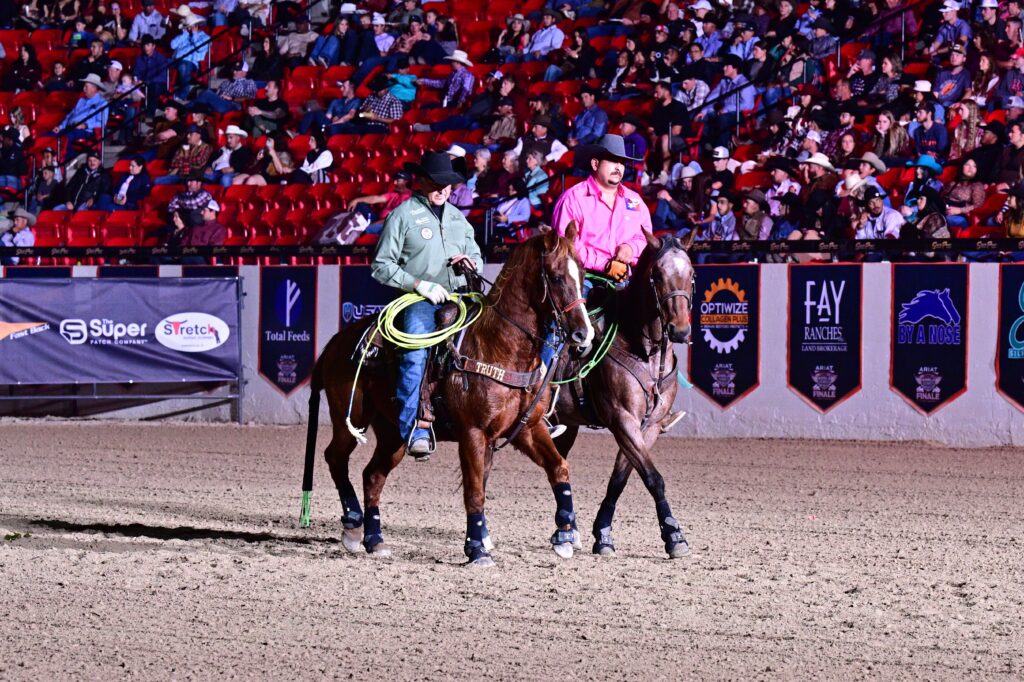
Jimenez and his horse Leo are “heelers”—the ones siding up and lassoing the steer’s hind legs once their partner, the header, secures the horns. Heeling is a tough job for any horse, requiring explosive energy out of the gate, intense focus and concentration, quick reactivity, sharp movements, balance, strength, and agile athleticism that places a lot of strain on the joints. For a senior, all that might seem impossible.
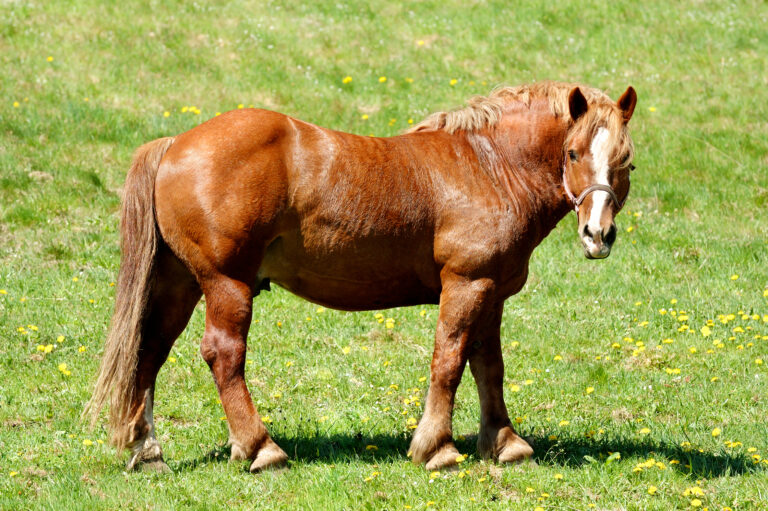
For Leo, though, anything seems possible. According to Jimenez, the white-blazed sorrel gelding is as fit as he’s ever been, fully muscled and round, never lame, never stiff. He’s never even had a joint injection, he tells us.
In Vegas, the 15.3-hand Quarter Horse gelding prances eagerly in the starting gate, his eye fixed on the steer fenced in next to him. When the chute pops open, he bounds into the arena, keeping level with those speeding steer hind limbs while keeping the ideal distance for his rider’s rope-toss. As soon as the rope wraps around the target, Leo digs his hooves into the sand, planting his muscular haunches nearly to the ground in a spectacularly crouched halt.
“We were smoking them on the back end,” Jimenez says.
Leo’s previous owner, Chantz Banks, of Pittsburg, Texas, admits he regrets selling the stunning senior. The two of them had won more than $300,000 roping, but after Leo sustained a knee injury at age 18, Banks thought it was time for the horse to transition into lighter work and preretirement.
Jimenez bought Leo as a schooling horse for his young son to practice heeling, after veterinary care to resolve the knee injury. But as Leo healed, the gelding made it clear that he didn’t want a lighter workload after all. “He was such a high-powered horse,” Jimenez recalls. “I ended up making him my No. 1. And we won the World Series qualifier for Vegas and a whole bunch of jackpots and prizes right off the bat.”
Customized Care Is the Key to Leo’s Longevity
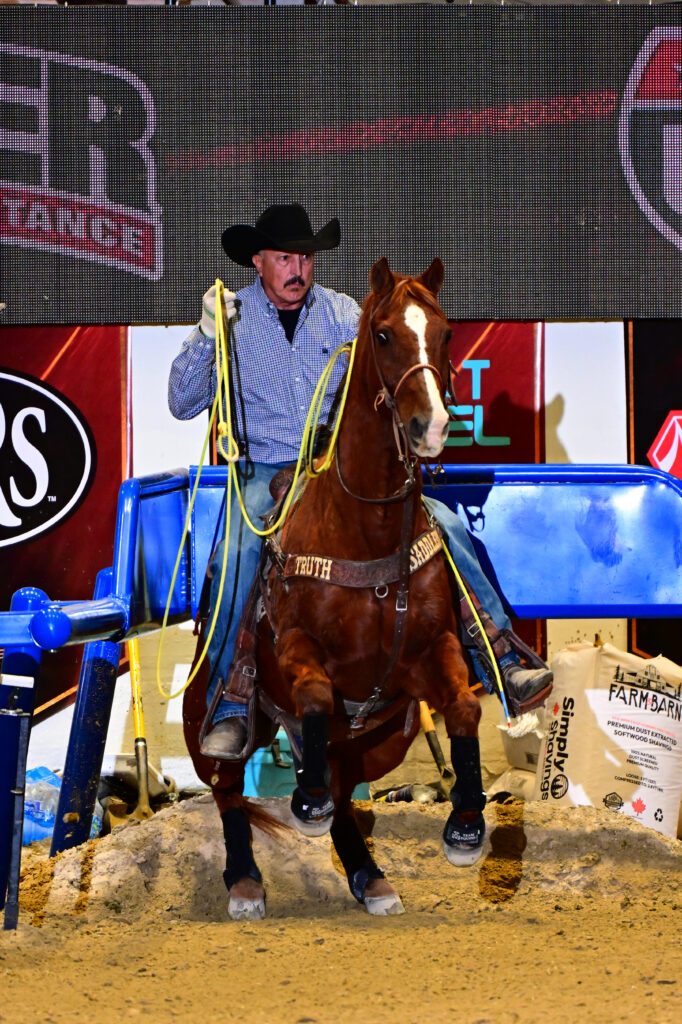
What’s Leo’s secret? Good genes to start with, undoubtedly, his owner says. But also, the vibrant sorrel has had a lifetime of great care aimed at longevity.
When Leo was 13, trainer Cody Gillham, of Ardmore, Oklahoma, bought him as a prospect. He saw great potential in the gelding and took him into his facilities for a “full reset.”
“We’ve got a good veterinarian we work with, so when we got Leo we did like we do with all the horses we bring in. We got him X-rayed, teeth worked on, put through a few shoeing cycles, and a nutrition workup to get him on a customized feeding plan,” Gillham says. The team also investigates every potential issue to find the true source—distinguishing, for example, between a true tendon injury or an underlying incorrect hoof angle.
“Horses need maintenance—especially a performance horse that’s taking hits like these guys do,” Gillham explains. “So we just establish a baseline with them on a unique program that’s right for them, and hope the new owners keep it going.”
For Leo, that’s exactly what happened, Gillham says. Banks and his family paid careful attention to the horse’s individual nutritional and conditioning needs. And importantly, they respected warm-up time, paddock turnout, groundwork, variety, and time off. “They’re not just getting on those horses and roping,” he says. “They’re working toward longevity.”
Today, Leo works about twice a week “when it’s not too hot,” Jimenez says. He lives in a large pasture with a walk-in barn, alongside his best friend Dizzy—the header—and another gelding. He’s missing his two front teeth and a couple of molars, but he still eats well without quidding. Jimenez feeds him a scoop of alfalfa pellets in the morning and a commercial joint supplement recommended by his farrier, who’s also a team roper. Leo’s only real health concern, Jimenez says, is insect bite hypersensitivity (IBH, or “sweet itch”). But good fly sheets in summer keep him comfortable.
In Summary
More than a decade after training him, Gillham says he’s not surprised to see Leo doing so well. “He’s a gritty little horse, and he always had a big heart,” he says.
For now, Leo doesn’t seem at all interested in retirement, according to Jimenez. For one, he’s never been the “cuddly, give-me-a-carrot kind of guy.” But more than that, under saddle he’s as eager as he ever has been.
“I’m going to take him as long as he wants to go,” says Jimenez. “I’ll depend on my farrier and my vet to tell me, of course. But I’m sure Leo will tell me, too.”
Related Reading
- Managing the Senior Performance Horse
- How Old Is Too Old for a Horse to Compete?
- My Senior Horse Podcast: Senior Exercise
Sign up for My Senior Horse’s FREE newsletter to get the latest information about equids 15 years and older delivered straight to your inbox!