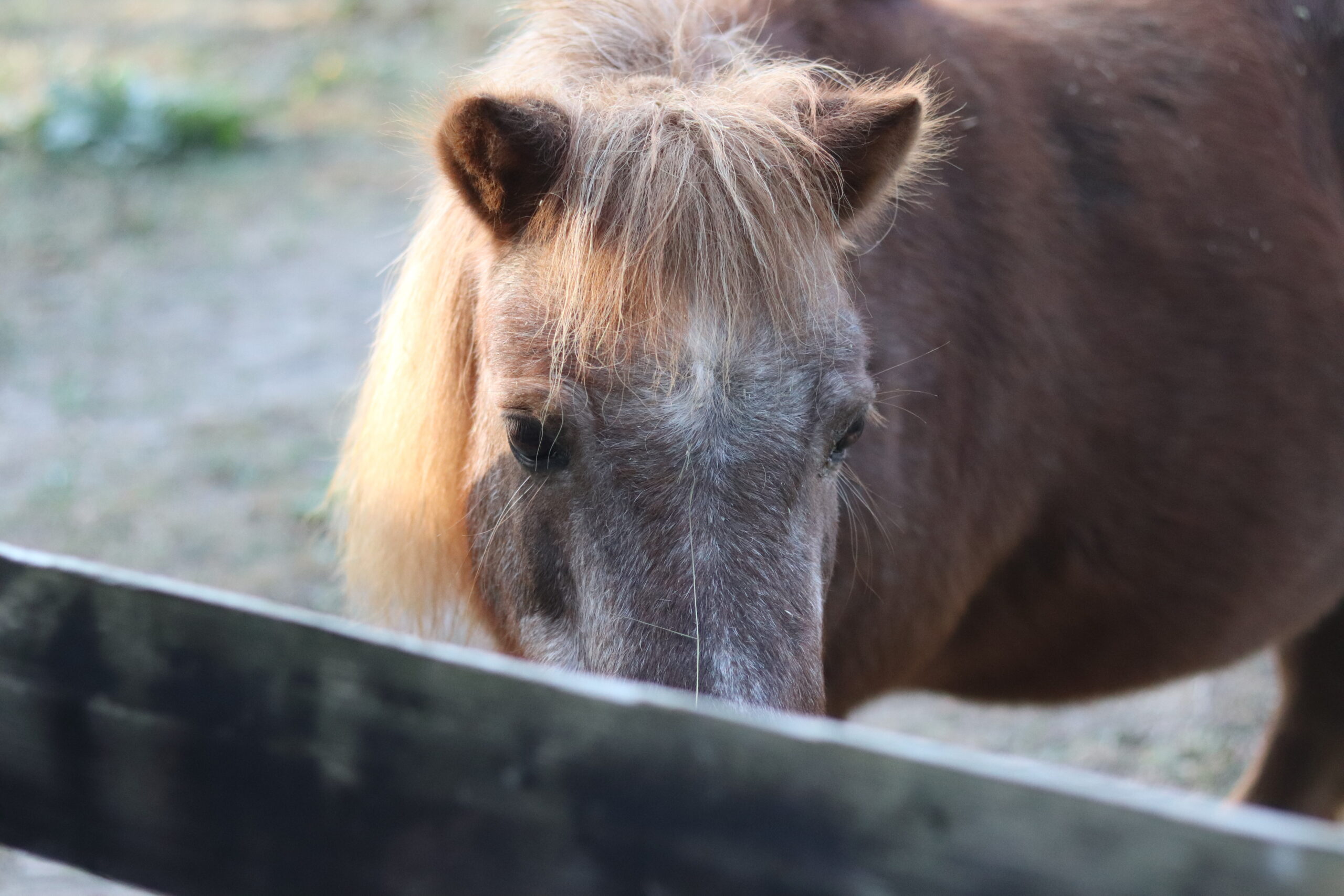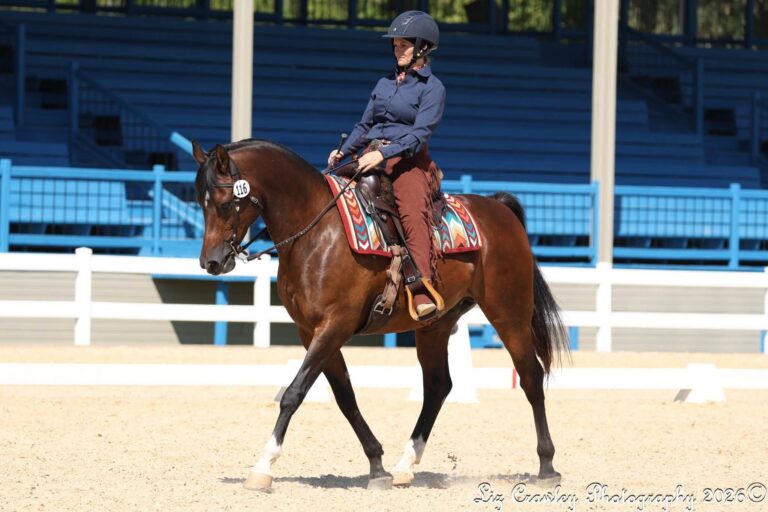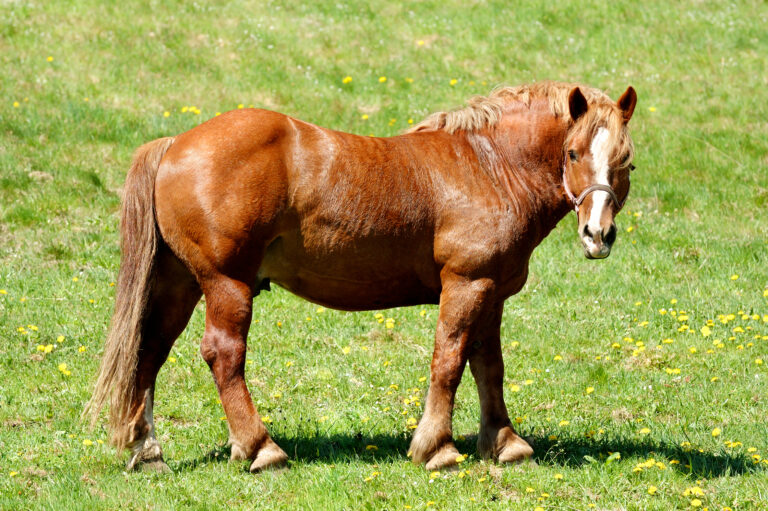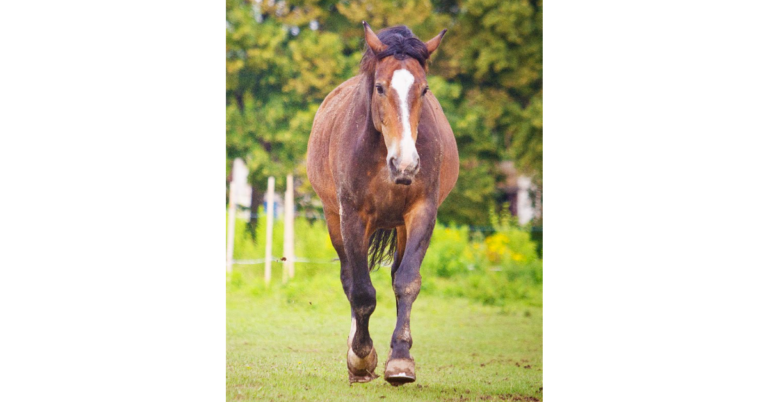
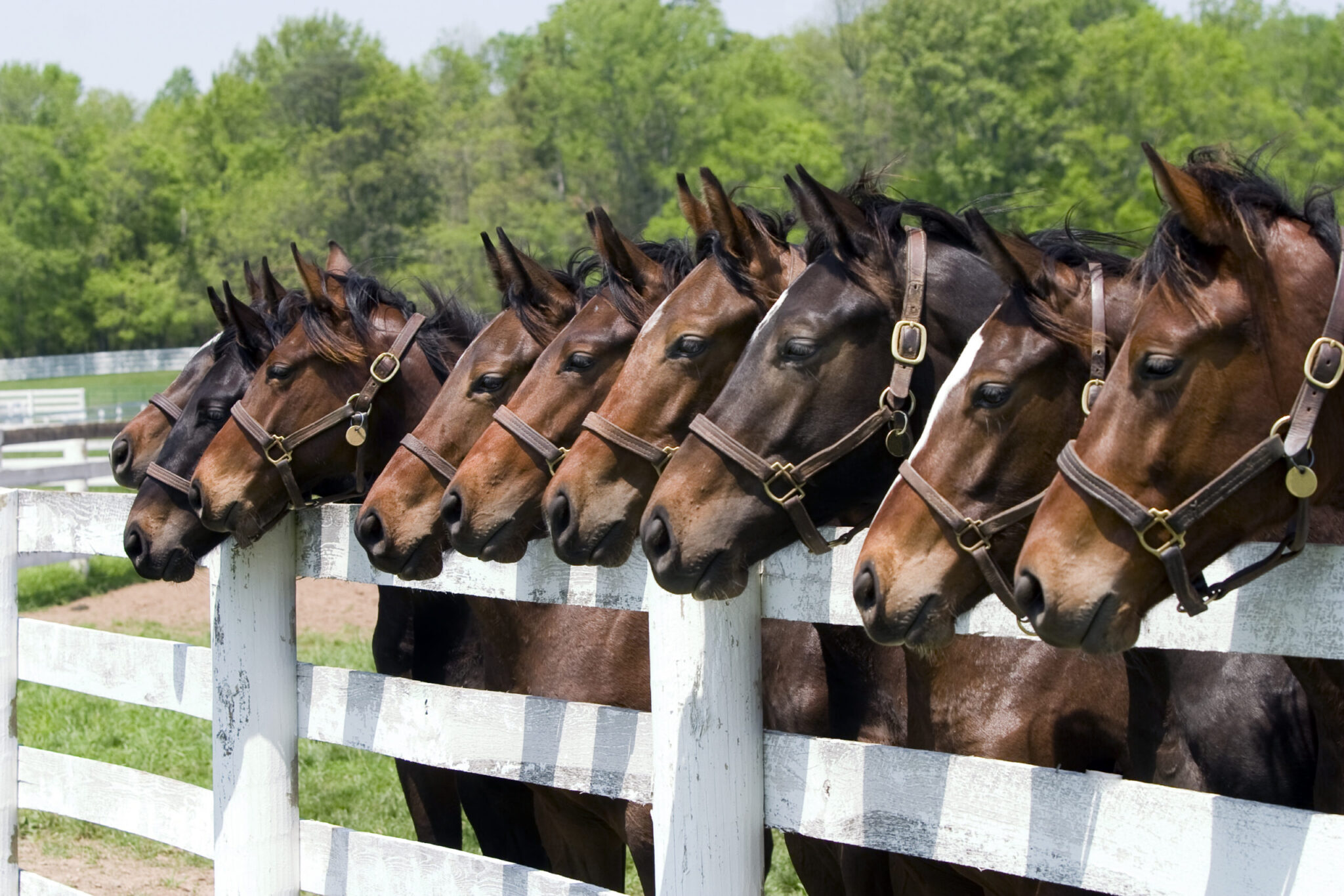
The horse has very good hearing. Its ears can each rotate about 180 degrees. With both ears working together, the horse can capture sounds in almost any direction—practically a full 360 degrees—without moving its head.
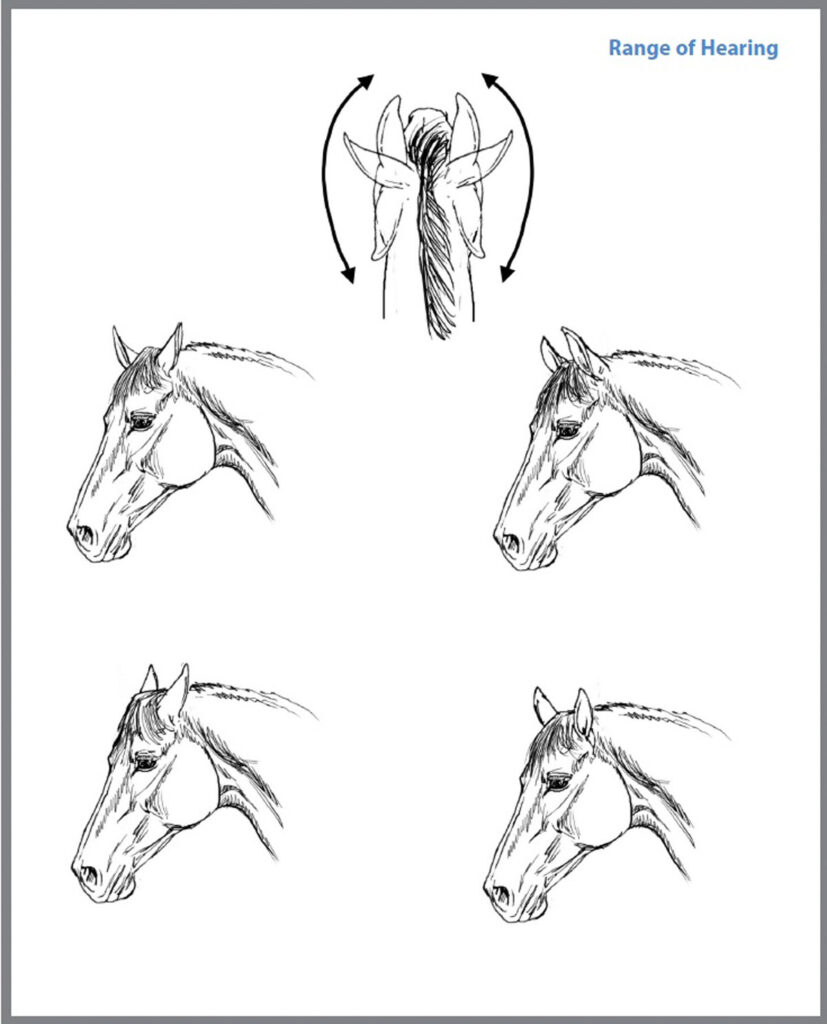
Since horses are prey animals, they evolved to flee predators. Their senses are tuned to perceive a potential threat as quickly as possible. Hearing is an important part of their protective mechanism.
The horse can discern sounds in a wide range of frequencies. Those include almost any sound that a person can hear, and more. Humans tend to have more sensitive hearing in the lower frequency range of sounds but do not discern sounds as well as horses in the higher frequencies. Like man’s, the horse’s hearing capability diminishes with age.
“Hertz” is the measurement for hearing range. Here are the normal human and horse hearing ranges:
- Man—500 hertz to 8 kilohertz
- Horse—14 hertz to 33.5 kilohertz
- Dog—67 hertz to 45 kilohertz
Horses tend to react to sounds that humans might not perceive. Two reasons for this are:
- Horses can discern sounds in ranges that humans cannot.
- Horses can move their ears and hear in almost any direction.
If you see your horse prick up its ears in a certain direction, pay attention! It might be hearing something that you cannot!
Adapted/excerpted from “Equine Science”
Further Reading
- Horse Hearing and Environmental Noise. Heather Lewis, AIA, NCARB, AAA. MySeniorHorse.com
Sign up for My Senior Horse’s FREE newsletter to get the latest information about equids 15 years and older delivered straight to your inbox!