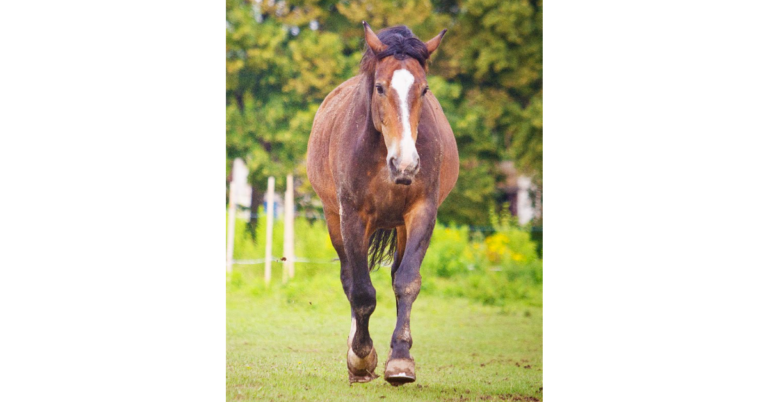

Senior horses might have a greater risk of developing glaucoma and a kind of superficial, chronic corneal ulcer, a new review suggests.
Analyzing medical records of horses examined at a referral clinic for eye problems, Canadian researchers found that while horses 16 and older comprised just 21% of cases, they accounted for more than half of the glaucoma diagnoses. Seniors also represented nearly two-thirds of horses with “indolent” corneal ulcers, also sometimes called nonhealing or refractory, according to Marina Leis, BSc, DVM, MVSc, DACVO, Associate Professor, Small Animal Clinical Sciences in the Western College of Veterinary Medicine at the University of Saskatchewan, in Canada.
“These ocular diseases are quite skewed to older horses,” she said. “A lot of vets will do annual bloodwork for older animals, so potentially adding a yearly eye exam could be a proactive thing to do as well.”
Leis and her colleagues reviewed the medical records of 283 horses that had undergone in-depth eye evaluations between 2011 and 2021 by board-certified veterinary ophthalmologists at the Ontario Veterinary College Health Sciences Centre in Guelph. The horses, representing multiple breeds, ranged in age from weanling to 35 years old and were categorized as young (0 to 4 years), middle-aged (5 to 15 years), or senior (16 and above). Sixty of the study horses were seniors.
The researchers found that, across all age groups, the most frequently identified eye problems were uveitis and ulcerative keratitis, affecting 43.7% and 42% of the horses, respectively.
Ulcerative Keratitis
In general, ulcerative keratitis was least common in middle-aged horses and most common in both seniors and young horses. The indolent version of the disease, however, was especially pronounced among seniors. Seven of the 11 cases of indolent corneal ulcers occurred in horses aged 16 and up, she said.
“Indolent ulcers are superficial and noninfected, but they just really have a lot of trouble healing,” Leis explained. In older horses, that could be due to age-related declines in healing rates—a typical phenomenon in both humans and animals. “These ulcers don’t necessarily become vision-threatening or eye-threatening, but they remain a source of discomfort and are a site for potential secondary bacterial infection later on.” Corneal debridement performed by a veterinarian can help support the healing process, she added.
Glaucoma
Glaucoma appeared in 17 horses (6%), including nine seniors. That’s consistent with previous work showing that 65% of horses with glaucoma were at least 15 years old. In both studies, most glaucoma cases were secondary to other eye diseases, namely uveitis, which interfere with fluid flow within the eye, Leis said.
Older horses are more likely to develop secondary glaucoma because of ongoing damage to the inside of the eye, as in cases of equine recurrent uveitis, for example, she said. In horses with primary glaucoma, this is less clear. But what’s certain is the condition is very likely to reduce the horse’s quality of life.
“The concern with glaucoma is that it is painful, because if the pressure isn’t controlled, the globe can actually start stretching,” said Leis. “And over time it can cause degeneration of the retina and optic nerve, which leads to blindness.”
Treatment with daily eye drops or laser therapy can help keep pressure at bay for a while, she said. But eventually, the benefits wear off and the treatment becomes ineffective, making enucleation necessary. “We just try to extend their vision and comfort for as long as we can,” she explained.
Cataracts
Cataracts—the third most frequently found eye issue in the study, diagnosed in 25.1% of the animals—were not more common in senior horses in this study population, said Leis.
Final Thoughts
Veterinarians might consider adding basic eye exams such as pressure checks and fluorescein stains to annual checkups on senior horses and even pupil dilation for a quick view of the lens, retina, and optic nerve, said Leis. “There are some pretty practical diagnostics that veterinarians could do for these older horses,” she said.
Reference
Ing ST, Pinard CL, James-Jenks EM, Leis ML. A retrospective survey of equine ocular diseases evaluated at a referral hospital in Ontario (2011 to 2021). Can Vet J. 2025 Mar;66(3):308-317. PMID: 40070935; PMCID: PMC11891807.
Related Reading
- Watch for Eye Complications in Older Horses After General Anesthesia
- Equine Guelph Senior Horse Eye Education
- How to Medicate a Horse’s Eye Video
Sign up for My Senior Horse’s FREE newsletter to get the latest information about equids 15 years and older delivered straight to your inbox!
-
View all posts
Christa Lesté-Lasserre is a science journalist specialising in animal health and behaviour, life sciences, and evolutionary processes. Her articles and stories have appeared in major science magazines and literary reviews in multiple languages across the globe. Based in France's greater Paris area, Christa holds an MA from the University of Mississippi and a BA from Baylor University in Texas, complemented by postgraduate work in life sciences at the University of Paris René Descartes.
A Pulitzer Center grantee for her coverage of the COVID-19 pandemic for Science magazine and recipient of American Horse Publications awards for her articles on equine behaviour, Christa focuses on shaping scientific studies into the stories they tell.