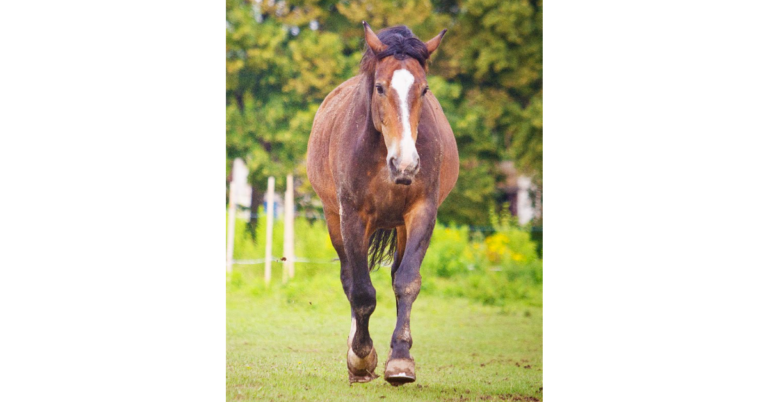
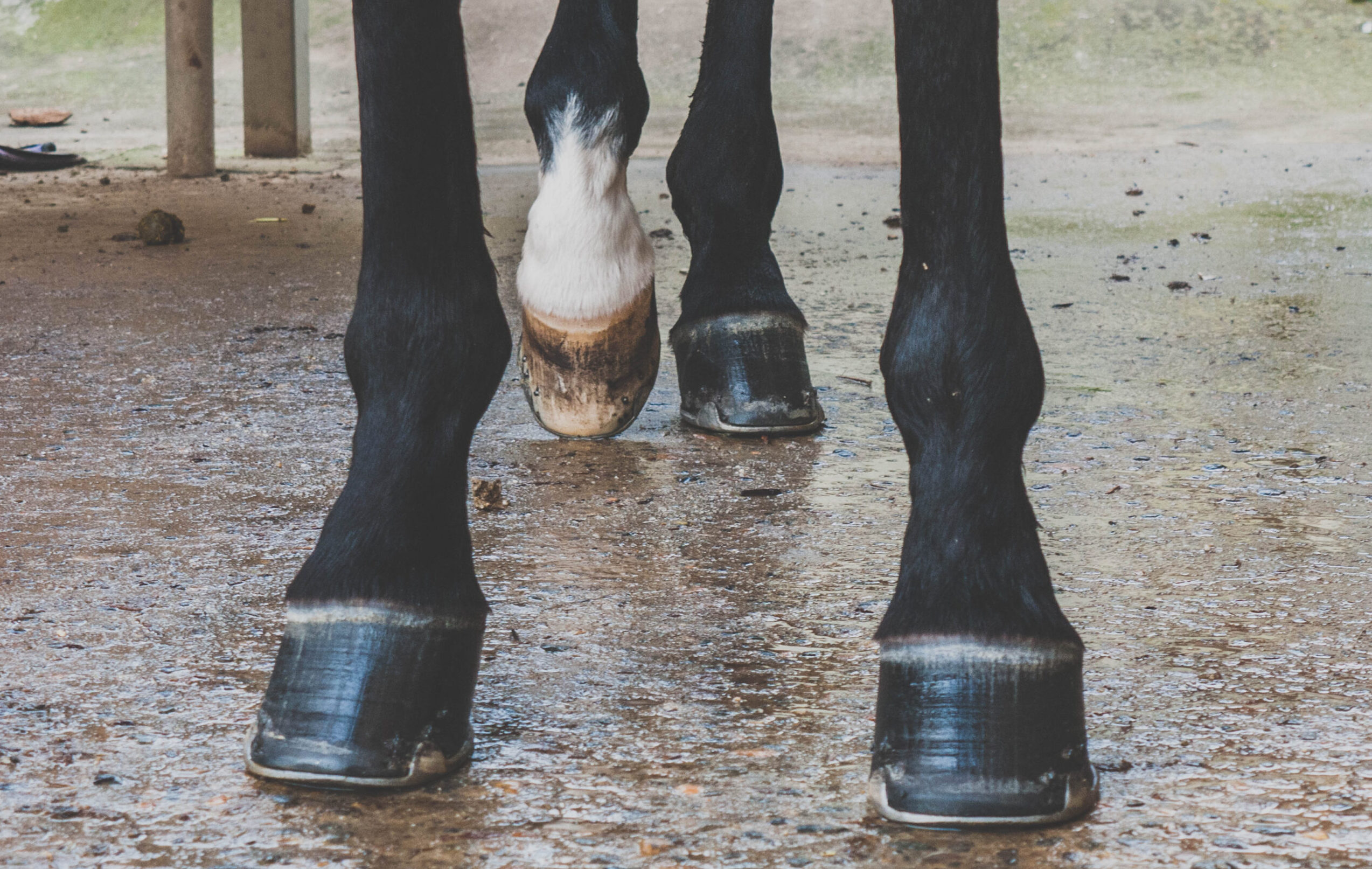
Older horses come in a variety of forms and with widely different life stories. So do their hooves.
As such, there’s no one-size-fits-all answer to the question: Should my senior horse wear shoes or go barefoot? The decision, our sources say, depends completely on the individual horse and his feet.
While senior hooves tend to grow out more slowly and can develop slightly thicker walls and flatter hoof angles, that doesn’t make them more or less likely to need shoes, says Simon Curtis, PhD, FWCF, Hon-AssocRCVS, a farrier in Newmarket, U.K.
Further, there’s nothing inherently “old” about older horses’ hooves, explains Chris Pollitt, BVSc, PhD, head of the Australian Equine Laminitis Research Unit at the University of Queensland. In fact, the quality and composition of senior horses’ feet remain pretty much the same as they were as yearlings—provided they’ve been healthy.
“There’s this assumption that the horse is getting old and so the hoof is falling away, but in my experience, many horses reach old age with hooves that are the same as when they were 3 years old,” Pollitt says. “Once grown and properly cared for and in the right environment, hooves will virtually outlive the horse. They’re a wonderful piece of evolution that serves the horse well throughout the whole life.”
How Life and Health History Affect the Hoof
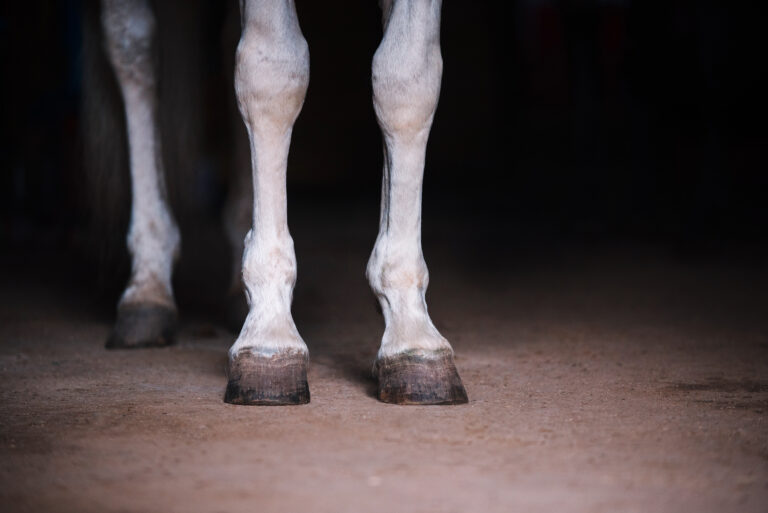
Older horses carry some of their life histories in their feet, which could affect their need for shoes, our sources say. Years of uneven loading resulting from old injuries, subtle asymmetries, or just innate imbalances, for example, can cause feet to grow faster on one side than the other or have different shapes on the left vs. the right.
In some older horses, poor nutrition—due to metabolic disease, dental problems, or chronic pain, for example—can deplete hooves of the vital balance of elements that give it strength and elasticity, says Shannon Pratt-Phillips, PhD, a professor of equine nutrition in North Carolina State University’s Department of Animal Science, in Raleigh. And when retired horses become obese from lush pastures and lack of exercise, their weight adds pressure to weakened hooves.
Senior horses are also at greater risk of insulin dysregulation, especially related to pituitary pars intermedia dysfunction (PPID) and/or obesity, says Pollitt. So, their feet can have chronic laminitic changes, such as a rotated coffin bone, a stretched white line, unhealthy angles, and prominent rings.
But all these foot problems can happen to any horse, regardless of age, our sources say, and age itself doesn’t make the foot more susceptible to their effects.
When Shoes Might Be Necessary
The question of whether to shoe an older horse is actually a question of whether to shoe the horse period, regardless of age, our sources say.
If the hoof wears down faster than it grows out, if the horse acts footsore on certain surfaces, or if the foot has pathologies that need correction, for example, then he might need shoes. If not, the horse can probably go barefoot, Curtis says. Hoof boots can offer an intermediate alternative, providing added protection and comfort during exercise or on hard surfaces.
Shoeing history matters, our sources add. Even if your senior doesn’t have any hoof pathologies or other reasons for shoeing, he might need to continue wearing shoes if he’s always worn them. Horses that have been shod for years—as a routine part of an athletic career, for example—no longer have a natural hoof structure. Their soles might be more sensitive, and their frogs are often retreated and weak.
This means switching from shoes to barefoot abruptly can be painful and interfere with normal movement, our sources say. Such seniors should transition to barefoot over a period of several weeks, under veterinary and farrier guidance.
Related Reading
- Nutrition and the Horse’s Hoof Wall
- Hoof Care for Senior Horses, Donkeys, and Mules
- Understanding the Three Stages of Laminitis in Horses
Sign up for My Senior Horse’s FREE newsletter to get the latest information about equids 15 years and older delivered straight to your inbox!
-
View all posts
Christa Lesté-Lasserre is a science journalist specialising in animal health and behaviour, life sciences, and evolutionary processes. Her articles and stories have appeared in major science magazines and literary reviews in multiple languages across the globe. Based in France's greater Paris area, Christa holds an MA from the University of Mississippi and a BA from Baylor University in Texas, complemented by postgraduate work in life sciences at the University of Paris René Descartes.
A Pulitzer Center grantee for her coverage of the COVID-19 pandemic for Science magazine and recipient of American Horse Publications awards for her articles on equine behaviour, Christa focuses on shaping scientific studies into the stories they tell.