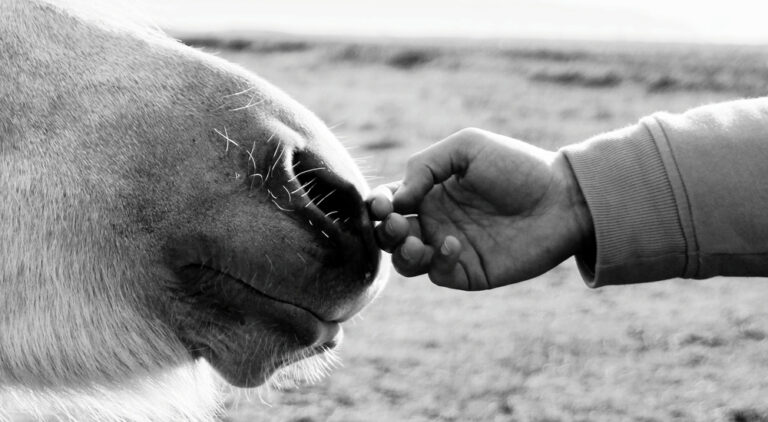

Our role and aim here at Redwings Horse Sanctuary, in Norwich, U.K., is always to give horses a good life. This begins with healing and repairing the damage done in the circumstances from which we rescue them. Then, we focus on introducing them to a natural way of living, which they may never have had before, where they can exhibit their need to graze, move, and be with their own kind.
As a social species, horses in herds rely on a strong network for security and shared responsibilities. In the wild, senior horses bring with them the experience of the best places to eat, rest, and shelter and will share this with youngsters. In a domestic setting, our horses are still driven by the same instincts. If we can’t provide the right kind of places to eat, rest, and shelter, we risk causing stress and frustration.
An easy way to remember our horses’ priorities is to remember the Three Fs: Friends, Forage, and Freedom.
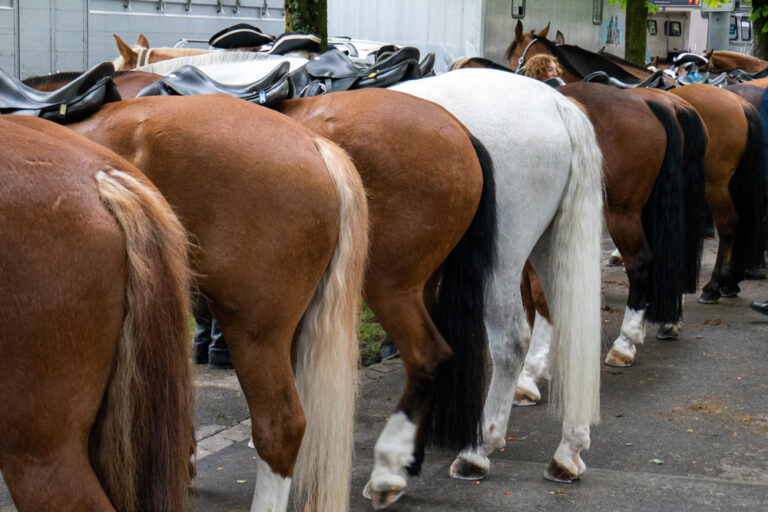
Friends
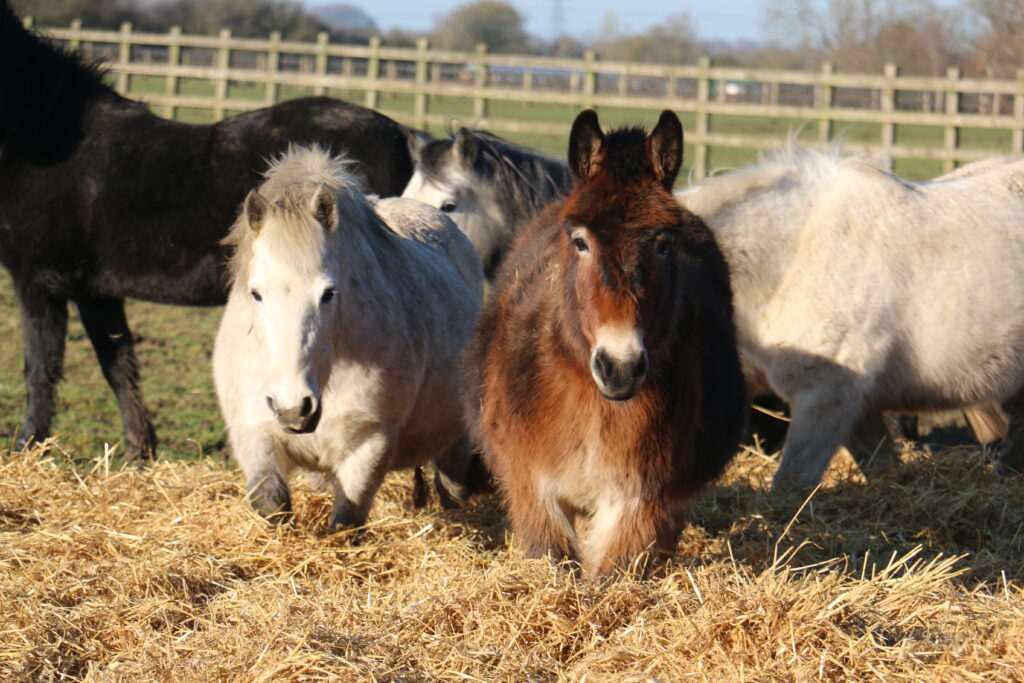
As owners we control so much of our horses’ lives—from where they live to whom they live with. At several points in their lives we might unsettle this: weaning, selling, moving to a new home and, in the case of our senior horses, retirement as some owners consider a specialist retirement livery or facility.
Throughout it all, the most desirable situation for our horses is to have long-term, stable friendships. Any separation from their friends is stressful, and they might present behaviours showing this as they adjust to any new environment.
Similarly, the friends we think might be good fits for our horses may not prove to be the case, and we should acknowledge that in these situations we risk frustration and friction in their new herd.
To avoid this, initiate separation from existing friends or integration into a new group gradually. At Redwings, we sometimes have to change our herd groups, usually to introduce our horses to new herdmates that are more compatible to their health or management needs. The separation and integration processes require us to carefully observe and closely monitor all the horses throughout. This is important for their physical health (e.g., to avoid injuries and ensure everyone can access food and water) as well as their mental well-being (being able to rest and spend time with chosen herdmates free from bullying or isolation).
Integrating New Horses
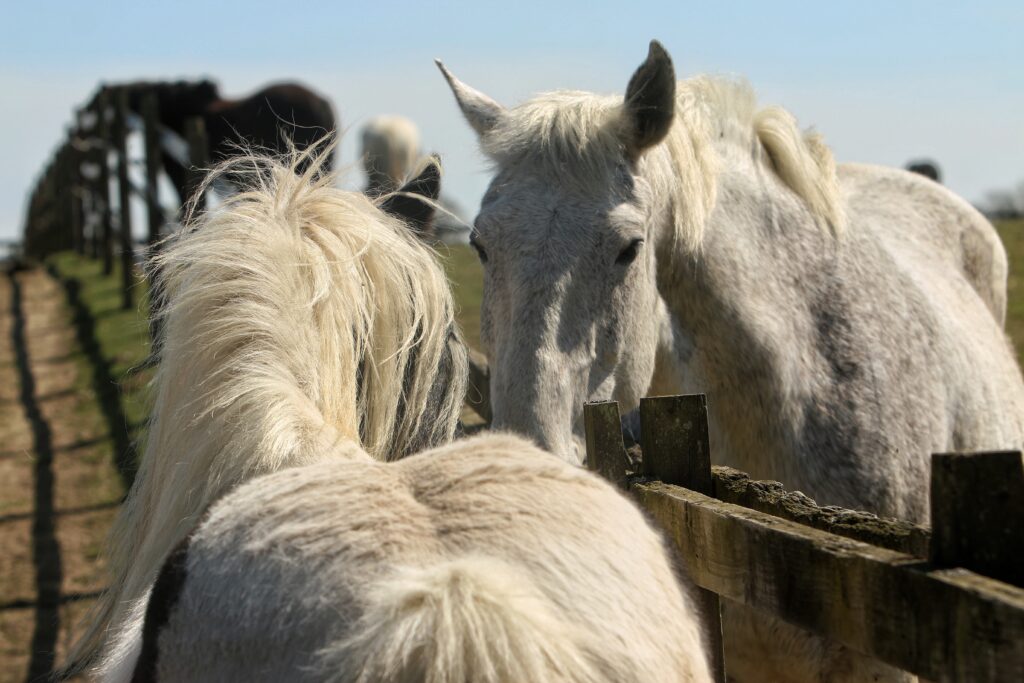
Our gradual integration process at Redwings begins with the new horse being put in a space of “protected contact,” such as a separate neighbouring paddock. The protected contact enables familiarisation of sight and smell of the new horse, where the horses can touch noses but not have full physical contact. Any evidence of conflict at this point indicates the horses either need more time or the grouping is not quite right. Behaviours such as allo-grooming and maintaining a relaxed proximity are indications of success.
At this point, we slowly introduce full contact, by putting only one or two of the “original” herd in full contact with the newcomer. We only introduce more herd members once they are settled and sharing resources voluntarily.
This process can take several weeks, but it helps us work toward the goal of full integration being a “nonevent,” with no dramatic displays of behaviour that can cause stress or injury. Integrating your horse like this sets them up for success and increases the likelihood they will find themselves in a settled herd, with friendships that fulfil their drive for companionship.
Forage
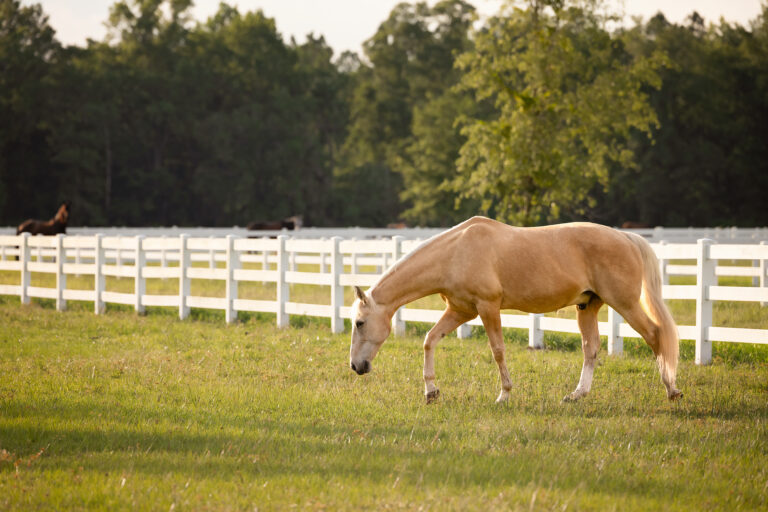
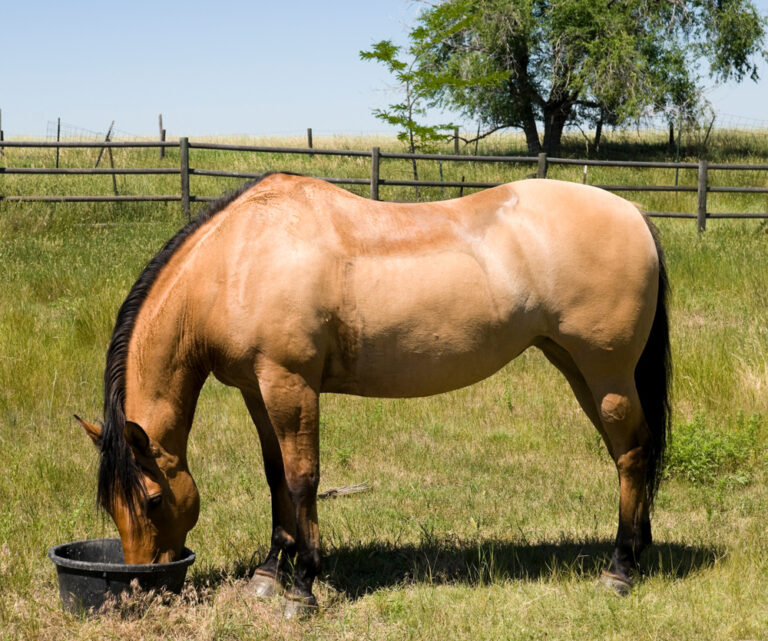
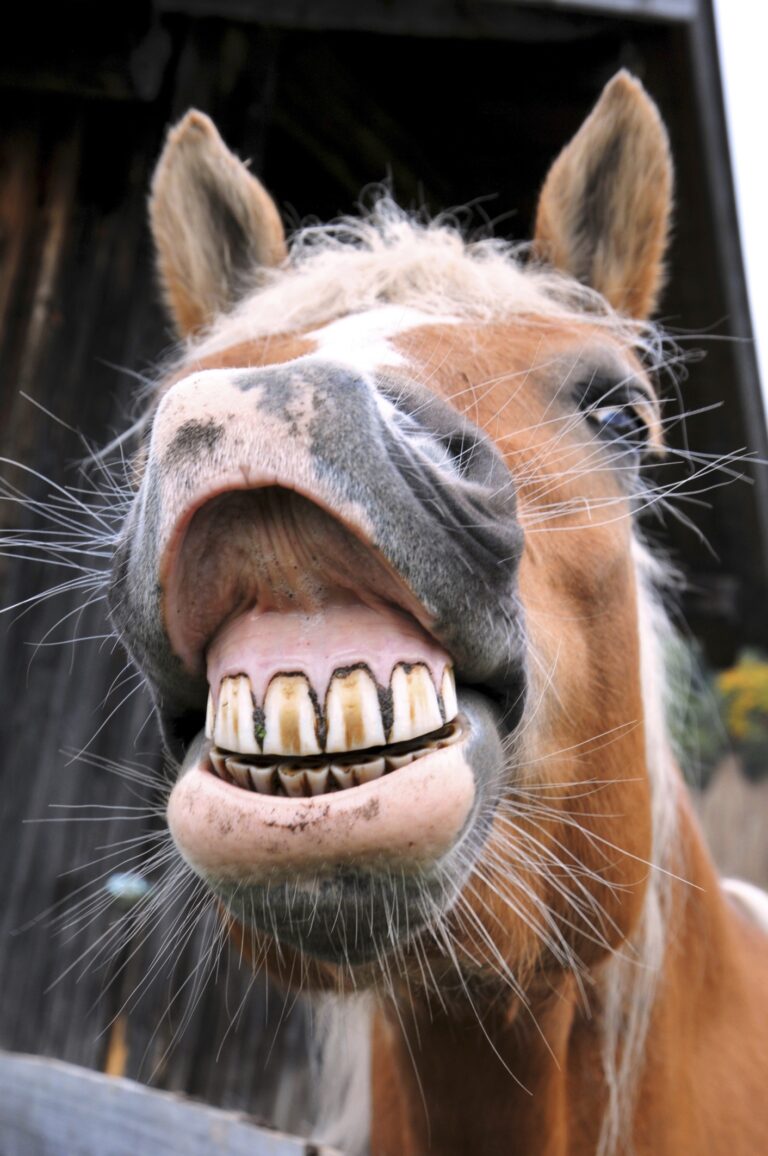
Horses’ psychological and gut health needs are met by little-and-often high-fibre foods, and they have evolved to spend around 17 hours of their day grazing. By prioritising good dental health throughout our horses’ lives, we can prolong the time they are able to meet their dietary needs through grazing and consuming long-stemmed forage like hay.
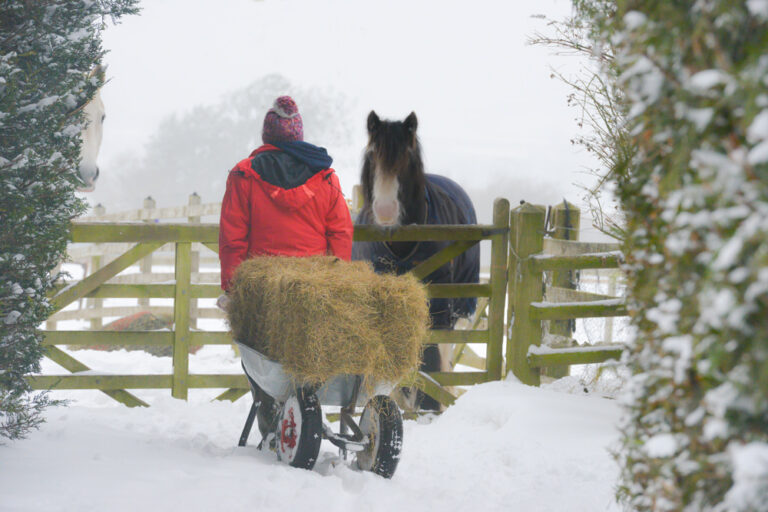
However, our senior horses might reach a point where we need to supplement their diet with mashes or forage replacers, which compensate for their aging teeth. To maintain their quality of life and not just their weight, we must consider how we can provide these feeds to mimic little-and-often grazing and ensure they can still have access to their friends and freedom of movement.
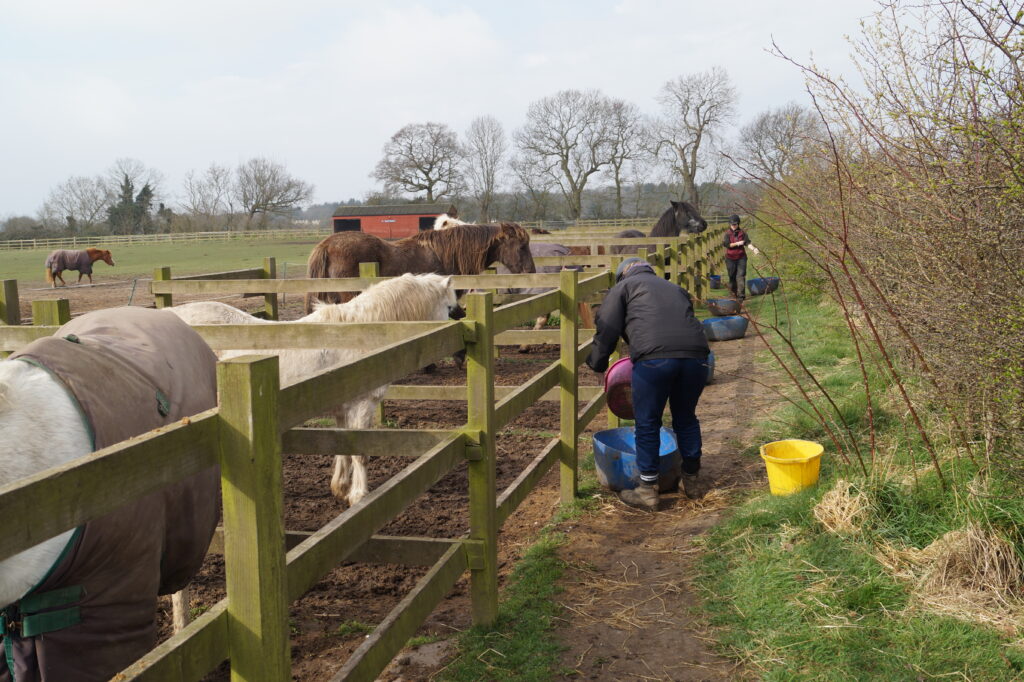
At Redwings, we use small corral areas in our fields—either permanently constructed or with temporary fencing—to make a space for those that require extra feeds to eat without interruption or competition, whilst enabling them to remain living as part of their established herd. This is a key way we ensure our older residents are living a good life.
Freedom
Freedom of movement is crucial for every horse, because they evolved to cover significant distances in search of water and grazing and to evade predators. For our senior horses, appropriate movement benefits their joint comfort, muscle tone, and gut motility.
However, it’s important that we monitor our veteran horses to ensure they are coping with the level of movement, with sufficient opportunity for comfortable and peaceful rest and shelter.
In addition to freedom of movement, we must afford our horses the freedom of choice and ask ourselves as owners, would our horse choose to live the life we are providing for them?
Throughout our series of articles, we will provide you with more tools and knowledge to help you confidently answer that question, from understanding your horse’s body language to ways we can train our horses to set them up for the future as happy and healthy veterans and ways to consider their management as they age.
Redwings is the largest horse welfare charity in the U.K., responsible for the daily care of over 1,000 horses and donkeys in the sanctuary, as well as over 700 who have been rehomed through our Guardianship scheme. We are committed to rescuing equines in need, as well as helping the horses and donkeys outside our sanctuary fences by sharing our knowledge and experiences, and we are entirely funded by donations from the public.
Related Reading
- My Senior Horse Podcast: Managing Senior Herds Part 1
- The Benefits and Uses of Strip-Grazing Horses
- Feeding Horses That Can’t Eat Long Fiber
Sign up for My Senior Horse’s FREE newsletter to get the latest information about equids 15 years and older delivered straight to your inbox!