Lots of older horses, like people, have generalized stiffness that wears off with some degree of exercise. It is assumed that this is related to osteoarthritis—and this may or may not be true.
Irrespective of the cause, is there anything we can do to help such horses, especially in cold weather?
Human sufferers generally say that they experience more stiffness in cold versus warm weather (so retiring to Florida?). My personal observation of horses is that some are similarly affected.
So, warmth and mobility are key factors.
Equine Adaptation to Cold
It is something of a paradox that horses are well-adapted to survive in cold weather. For example, their feet can reduce circulation to preserve heat in the body.
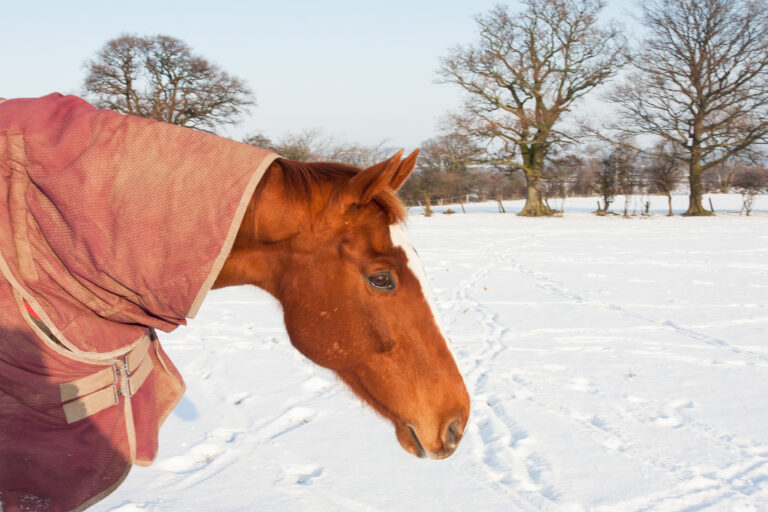
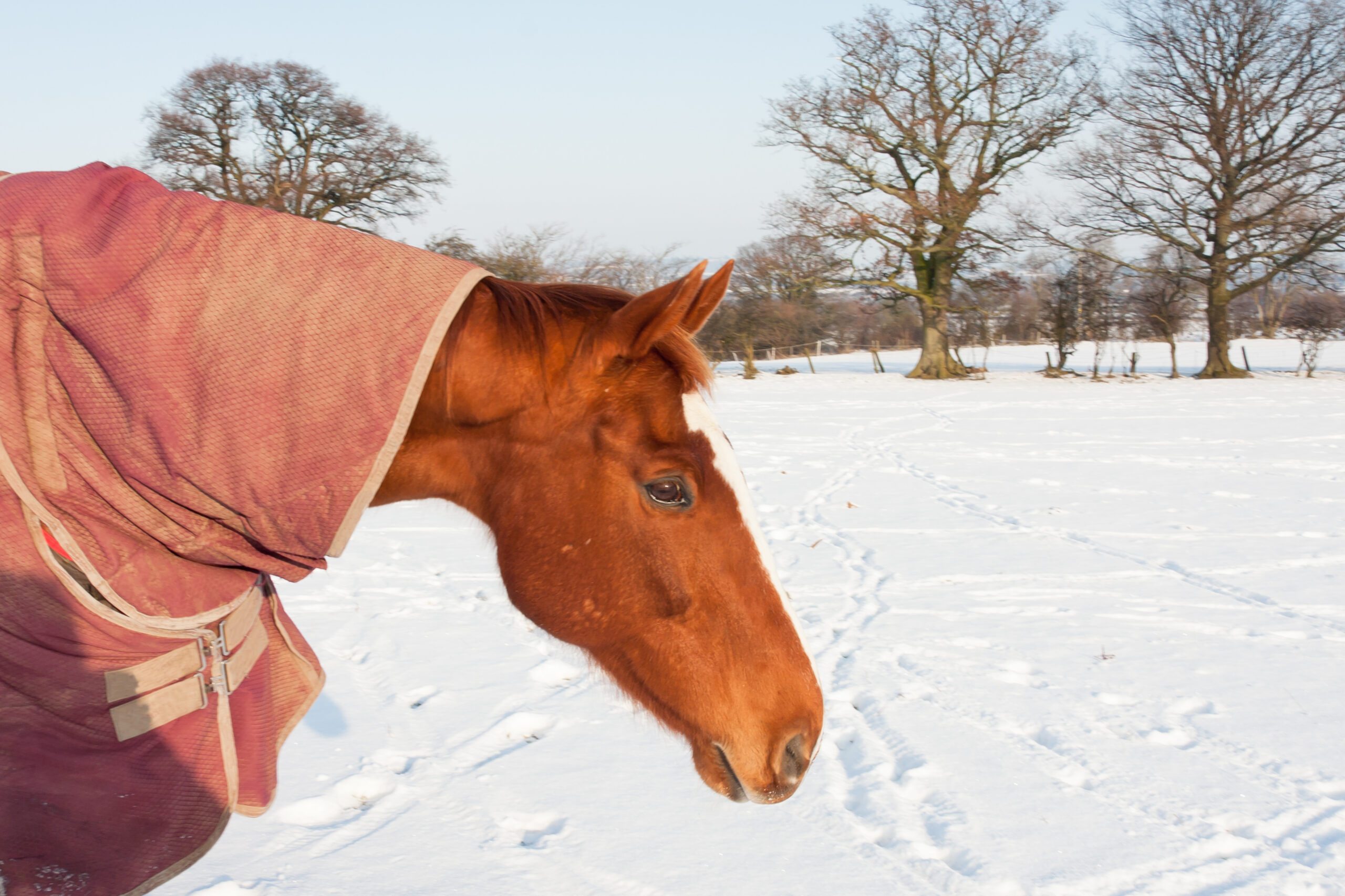
Horses often use field shelters less in cold than in warm weather. Shelter from strong cold wind and rain is probably more important than the absolute temperature. The important thing is that horses have choices. Many breeds grow long hair coats. That means over-rugging (blankets that are too heavy or worn in too-warm weather) is potentially more of a problem than under-rugging. If a horse does wear a rug, it is important that it is well-fitting and does not restrict mobility.
Mud vs. Movement
Wading through thick mud or walking on frozen, uneven ground is not ideal. However, there is a trade-off between some mobility throughout the day versus stable confinement.
A feral horse might roam up to 20 km (about 12 miles) a day. So, stable confinement is highly non-physiological.
One option might be a stable with free direct access to a turn-out pen. The water supply should be protected against freezing. Food stations should be spaced as widely as possible.
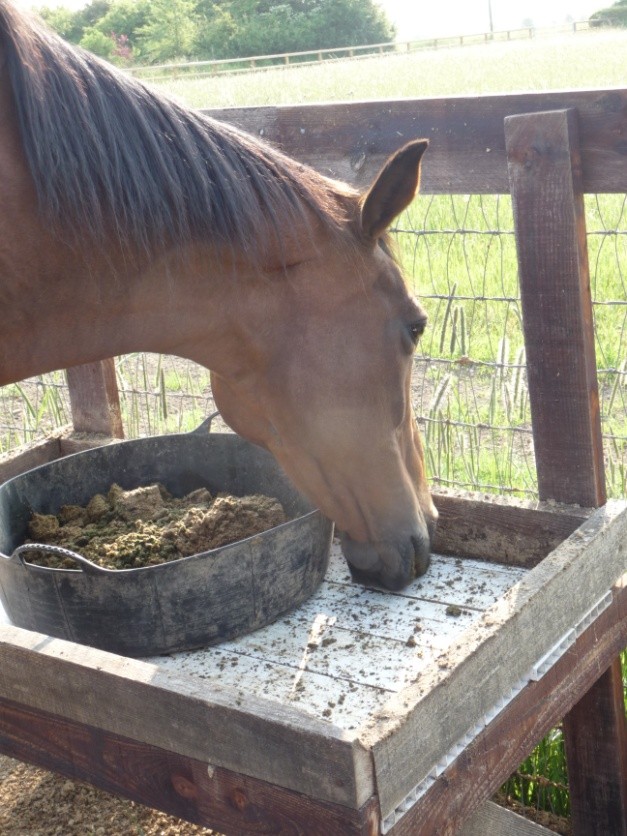
Forage is expensive, and waste should be minimised. However, it is preferable for horses to lower their head and neck to eat. So, use of forage boxes might be the best option.
Think Food and Rest
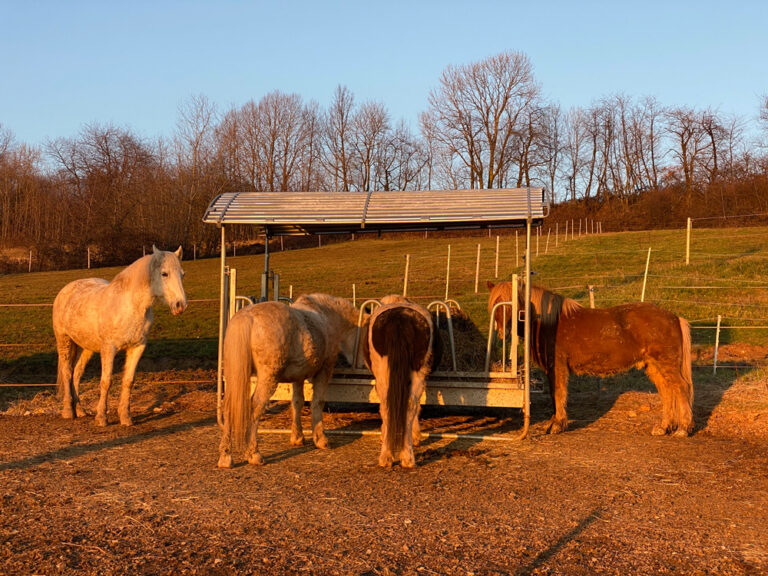
If there is more than one horse in the space, then provision of more feeding stations than horses gives the less-mobile horse the potential to get adequate food. Moreover, being surrounded by horses that are not best buddies might result in a less-mobile horse getting crowded out.
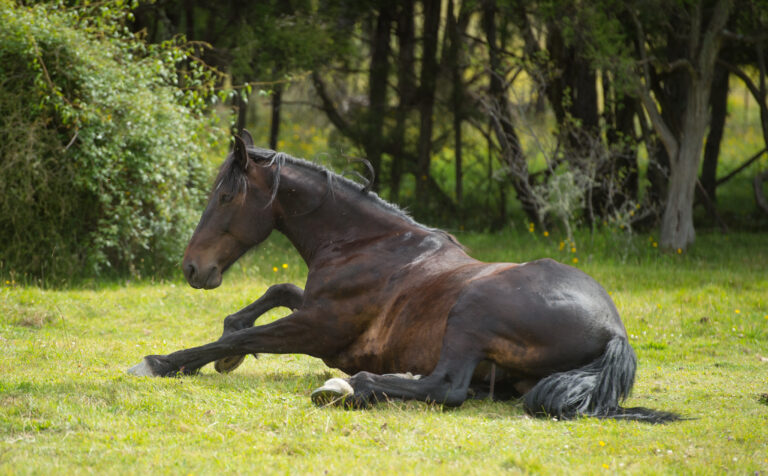
Adequate sleep is important, and a stiff horse may find getting up and down more difficult than younger horses. If there is no evidence of a horse lying down, it might be worth considering the use of palliative analgesics (such as phenylbutazone at an appropriate dose) to provide relief from discomfort.
The horse should also be provided with a dry area on which to lie down. Horses might love to roll in mud, but most horses do not lie down to sleep on mud.
Exercise and Movement
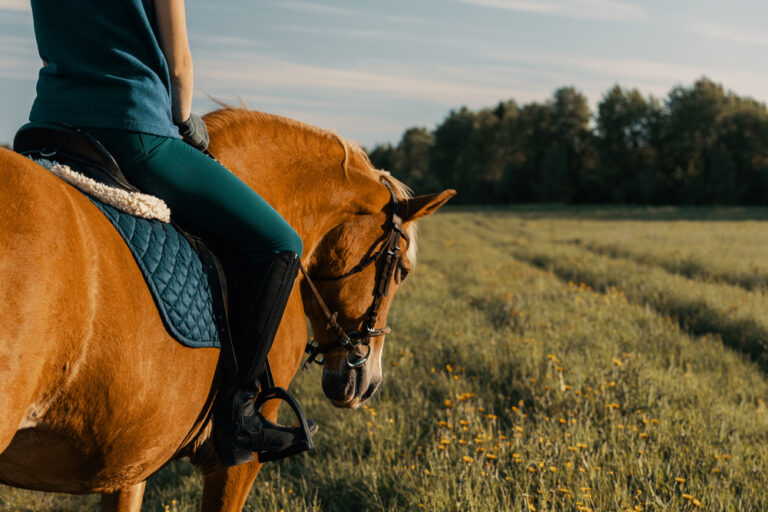
If a horse remains fit enough to perform ridden exercise, it should continue. But, if riding on lanes or roads, then use of road nails might help to prevent unnecessary slipping.
A stiff horse might find it more difficult to stand on three legs with one limb picked up for a prolonged period by a farrier. Encourage the farrier to allow the horse to have frequent breaks and to avoid lifting limbs excessively high. Consider moving among the limbs rather than persisting with one limb that the horse finds particularly difficult.
A patient, caring farrier will make the process much kinder for the horse.
If a horse is not being ridden regularly, the use of ground exercises will provide both mental and physical stimulation. The options are endless if you use your imagination.
The goal is to mobilize the body and to maintain muscle tone. Hand walking exercise over varied terrain might be time-consuming, but it is potentially beneficial for both the horse and the handler, helping to maintain proprioceptive function of the limbs.
Final Words
Ultimately, it is vital to observe the horse and its behaviour. If a horse appears subdued or fails to interact with a handler, that is a signal that something is not right. You just need to figure out what that might be.
Related Content
- Managing Chronic Pain in Senior Horses. Carly Sisson with Dr. Alison Bennell. MySeniorHorse.com
- How to Recognize Early Signs of Joint Issues in Horses. MySeniorHorse.com
- What Is a Healthy Equine Joint. MySeniorHorse.com
- What You Should Know About Equine Osteoarthritis. Kimberly S. Brown. MySeniorHorse.com
- Older Horse Pain Management Research. Dr. Rebecca Smith. MySenior Horse.com
Sign up for My Senior Horse’s FREE newsletter to get the latest information about equids 15 years and older delivered straight to your inbox!